
The Secrets Behind India's Top Pickleball Players' Success

Building Success Beyond the Court
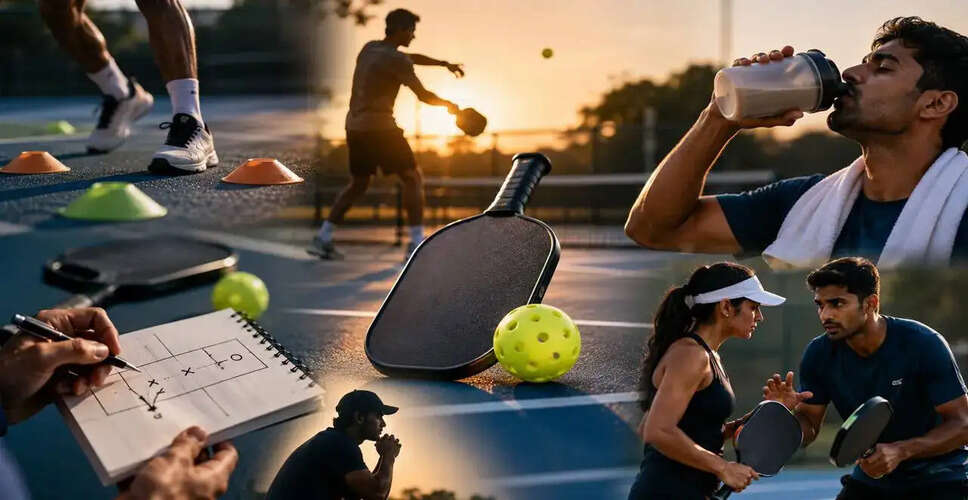
While championships are clinched on the day of the match, the groundwork is laid well in advance. Leading pickleball athletes from India emphasize the importance of training regimens, nutritious diets, and mental fortitude. The outcome of a pickleball match often hinges on just a few points, yet those who frequently find themselves on the podium attribute their success to the preparation that occurs long before they step onto the court. Insights gathered from top players during the Picklebay Zonals - North highlighted a shared theme: regardless of their diverse backgrounds and ages, they prioritize routines, discipline, and preparation over mere talent. Although their habits differ, the goal remains consistent: to improve incrementally every day.
Prioritizing Fitness Over Trophies
Fitness before trophies
Nilesh Desai, the champion of the 50+ Men's Singles, asserts that consistency starts with movement. He shares, "I dedicate at least three hours daily to playing both tennis and pickleball. I also prefer to compete against younger players, as they help me maintain my agility." Desai believes that playing within his age group can sometimes lead to lower intensity, so he actively seeks out challenging practice sessions. At a stage when many athletes begin to slow down, he chooses to push his limits.
The Importance of Recovery
Good food, better recovery
Young athletes Atharv and Advik are learning that recovery is as crucial as training. They have established straightforward yet disciplined post-match routines. Atharv mentions, "After playing, I typically have a protein shake made with milk, protein, and bananas, sometimes adding eggs." Advik echoes this sentiment, emphasizing the importance of a healthy diet without mentioning cheat meals or celebrations.
Small Decisions Lead to Big Success
Success Is Built in the Small Moments
A key takeaway from these discussions is that champions are often distinguished not by extraordinary moments but by the small, daily choices they make. Arjun Singh notes, "While my game hasn't changed drastically, those victories have boosted my confidence. I've played more matches at that level, and I'm optimistic about the future." He adds that when nerves arise, he reassures himself through positive self-talk.
Monica Menon highlights that success in doubles begins long before the match starts, stating, "I'm thankful for my partner, as effective communication is essential in doubles." She emphasizes that giving opponents a glimmer of hope can quickly alter the match's dynamics. Anay Patil suggests that sometimes, the best strategy is to slow down rather than rush. "After a fast-paced first game, I advised my partner Vishal to take a moment to calm ourselves," he explains.
Individually, these practices may seem mundane—a longer practice session, a post-match protein shake, self-encouragement, trusting a partner, or choosing calmness over anxiety. Collectively, they illustrate a larger truth: Indian pickleball is nurturing athletes who recognize that success is not solely reliant on talent but is built on discipline, repetition, and the desire to improve even when no one is watching. These habits may not be reflected on a scoreboard, but they often determine who emerges victorious at the end of a tournament.