
The Rise of Pickleball in India's Urban Developments

Pickleball: A New Trend in Urban Living
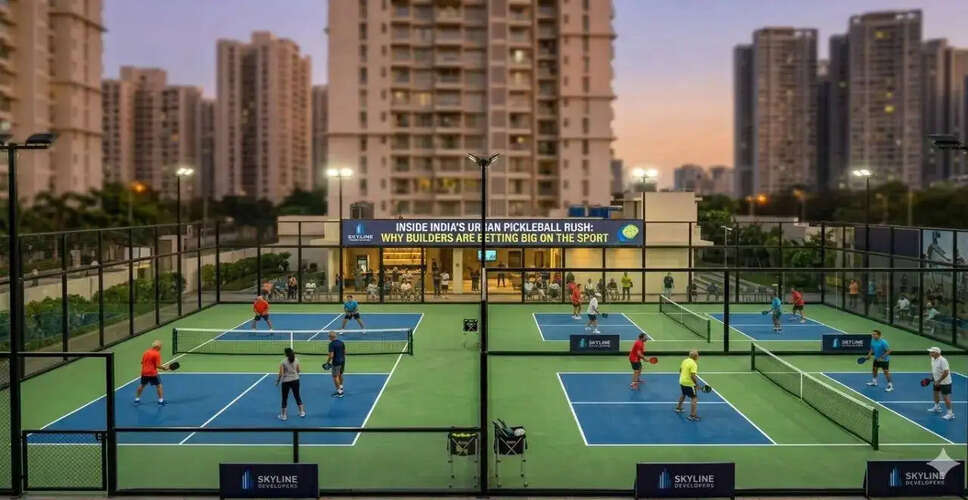
In the rapidly changing urban environment of India, residential complexes are now marketed beyond just their physical attributes like square footage or luxurious amenities. Developers are increasingly focusing on fostering a sense of community, with pickleball emerging as a key element in this strategy. M3M India, a prominent real estate firm based in Gurugram, has recognized this trend early on, integrating pickleball into its residential offerings. The company views this sport not just as a business opportunity but as a significant investment for the future.
Over the years, M3M has made impactful strides in New Delhi and the National Capital Region, including constructing pickleball courts in housing projects and owning the Capital Warriors Gurgaon franchise in the Indian Pickleball League (IPBL). Their involvement signifies a shift in how corporate India perceives pickleball—not merely as a recreational activity but as a valuable investment in social engagement and wellness.
Robin Mangla, M3M's president, emphasizes the sport's efficiency in urban settings. He states, “Pickleball is not just an amenity; it’s one of the most effective and inclusive sports we've seen in recent years. It requires minimal space while maximizing engagement, making it perfect for urban developments.” Recognizing the gap between the growing interest in pickleball and the lack of quality infrastructure, M3M aims to lead the market in 2023.
While quantifying pickleball's exact impact on real estate is challenging, it has undoubtedly climbed to the top of builders' priorities.
Valuable and Social
Mangla's insights reflect a broader trend in India's metropolitan areas. In urban locales where land is limited and lifestyles are increasingly sedentary, pickleball offers developers a compact, social sport that can enliven community spaces without the need for extensive facilities. Unlike traditional sports amenities that often go underutilized, pickleball is accessible to a wider audience, encouraging participation across various age groups.
One of pickleball's greatest strengths is its ability to promote movement and enjoyment without overwhelming physical demands. It provides a slower-paced, aerobic workout that remains engaging and social. At higher levels, however, the sport demands skill, reflexes, and strategy, making it a challenging pursuit.
Fostering a Community Culture
M3M understands that a focus solely on profitability cannot drive meaningful engagement. For residential developers, this presents an opportunity to attract new buyers. Mangla notes that pickleball's intergenerational appeal is a powerful aspect of its cultural significance. “It can unite first-time players, experienced athletes, and families on the same court, fostering cross-generational connections,” he explains.
At M3M, pickleball is viewed as a social connector that enhances community vibrancy. The company has already established pickleball courts at its flagship Golf Estate in Gurgaon, with plans for more installations.
Making Pickleball Accessible
The concept of 'activated spaces' is becoming crucial in contemporary urban planning. Today's residential projects compete not just on architectural merit but also on the experiences they offer to foster community. In this context, pickleball serves as both a wellness initiative and a community activity that naturally brings residents together.
M3M's strategy goes beyond merely adding courts as luxury features. The company aims to position pickleball as a grassroots sport rather than a status symbol. “We want to democratize access to the sport, integrating courts within residential areas to encourage organic participation,” Mangla states. This approach mirrors the trajectory of pickleball in the United States, where it gained popularity through community engagement rather than exclusive clubs.
Initial responses have been promising, particularly from individuals who had never engaged in racquet sports before. The simplicity of pickleball facilitates easy adoption, leading to regular resident-led games and informal tournaments.
Supporting Professional Growth
M3M's commitment to pickleball extends beyond community engagement. Their ownership of the Capital Warriors Gurgaon franchise illustrates a recognition that grassroots participation must be paired with visibility and structured pathways for the sport to thrive. Mangla emphasizes, “Infrastructure is just one part of the ecosystem. For pickleball to grow, it needs visibility and aspirational pathways.”
The company’s sponsorship of the LawStrings Pickleball League, aimed at lawyers, highlights how pickleball is being embraced as a networking and lifestyle platform within professional circles. This intersection of fitness, leisure, and branding aligns perfectly with the lifestyle narratives that modern housing projects aim to convey.
M3M is also dedicated to nurturing pickleball talent, expressing interest in developing coaching frameworks and beginner programs to support serious players. Mangla concludes, “We see ourselves as long-term partners in the sport’s growth, contributing to the entire ecosystem, not just building courts.”