
The Rise of Pickleball in Europe: A New Era for Racquet Sports
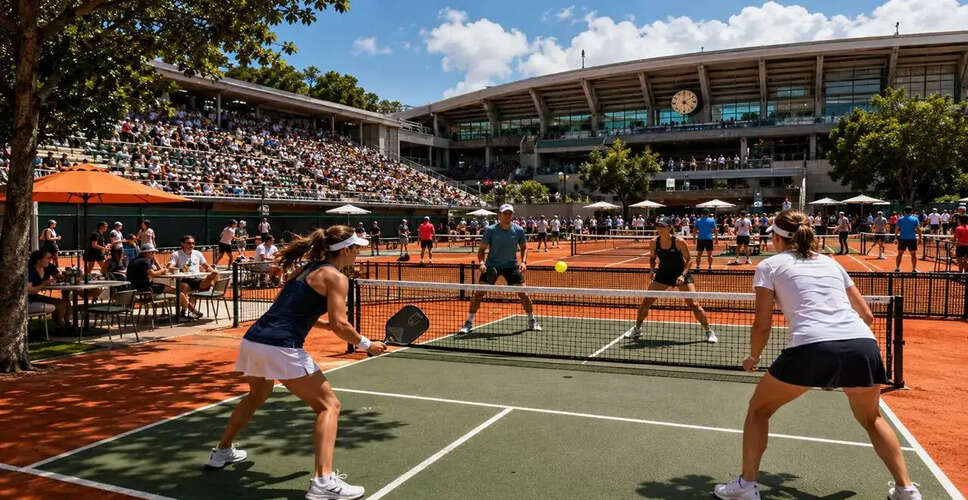

Pickleball's Emergence in Europe
While pickleball's popularity has surged in the United States, its growth in Europe, particularly in countries like France and Spain, is taking on a more structured form. Rather than being seen as a rival to tennis and padel, major sports organizations are beginning to incorporate pickleball into their frameworks. This shift is particularly evident in France, where the French Open at Roland-Garros showcased pickleball as part of its promotional efforts.
Pickleball at Roland-Garros
During the 2026 French Open, temporary pickleball courts were set up within the Roland-Garros complex, inviting visitors to engage with the sport. Families and newcomers participated in open sessions next to the iconic Court Philippe-Chatrier. This initiative signifies a departure from the traditional tennis community's perception of pickleball as a competitor for court space. Instead, the French Tennis Federation is embracing pickleball, promoting coexistence between the sports.
Expanding the Racquet Sports Ecosystem in France
The French Tennis Federation is increasingly viewing pickleball, padel, and tennis as complementary rather than competing sports. FFT president Gilles Moretton emphasized the need for accessibility in modern sports, noting that pickleball offers a quicker learning curve for beginners. This accessibility could be a key advantage for pickleball in Europe, allowing players of all ages to enjoy the game together.
Spain's Growing Interest in Pickleball
Spain is also embracing pickleball, with initiatives in schools and community programs. The Rafa Nadal Foundation recently introduced pickleball to over 500 schoolchildren, highlighting its role in promoting community engagement. Additionally, Madrid's El Tejar de Somontes is set to become a major hub for pickleball, featuring multiple courts for both recreational play and international tournaments.
Concerns from the Tennis Community
Despite the positive integration of pickleball, some within the tennis community express concerns about the conversion of tennis courts to pickleball facilities. Former doubles champion Bob Bryan noted the loss of tennis courts to pickleball lines, reflecting ongoing tensions. However, French officials remain confident that tennis will continue to thrive alongside the growing popularity of pickleball.
A Different Growth Model for Pickleball in Europe
Unlike the rapid and often unstructured growth seen in the U.S., Europe's approach to pickleball is more organized. Federations are getting involved early, and clubs are strategically adapting to include pickleball. This integration into established sports systems lends legitimacy and sustainability to the sport's future.
Cultural Shifts in Perception
The most significant change may be cultural. Once dismissed by traditional tennis players, pickleball is now being promoted at prestigious events like the French Open. Its appeal lies in its accessibility, allowing players of varying skill levels to compete and enjoy the sport together, fostering community engagement without requiring substantial investment.
France's Blueprint for Pickleball in Europe
France's strategy could serve as a model for pickleball's future in Europe. By integrating pickleball into the broader racquet sports ecosystem, French officials are not only attracting new participants but also modernizing clubs and enhancing community involvement. As pickleball continues to grow globally, the focus may shift from its rapid rise in America to the sustainability of its development in Europe.