
The Rise of Pickleball: A Global Health Phenomenon
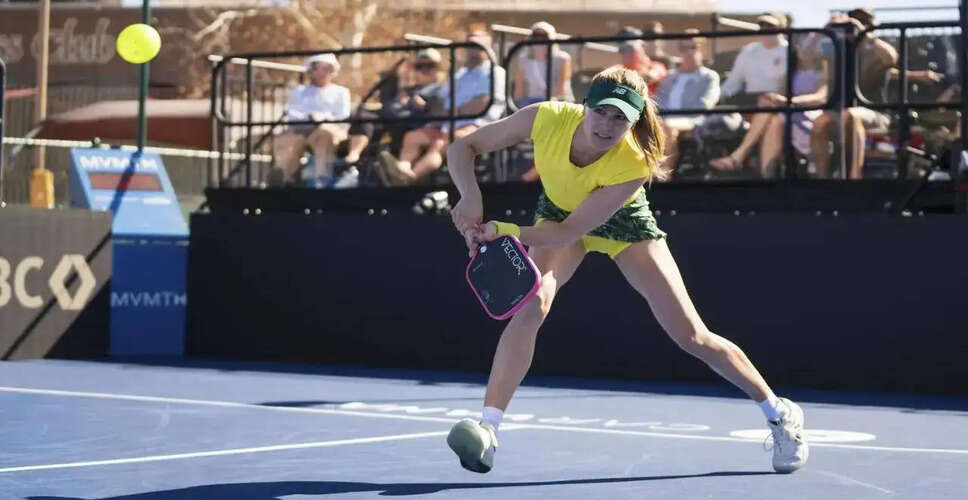

Pickleball's Global Surge
Pickleball has rapidly emerged as the world's fastest-growing sport, evolving from its origins on Bainbridge Island, Washington, in 1965 into a significant global health trend. Recent research conducted by Apple, Harvard Medical School, and Brigham and Women’s Hospital has provided compelling evidence regarding the sport's health benefits, involving over 250,000 participants and five years of data collection. The primary focus of this extensive study was to determine the actual health advantages of playing pickleball, and the results were overwhelmingly positive. Notably, in July 2023, pickleball surpassed tennis to become the leading racquet sport in terms of popularity.
This growth is not merely seasonal; while tennis participation tends to peak in summer and decline in winter, pickleball's popularity continues to rise consistently throughout the year, indicating that it has become a lifestyle choice rather than a fleeting trend. The data supports this assertion.
Health Benefits of Pickleball
Cardiovascular Advantages
The cardiovascular benefits of pickleball are significant. The sport's combination of gentle rallies, social interaction, and short bursts of activity enhances both physical fitness and mental health. Many individuals who previously avoided sports due to injury concerns are now returning to the courts, as pickleball is inclusive and accessible to all.
Demographic data reveals that players engaging in at least ten pickleball sessions have an average age of 51, compared to 45 for tennis players. However, pickleball is not solely a sport for seniors; the largest age demographic is now between 25 and 34, with the average player age decreasing from 38 in 2021 to 34.8 in 2025. The sport is attracting a younger audience rapidly. Additionally, pickleball boasts the most balanced gender representation among major racquet sports, with 57% male and 43% female participants, and it has become popular among individuals who previously did not engage in regular sports.
Accessibility is a key factor driving pickleball's popularity. Players cite the social atmosphere, ease of learning, and low barriers to entry as reasons for choosing it over traditional racquet sports, leading to more pickleball sessions compared to tennis.
Interestingly, while tennis players achieve higher peak heart rates (152 bpm on average compared to 143 bpm for pickleball), pickleball sessions tend to last longer, averaging 90 minutes compared to tennis's 81 minutes. This results in an additional nine minutes of activity per session, largely because the engaging nature of the game makes players forget they are exercising. Importantly, both sports allow participants to reach peak heart rates at about 70% of their estimated maximum, ensuring cardiovascular benefits regardless of the sport.
Mental Health Insights
Surprising Mental Health Benefits
One of the most remarkable findings from the study relates to mental health. The relaxed pace of pickleball, combined with constant social interaction and engaging rallies, appears to enhance the release of dopamine and serotonin in the brain. According to the PHQ-2 scale, which assesses potential depression, tennis players were 51.3% less likely to score 3 or above, while pickleball players showed an even more significant reduction at 60.1%. Both sports outperformed the general population, with pickleball leading the way.
This substantial difference can be attributed to three main factors: sustained aerobic exercise promotes the release of feel-good chemicals, the doubles format fosters social connections, and the strategic nature of the game keeps players mentally engaged, reducing the likelihood of negative thoughts. Essentially, participants are benefiting from a combination of therapy, cardiovascular exercise, and social interaction within a 90-minute session.
As a response to the growing interest, infrastructure is adapting. A 2025 analysis indicated that over 8,000 tennis courts in the U.S. have been converted to pickleball facilities to accommodate demand. Furthermore, dedicated tracking features for pickleball workouts have been introduced in fitness devices, highlighting the sport's increasing recognition as a valuable activity.
Pickleball's Expansion in India
The Impact of the Indian Pickleball League
The findings from the Apple study in the U.S. are now being mirrored in Indian cities, where pickleball has become one of the fastest-growing sports. With over 150,000 active players and more than 1,200 dedicated courts, the sport has seen a remarkable 150% increase in participation over the past two years. Cities like Ahmedabad, Mumbai, Bengaluru, Chennai, Gurgaon, and Delhi are experiencing similar health benefits, albeit on different courts.
A pivotal moment occurred in December 2025 with the launch of the inaugural Indian Pickleball League (IPBL) at the Indira Gandhi Sports Complex in New Delhi, which captured the public's attention and excitement. The final match showcased thrilling competition, with the Mumbai Smashers narrowly defeating the Hyderabad Royals to claim the first championship title.
This league has sparked a grassroots movement, revitalizing interest in the sport across various venues, including housing societies, clubs, public parks, and even repurposed tennis courts. The demand for pickleball has surged, leading to the establishment of a vibrant community of players.
Sanjivani Pattjoshi, a Supreme Court litigation lawyer who took up pickleball to enhance her stamina, emphasizes the sport's accessibility. “There’s a pickleball court available every 15 to 20 minutes, no matter which locality you’re living in. There are apps which allow you to book in advance; you can simply pay and play. The accessibility factor in terms of proximity to the game also sets it apart from sports like golf or tennis, which are often available only at elite clubs where you may need a membership or have to buy expensive racquets and gear,” she shared in a recent interview.
The statistics speak volumes: as of June 2026, approximately 50 million people have played pickleball, with around 23.4 million actively participating. These figures indicate that the sport is not only in its growth phase but also possesses the potential for long-term sustainability. With increasing interest among young people in India aspiring to excel in pickleball, the sport is set for a promising future.