
The Rapid Rise of Pickleball: Insights from Former Tennis Star Deniz Khazan

Pickleball's Growth Compared to Tennis
Deniz Khazan, a professional pickleball player and former top-ranked tennis player from Israel, has observed significant advancements in pickleball, although she believes it still lags behind tennis in terms of overall quality and depth. Khazan, who previously secured an International Tennis Federation title before transitioning to pickleball, noted, “The level in pickleball has improved dramatically in a very short time. You can see it in the athleticism, the strategy, and the construction of points. However, it has not yet reached the level of the tennis tour.”
She emphasized that the depth of competition is a major distinction. “In tennis, especially at the elite levels, every match feels like a fierce contest,” Khazan explained. “The depth is remarkable because players have been nurtured through structured systems for many years.”
Khazan added, “In pickleball, that framework is still under development. While there are some exceptionally strong players, the overall consistency in depth is not yet there.” Despite this disparity, she is optimistic about the sport's rapid evolution as more elite athletes enter the scene. “Currently, we are witnessing an influx of high-level athletes into pickleball, which is quickly elevating the sport's standards,” she remarked. “The progress made in just a few years is substantial.”
She also pointed out that the growing comparisons between pickleball and tennis reflect the sport's upward trajectory. “A few years back, people didn’t even consider comparing the two seriously,” Khazan stated. “Now, they are, which speaks volumes about pickleball's future.” Nevertheless, she maintains that tennis continues to set the standard. “Tennis remains the benchmark for overall quality and depth,” she concluded.
Popularity of Pickleball
Pickleball's appeal lies in its simplicity, accessibility, and social nature, making it a fun way to stay active. The sport has gained immense popularity since the pandemic, particularly in the United States, where the number of players has surged by 263.5% since 2014, with an annual growth rate of 85.7% since the onset of the pandemic.
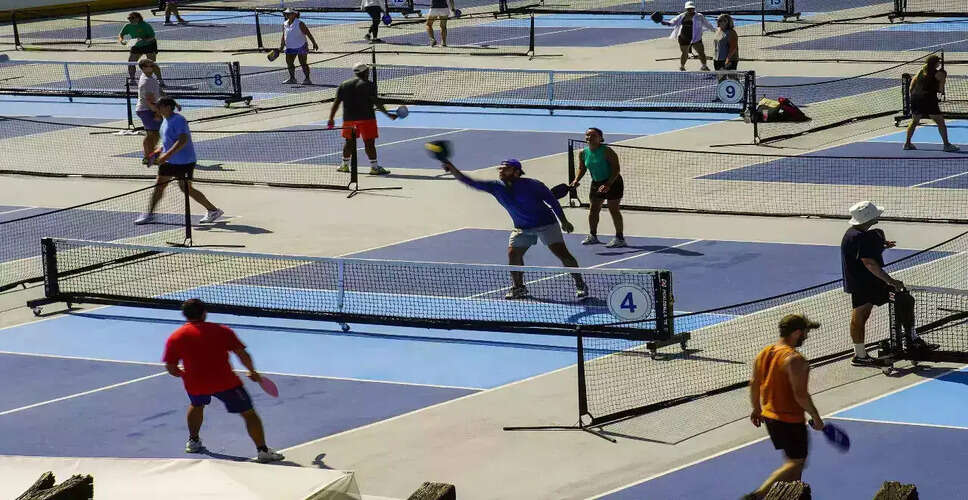
This surge in interest has led to a significant increase in demand for pickleball courts, prompting many cities to convert existing tennis courts into pickleball facilities, as one tennis court can accommodate nearly three pickleball courts. New facilities are also being constructed, resulting in a sixfold increase in public pickleball courts across the 100 largest U.S. cities since 2017. However, cities are still struggling to keep up with the growing demand.
A research report from Market US indicates that the global number of pickleball courts has expanded from approximately 20,000 in 2020 to an estimated 100,000 by 2025. States such as Florida, California, and Texas are at the forefront of developing pickleball infrastructure, while even smaller states like Hawaii and Oklahoma are recognizing the sport's potential and investing in new facilities. The U.S. pickleball industry will require $855 million to establish 24,500 new courts over the next 5 to 7 years.