
The Rapid Rise of Pickleball in India: A Nationwide Phenomenon
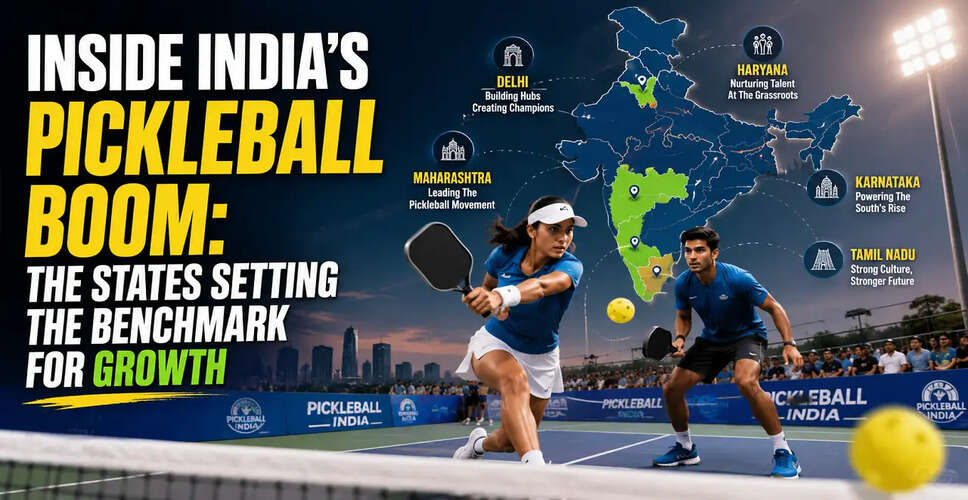

Pickleball's Expanding Popularity Across India
In India, the popularity of pickleball is no longer confined to just a few urban areas. The sport is witnessing a significant surge in participation across the nation. From the corporate and community engagement in Delhi to the vibrant club scene in Mumbai, pickleball is making its mark. The Indian Pickleball Association (IPA) reports over 50,000 players and more than 100 ranking tournaments, with representation in 27 states. Certain regions are leading the way in establishing sustainable ecosystems for the sport.
Maharashtra stands out as a key market for pickleball in India. Major competitions are frequently held in cities like Mumbai and Pune, with clubs such as the Otters Club and Khar Gymkhana playing a pivotal role in promoting the sport among both casual and competitive players. The Maharashtra Pickleball Association has developed a model that includes district units, schools, academies, and inter-district tournaments, fostering grassroots involvement and high-level competition. The state also maintains a year-round schedule of events through various clubs and leagues.
Karnataka's infrastructure for pickleball is particularly impressive, with Bengaluru boasting over 400 courts and more than 100 additional courts throughout the state. The accessibility of courts in Bengaluru allows players to find facilities conveniently located near their homes.
Gujarat, home to the IPA headquarters in Ahmedabad, is another significant hub for pickleball. The state hosts numerous IPA-sanctioned tournaments and is home to several affiliated academies and clubs, including the Dinkers Pickleball Academy and Club. Gujarat excels in fostering community engagement through its pickleball events, with smaller towns also embracing the sport, indicating that its growth is not limited to major cities.
The Delhi NCR region has emerged as one of the most active areas for pickleball, driven by corporate interest, private sports clubs, and commercial venues. Community-driven groups are also thriving in this region.
Unlike many traditional sports, pickleball aligns well with the lifestyles of urban professionals in Delhi NCR. The shorter matches, smaller courts, and doubles format make it an ideal choice for after-work recreation.
Other states are quickly catching up as well. In Telangana, Hyderabad is experiencing a notable increase in clubs and community tournaments. Tamil Nadu is also witnessing significant growth outside of Chennai, with Coimbatore featuring over 100 courts and substantial corporate involvement in tournaments.
The success of pickleball in India follows a clear pattern. First, infrastructure is crucial; Karnataka's experience demonstrates that increasing the number of courts enhances participation and accessibility for the public. Second, clubs and communities are essential for growth, as seen in Maharashtra and Gujarat, which have heavily invested in academies and social leagues rather than relying solely on high-profile tournaments. Third, community engagement is more vital than competition, as evidenced by developments in Delhi NCR, Tamil Nadu, and Northeastern states like Nagaland, where women's groups and family events are on the rise.
Lastly, growth is not limited to metropolitan areas. Cities like Coimbatore in Tamil Nadu, Anand in Gujarat, and Indore in Madhya Pradesh show that strong local communities can thrive well beyond India's largest cities. The IPA is working to expand its reach across all 27 affiliated states, with the challenge of replicating successful models nationwide. The future of pickleball in India hinges on creating more courts, clubs, and opportunities for individuals of all ages to engage with the sport.