
The Legacy of Dilip Doshi: A Spin Bowler's Journey in Indian Cricket
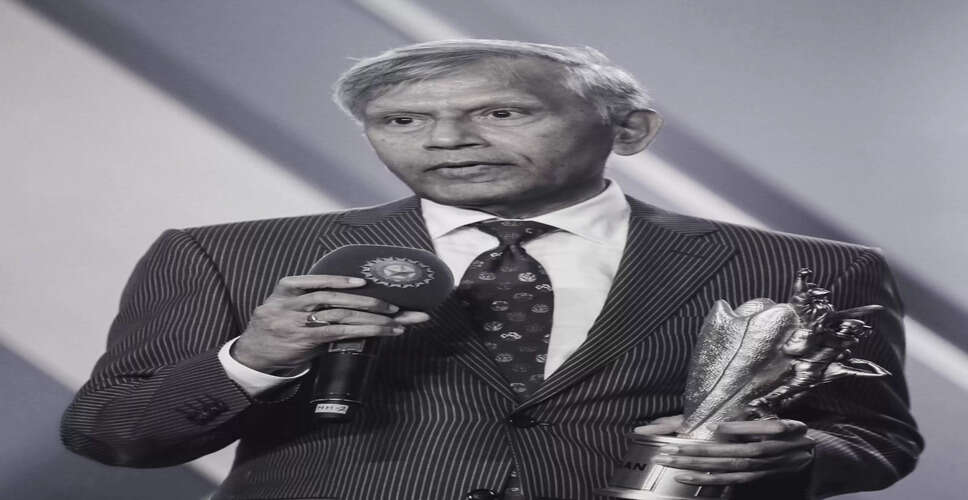
Dilip Doshi: A Unique Spin Bowling Talent
In the late 1960s, Dilip Doshi emerged as a formidable bowler in the Indian university cricket scene. His teammate from Calcutta University, the late Gopal Bose, once challenged him, asking, 'You can dismiss university players, but can you get Garry Sobers out?'
With a calm demeanor, Doshi confidently replied, 'Of course, I can.'
Indeed, he managed to dismiss Sobers during a World XI match a few years later and even played alongside the West Indies legend in Nottinghamshire County for several seasons.
When Doshi's autobiography, 'Spin Punch,' was released in 1991, it was Sir Gary Sobers who penned the foreword, praising Doshi's extensive knowledge of cricket and his qualifications to discuss the nuances of spin bowling.
This heartfelt acknowledgment from one of cricket's greatest players raises questions about why the Board of Control for Cricket in India (BCCI) never sought Doshi's expertise.
A Career Marked by Resilience
Doshi's determination was evident as he made his Test debut at the age of 32, overcoming the competition from Padmakar Shivalkar and Rajinder Goel, and went on to take over 100 Test wickets, primarily on flat pitches.
His notable performance came during the 1980-81 tour of Australia, where he claimed 11 wickets across two matches in challenging conditions, dismissing prominent players like Greg Chappell and Rod Marsh.
While his bowling style was not as fluid as Bishan Singh Bedi's or as precise as Shivalkar's, Doshi found a balance, effectively using flight and loop to create uncertainty for batsmen.
Known affectionately as 'Dilip-da' in Bengal cricket, he valued consistency, whether in his bowling or his long-standing admiration for the Rolling Stones, maintaining a friendship with Mick Jagger for nearly five decades.
Challenges and Controversies
Despite his bowling prowess, Doshi struggled with batting and fielding, which made him vulnerable to being dropped during dips in form.
During the 1982-83 tour of Pakistan, he faced relentless sledging from Javed Miandad, who would mockingly ask for his room number, claiming he would hit a six off him.
Doshi's final Test match in 1983 against Pakistan ended in a draw, where he took the wicket of Wasim Raja amidst rain interruptions.
In his autobiography, he candidly recounted the tense atmosphere surrounding his recall to the team, feeling unwelcome and pressured to perform.
He described a conversation with Bedi, who was managing the team, where he felt undue pressure to guarantee wickets, questioning the fairness of such expectations.
A Lasting Impact on Indian Cricket
Although Doshi played a few more seasons for Bengal and Saurashtra before moving to England, he believed he had more to offer to Indian cricket.
His loyalty and contributions during his four years in the national team were significant, complementing stars like Kapil Dev.
Doshi's journey reflects the complexities of a cricketer's life, marked by both achievements and challenges, leaving a legacy that continues to inspire.