
The Importance of Court Etiquette in the Growing Pickleball Community

Understanding Pickleball Court Etiquette
As pickleball gains popularity in clubs, parks, and private venues globally, discussions about player conduct and court etiquette are becoming crucial within this expanding community. With a significant increase in participation and busier courts, both players and organizers are focusing more on fair access, rotation systems, and adherence to local rules to enhance the experience for everyone involved.
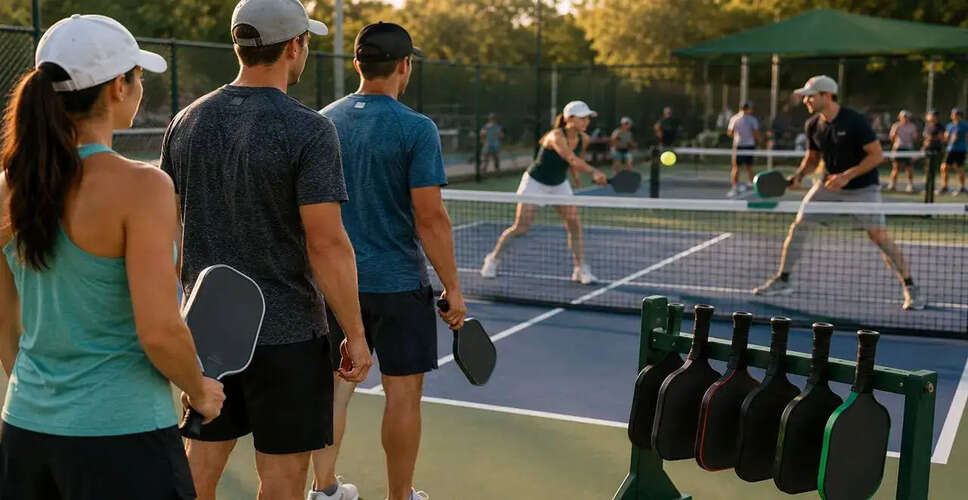
Unlike many traditional sports that operate on fixed bookings or teams, pickleball's open-play culture often depends on shared court systems, necessitating cooperation and patience among players. A common method employed in community facilities is the paddle rack or paddle saddle format, where players queue their paddles while waiting for their turn. After each match, players rotate off, allowing the next group to enter the court.
In crowded venues, many facilities adopt a 'four on, four off' approach instead of letting winning teams remain on the court, which helps minimize long wait times and ensures equitable opportunities for all participants. Challenge courts introduce a more competitive vibe, allowing winning teams to stay on while facing new challengers, although many venues impose unofficial limits of two or three consecutive games to prevent monopolization of the court.
As the sport evolves, seasoned players emphasize the importance of respecting these informal systems to uphold pickleball's community-oriented culture. Structured formats like ladder leagues and timed rotation events are becoming increasingly prevalent, especially in organized tournaments and club competitions, where player movement and rotations are often managed through schedules or rankings.
The rapid expansion of pickleball has occasionally led to tensions at busy public venues, particularly when players disregard rotation systems or skip waiting lines. Many experienced community organizers advocate for polite communication over confrontation in such instances, prioritizing education and fairness to resolve conflicts. This broader conversation highlights how pickleball's identity is evolving alongside its remarkable growth.
Once primarily seen as a recreational activity, the sport is now navigating the balance between competitive aspirations and the social culture that contributed to its rise. As more players take to the courts worldwide, maintaining respect for shared rules and community etiquette is increasingly recognized as vital to preserving the welcoming environment that has characterized pickleball's swift global ascent.