
The Fascinating Journey of the FIFA World Cup Trophy

The Anticipation of the Final
This Sunday, either Spain or Argentina will claim the prestigious FIFA World Cup trophy, concluding an unforgettable tournament. While the trophy is the ultimate accolade in football, its intriguing history is less known. The current trophy was introduced after the 1970 World Cup, crafted by Italian sculptor Silvio Gazzaniga.
The Need for a New Trophy
Why FIFA Needed A New Version Of The Trophy?
Prior to the current trophy, FIFA utilized the original Jules Rimet Trophy from 1930 until 1970. The then FIFA President, Jules Rimet, established a rule allowing the first team to win three World Cups to retain the trophy permanently. Consequently, Brazil, after winning their third title in 1970, was permitted to keep the trophy in Rio de Janeiro.
Crafting the Iconic Design
Finding The Perfect Design
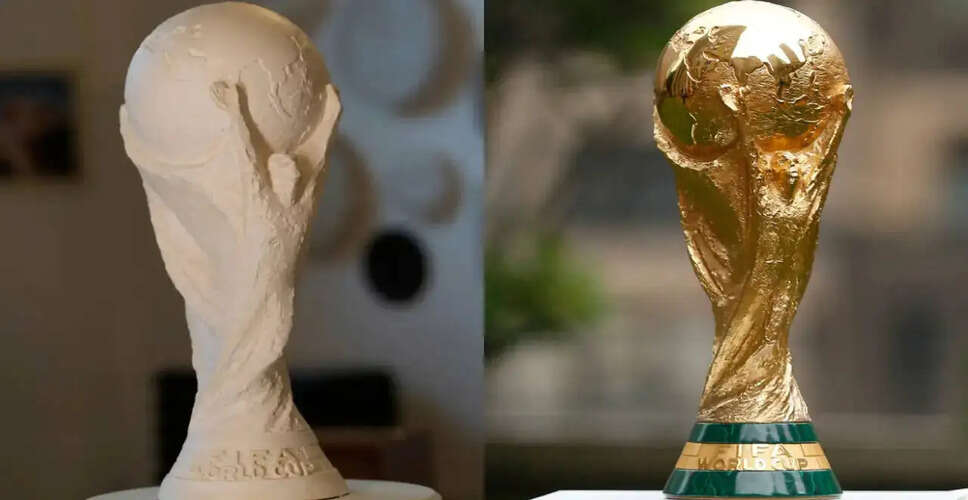
The remarkable design was the result of months of dedicated effort. Silvio Gazzaniga explored numerous concepts in his Milan studio before finalizing the design that would become the FIFA World Cup Trophy.
"He created numerous sketches and eventually developed the concept of two spirals resembling DNA, symbolizing upward movement," recalled Giorgio Gazzaniga, reflecting on his father's creative process. The final sculpture features a dynamic spiral that seems to elevate the Earth into the heavens.Symbolism Beyond Victory
More Than A Trophy
For Gazzaniga, the trophy represented more than just a symbol of victory. His son noted that every curve and texture holds deep significance. "The world is above all," Giorgio explained. The raised arms of the trophy signify not only the act of lifting a prize but also embody victory, joy, and the shared emotions of players and fans alike. Over 50 artists participated in FIFA's design competition, but Gazzaniga's creation was ultimately selected. The trophy, crafted from 18-carat gold and featuring a green malachite base, stands at 36.5 cm (14.4 inches) tall. Gazzaniga's family has preserved his legacy, maintaining his office near Milan, where visitors can view the original sketches, wax casts, and the prototype submitted to FIFA over five decades ago.
Argentina has the chance to make history by becoming the second team, alongside Germany and Italy, to win the tournament four times. However, teams are now required to return the original trophy to FIFA after their victory, receiving an official replica instead.