
The Evolution of Music: Balancing Tradition and Technology
Transforming Musical Landscapes
Music has always been a reflection of identity, culture, and emotion, but it is now experiencing a significant transformation that transcends the conventional discussions of Indian versus Western instruments. The rise of artificial intelligence (AI) in music production is reshaping the landscape of artistic expression.
Shifting Preferences: Indian vs Western Instruments
Recently, there has been a noticeable trend among younger audiences gravitating towards Western instruments like the guitar, piano, and electronic music tools. These instruments are often seen as more user-friendly and have become integral to contemporary music education and entertainment.
However, this shift does not signify the decline of traditional Indian instruments. Bulumoni Goswami, a music educator from Guwahati, suggests that the reluctance to engage with instruments such as the sitar or tanpura arises from the belief that they require extensive dedication and time to master.
He remarked, “Many young learners perceive Indian classical music as demanding a commitment that feels overwhelming, leading them to choose instruments that promise quicker satisfaction.”
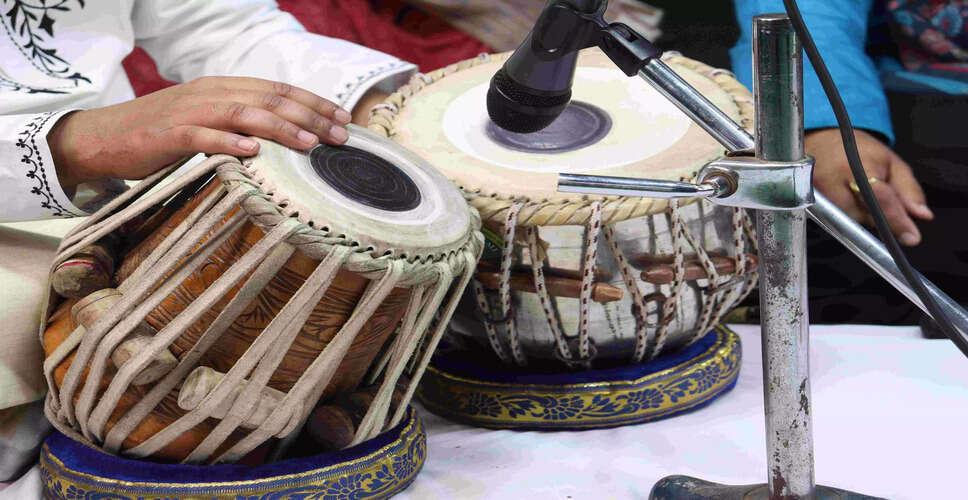
Lankeshwar Kalita, who operates a music shop in the city, concurs, noting that while older musicians still purchase Indian instruments, younger customers rarely buy sitars or tanpuras. He mentioned, “The tabla remains in demand, and there’s a resurgence of interest in folk instruments like the ektara and dotara, which are deeply connected to regional heritage.”
Kalita also highlighted that the presence of Indian instruments in popular culture—through films, music videos, and social media—often stimulates sales and rekindles public interest.
AI's Growing Role in Music Creation
Technology has historically supported music production, from digital recording to sound engineering tools. Axl Hazarika, a software engineer and musician, views these developments positively, stating, “I see this as a fusion rather than a replacement. India and the West influence each other — we adopt their structures, while they incorporate our rhythms and traditional sounds like the sitar.”
As the discussion around instrument preferences continues, a more urgent issue is surfacing: the increasing integration of AI in music creation. The advent of AI has sparked new debates about creativity, originality, and the role of human artists.
Hazarika points out that AI's capabilities have expanded significantly, allowing it to compose melodies, generate beats, and even imitate vocal styles, producing entire songs with minimal human involvement.
This evolution raises concerns for some. Ruchil Borkotoky, a local music enthusiast, fears that AI-generated music could overshadow human creativity. He expressed, “In contemporary music, the only human aspect is often the singer’s voice — and even that is frequently auto-tuned. Everything else, from beats to harmonies, is generated by computers.”
Borkotoky believes the focus should shift from Indian versus Western music to preserving the human essence in music creation. “It appears that musicians now need coding skills more than proficiency in their instruments. When algorithms take over music-making, what happens to emotion, imperfection, and spontaneity?” he questioned.
Influences on Musical Trends
Despite the concerns surrounding AI, both Goswami and Kalita agree that musical preferences are significantly shaped by cultural trends, government initiatives, and digital media.
Kalita noted, “When an instrument is showcased in a popular film or viral video, interest surges, and people want to learn it.” He also mentioned that government support for traditional music through scholarships and cultural events plays a crucial role in rekindling interest.
He emphasized that sales trends are dynamic. “What is popular today may not be tomorrow, and vice versa. Instruments experience cycles of popularity based on societal celebrations.”
AI as a Tool, Not a Replacement
Looking forward, experts agree that AI is here to stay, but its role must be carefully defined. While it can be beneficial in commercial applications like advertisements or background scores, there is a strong consensus that it should not replace human musicians in creative endeavors.
Hazarika stated, “AI can assist, but it cannot replicate the soul of a song. Music conveys deep human emotions like pain, joy, and longing — something a machine cannot genuinely experience.”
Borkotoky added, “AI is merely a tool. It should not become the artist.”
As music continues to evolve, the challenge lies in finding a balance between tradition, modernity, and technology. Whether one plays a folk ektara or creates beats on a laptop, the essence of music — its power to resonate with people — must remain intact.
In a rapidly advancing technological landscape, safeguarding the essence of music is crucial. At its core, music transcends mere sound; it embodies stories, emotions, and human connections. No machine, regardless of its intelligence, can truly replicate that.