
Rising Costs of Pickleball Equipment Due to Iran Conflict
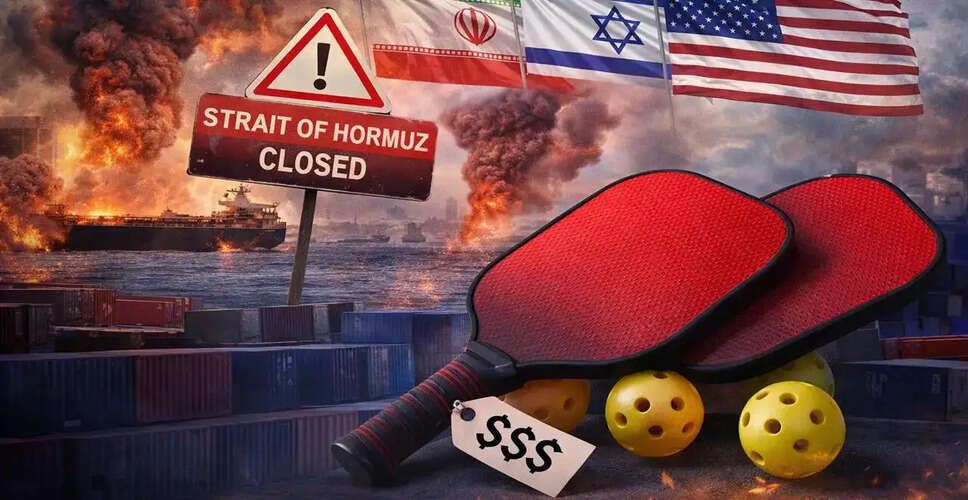
Impact of Oil Prices on Pickleball Equipment
Israel-Iran War: Devi Wei, a producer of pickleball paddles, has issued a warning to American consumers about impending price hikes. During a trade exhibition in Beijing, he indicated that U.S. buyers will soon feel the financial strain as prices increase across various products. This surge is attributed to escalating oil prices, a consequence of the ongoing conflict in Iran and the resulting disruptions in the Strait of Hormuz. Wei, who leads Huijin Trade, has already raised the prices of paddles and pickleballs by as much as 20%, but he cautioned that this might not be the final adjustment. “Americans will have to pay more,” he stated in an interview with a media outlet at the China International Exhibition Center. “I might have to go even higher,” he warned, suggesting that prices could potentially double if the situation in Iran does not improve soon.
Polypropylene, a petroleum-derived plastic essential for manufacturing pickleball gear, is primarily sourced from the Middle East. Consequently, interruptions in shipments through the Strait of Hormuz have sparked concerns among manufacturers regarding further disruptions in the supply chain. The effects are being felt across various sectors, and U.S. consumers may also experience the repercussions. James Li, a textile exporter, mentioned that he has already modified his pricing strategy. “We will definitely pass on the extra cost to our customers,” he remarked. “In our industry, these materials are almost irreplaceable. If oil prices continue to rise, we will struggle to cope,” he added.
Cameron Johnson, a senior partner at Tidalwave Solutions, a supply chain consultancy based in Shanghai, warned that if the situation persists into May, it could lead to significant challenges across industries. “There is no clarity on when new supplies will arrive,” he noted. Meanwhile, the increased cost of fuel means less disposable income for consumers like Wei, who remarked, “Ordinary people are getting squeezed the most from the high oil price. Their spending power just isn’t what it used to be,” he concluded.