
Revival of Taramakant Tea Estate: A New Dawn for Keonjhar's Economy?
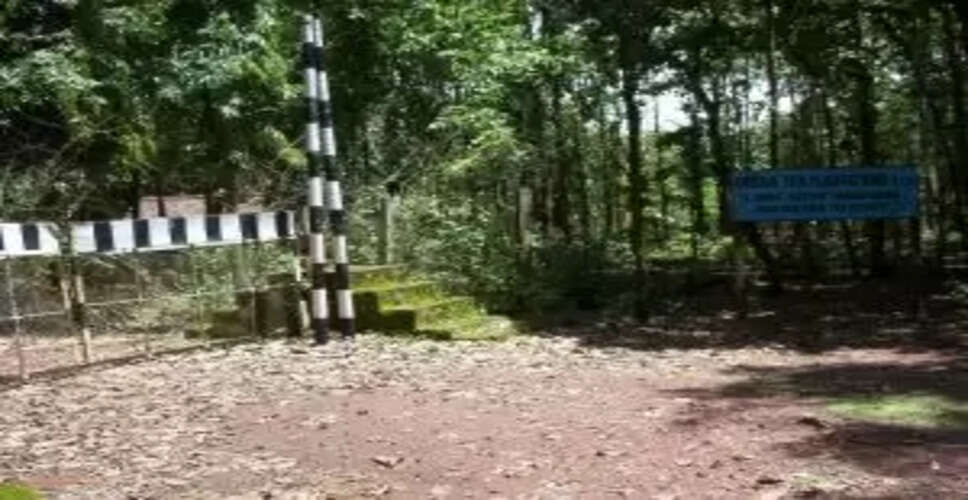
Taramakant Tea Estate Set for Revival
Keonjhar: The Taramakant tea estate, located in the Banspal block of Keonjhar district, is on the verge of reopening after being inactive for 21 years.
This initiative comes as a result of Chief Minister Mohan Charan Majhi's commitment to revitalize the estate shortly after taking office.
The revival plans gained momentum following a directive from the Directorate of Soil Conservation and Watershed Management, which has crafted a comprehensive project report (DPR) for the Chief Minister's review.
Officials anticipate that the reopening of the estate will not only create numerous job opportunities but also attract tourists.
Nestled at an altitude of 1,800 to 2,200 feet, the Taramakant region is recognized as an excellent site for tea cultivation.
The area benefits from the Punyatoya river and its three main distributaries—Ranima nullah, Bainga nullah, and Jalpa nullah—along with various natural water sources.
With an annual rainfall ranging from 900 mm to 1,050 mm and winter temperatures dropping to 2 to 3 degrees Celsius, the climate is ideal for tea growth.
Originally established in 1982, the tea plantation spanned 896.54 hectares and was a joint venture between the state government and Kolkata's Basant Kumar Dubey.
At its height, the estate successfully exported tea both domestically and internationally, generating significant profits and employing a workforce of 12 office staff, 29 technical workers, and 149 regular laborers, while indirectly supporting nearly 1,000 jobs.
However, by 2002, the estate's operations began to decline, leading to its closure in 2003 and complete shutdown by 2004, primarily due to mismanagement and lack of governmental support.
In the aftermath, valuable equipment and furniture were stolen due to inadequate security measures.
The closure devastated the livelihoods of many workers from Taramakant and surrounding villages, including Kushkala, Adal, Kalanda, and Jatra, who relied on the estate.
The factory, machinery, staff quarters, a Belgian-glass guesthouse, and the tea garden have all fallen into disrepair.
Despite over 40% of the tea bushes still surviving, the estate is now largely overtaken by wild vegetation.
The current BJP administration has taken steps towards its revival.
In a letter dated March 24, 2025, the director (technical) of the Directorate of Soil Conservation and Watershed Development proposed that the estate could be restored using solar or wind energy.
While the report did not specify the funding needed, it included several proposals that were sent to the Chief Minister's office.
"If the state government undertakes this project, it could provide job opportunities for tribal communities in Bansapal, including Taramakant," stated Bansapal block chairman Manas Dehury.