
Reflections on Mani Kaul: A Journey Through Cinema and Silence
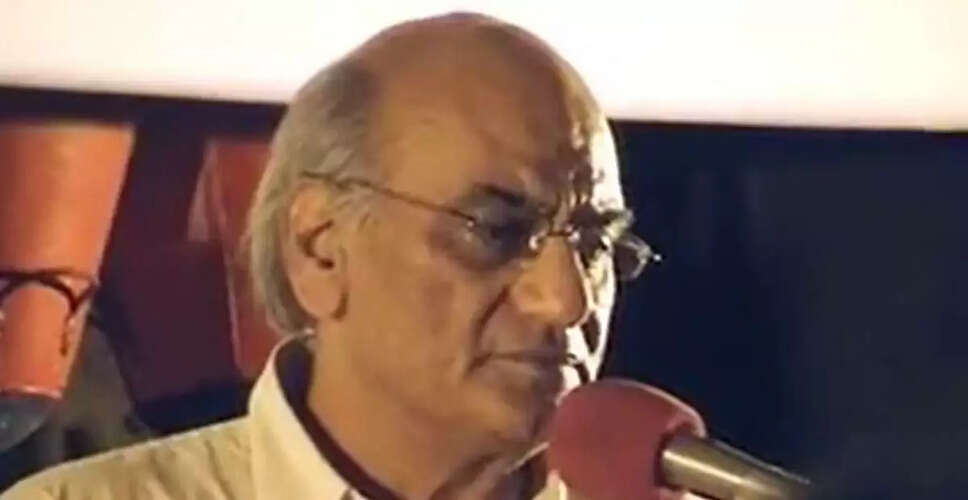
A Personal Encounter with Mani Kaul
In the summer of 1981, I first learned about Mani Kaul while completing my undergraduate degree in English Literature. At that time, he was in Madras working on a print of Satah se Uttha Admi at Prasad Labs, and an interview with him was published in the Hindu.
During the interview, Mani remarked that when Palghat Mani Iyer plays the mrdangam, he constructs the silences between the notes. This profound insight inspired me to apply to the Film Institute, known as FTII, as I sought an environment that encouraged such thinking. Convincing my parents to support this decision was a challenge in itself.
I had the opportunity to meet Mani during my first year at the Institute when he visited. I approached him to share my aspirations, and he chuckled, suggesting that my true desire was to join the Institute rather than meet him. He then took a group of us out for lunch, reminiscing about how Ritwik Ghatak would theatrically request the bill.
I expressed my interest in making a film about the musician MD Ramanathan, who is celebrated for his unique style in Carnatic music. Mani immediately grasped my vision. In a YouTube clip, he articulates the concept of the Self in a manner that resonated deeply with me. Growing up immersed in Carnatic music, Mani offered me a fresh perspective that became my gateway into cinema at the age of 20.
My next encounter with Mani was during a lecture at the National Film Archives’ summer film appreciation course. He arrived with copies of Robert Bresson’s Notes on Cinematography and Gilles Deleuze’s Cinema 1 & 2, which quickly circulated among attendees.
As I entered the packed classroom through the projection chamber, I overheard Mani discussing Bresson's portrayal of violence in cinema. He posed the question of whether violence needs to be explicitly shown to be impactful. I chimed in, suggesting that even the sound of a door slamming could convey violence.
Mani turned towards me, surprised, and his signature grin appeared. Reflecting on that moment, I recall the heavy spring door connecting the projection chamber to the classroom. I had closed it carefully to avoid disruption, and its weight suggested it could bang shut, which likely influenced my response. I was as astonished as he was that I had an answer.
This attentive listening and the ability to ask the right questions were hallmarks of Mani's approach, often revealing insights that one was unaware of possessing.
Deleuze discusses this idea in his early work, Bergsonism, where he states that a speculative problem is resolved once it is properly articulated. I only discovered this line around 2015-16 while teaching the text, and it immediately reminded me of Mani.
Whether Mani had read that book is uncertain, but it highlights that cognition often operates unconsciously, and both Bergson and Deleuze recognized intuition as a valid cognitive method.
In that classroom, I became more focused and receptive to Mani's teachings. He provided coherence to my thoughts, fostering a trust in both my unconscious and the collective unconscious. I continue to watch student films with this perspective, and sometimes others view my work with similar attentiveness.
This is the essence of film pedagogy and criticism: to nurture emerging talent without reductively analyzing the filmmaker. I still see myself reflected in the gleam of Mani's eye, which, while affirming, never sought to possess or restrict, but rather encouraged growth.
The concept of svabhav, or svabhavam in Tamil, meaning immanence, was significant to him. I recall him humorously noting that adding the 'um' sound to Sanskrit leads to Tamil.
Another vivid memory is from Bombay, after I completed my course and returned to Madras. I learned that Mani had visited the Institute, watched recent diploma films, and praised mine. He later referred to Gulmohur Kaal as an 'event of the year' in a Times of India poll, alongside Ghatak’s Titash Ekti Nadir Naam, which was rediscovered in 1985.
While I mention this in my CV, what truly moved me was his organization of screenings for my film in Bombay. He invited me to one and spoke extensively to initiate the post-screening discussion. I absorbed his words as if he were discussing someone else or an abstract idea of cinema.
I struggle to recall his exact words, but I remember that he spoke to a profound part of me, awakening something that has persisted through challenging times. Even when suppressed, it has always managed to resurface.
In a twist of fate, I remember a junior from FTII asking a question after Mani's lecture, which disrupted the mood. It visibly affected Mani, leading to a sharp response and a heated exchange. I remained silent, protecting my feelings.
Afterward, I approached the junior to discuss the situation, but he was unresponsive. I then sought out Mani and found him in the lift. I expressed how I understood every word he said, to which he replied, 'You must be the only one,' and added, 'Now get in, I’ve been holding the lift open long enough already.'
Despite sharing a birthday in 1944, Mani was no martyr. He often came close to it but possessed a sense of humor and a zest for life that prevented him from remaining one. I later assisted him on his 1989 film Before My Eyes, and our conversations continued as long as he was able, but those stories are for another time.
Soudhamini is a filmmaker (Thalarndhadhu – It Rested, 1989; Pitru Chayya, 1991; Saga of a Poet, 2000; Meditations on the Tiger, 2006; Vac or What the Lightning Said, 2009; The Temple Nagaswaram, 2014; Nadhi Smriti – Memories of a River, 2017, Ode to Uśas: This time let’s get the Dawn right, 2023). She has also taught film and immersive media in India, USA and Australia. She is currently engaged in converting her doctoral dissertation into a book titled VR and the Virtual Self: Ātma or Avatar (Edinburgh University Press).