
Pothre: A Village Transformed by Lemon Cultivation
Introduction to Pothre's Transformation
Pothre, a small village in Maharashtra's Solapur district, once struggled with severe water shortages, crop failures, and poverty. The community faced dire circumstances due to inadequate rainfall, challenging soil conditions, and ineffective irrigation methods. Traditional farming practices yielded little success, leaving farmers in debt and despair. The financial crisis was so severe that banks refused to grant loans, and even marriage prospects were affected. However, over the last twenty years, a remarkable transformation has taken place in Pothre, largely driven by the humble lemon.
The Birth of Lemon Orchards
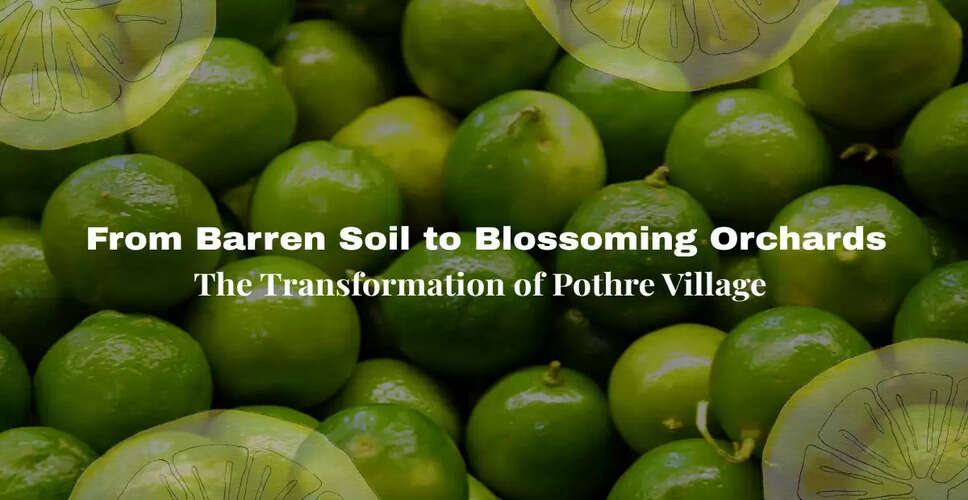
The turning point occurred in the 1980s when a villager decided to plant a lemon orchard. This bold move proved successful, as lemons thrived in the dry, black soil and required minimal watering compared to water-intensive crops like sugarcane. Inspired by this initial success, other villagers began to adopt lemon cultivation, turning a solitary experiment into a widespread agricultural movement.
Lemon Farming: The Economic Backbone
Today, lemon farming dominates Pothre's agricultural landscape, covering approximately 750 acres, which is more than one-third of the village's arable land. Most farmers cultivate lemons on plots ranging from one to four acres, with each acre yielding up to three tonnes of lemons per harvest. Profits can reach between ₹1.5 to ₹2 lakh per acre during peak seasons. Each morning, trucks transport lemons from the orchards to major cities like Mumbai, Pune, Jaipur, and Thane, marking a significant economic revival for the village.
Scientific Advancements in Lemon Cultivation
Farmers in Pothre have adopted two high-yield lemon varieties developed by the Mahatma Phule Krishi Vidyapeeth (MPKV) in Rahuri: Phule Sharbati and Sai Sharbati. These varieties are renowned for their strong aroma, soft rinds, and resistance to common diseases. The introduction of these improved lemons has led to enhanced productivity and consistent quality, making Pothre's lemons highly sought after in the market.
Impact on Surrounding Communities
The success of Pothre has had a ripple effect on neighboring villages such as Kamone, Ravgaon, and Nilaj, where farmers have begun to explore lemon cultivation, often collaborating with experts from Pothre. As incomes have risen, residents have invested in better housing, motorcycles, and education for their children, leading to noticeable improvements in their quality of life and self-esteem.
Social Changes Driven by Economic Growth
The economic revival has also spurred social change. In 2022, Pothre's Gram Panchayat made a groundbreaking decision to eliminate discrimination against widows, marking a significant step in rural Maharashtra. This initiative highlights how economic empowerment can drive social reforms and progressive ideas in traditionally conservative communities.
A Model of Resilience and Innovation
Pothre's journey from hardship to prosperity exemplifies sustainable rural development. By choosing a crop suited to its environment and fostering community cooperation, this once-struggling village has rebuilt itself, demonstrating that thoughtful agricultural choices can yield far-reaching benefits.