
Pickleball's Rapid Rise in China: A New Era for Racquet Sports

The Surge of Pickleball in China
Pickleball, recognized as the fastest-growing racquet sport globally, has gained significant traction in the United States and Asia, and is now rapidly establishing itself in China, a nation known for its vibrant racquet sports scene. What started as a casual pastime is transforming into a well-supported sporting framework, fueled by strategic policies, institutional initiatives, and a surge in participation.
The growth of pickleball is evident in the statistics. The China Pickleball Circuit, initiated by the Chinese Tennis Association (CTA) in March 2024, kicked off with approximately 80 events. By 2026, the annual schedule is set to expand to over 600 events. Alongside this increase in competitions, the officiating framework has also seen substantial growth, with China training more than 2,300 pickleball referees in 2025, nearly six times the number from the previous year.
According to Sun Wenbing, the deputy secretary-general of the CTA, the sport is evolving rapidly. She stated, “Pickleball is no longer just a niche sport for a select few. It is emerging as a popular choice for mass fitness and a new focal point for sports consumption.”
Government Support Fuels Growth
The expansion of pickleball is not occurring in a vacuum. In 2025, China’s State Council released a policy document aimed at promoting the growth of emerging sports, providing a significant administrative boost for new sporting activities. Additionally, the General Administration of Sport has included pickleball as an official event in the upcoming second National Fitness Games scheduled for April 2026. These initiatives reflect a concerted effort to incorporate the sport into the national fitness agenda rather than allowing it to develop informally.
Why Pickleball Resonates with Chinese Culture
Part of the reason for pickleball's swift rise in popularity is its alignment with China's existing sports culture. In 2023, Hebi in Henan Province was officially recognized as "China's City of Pickleball." The nation has a strong connection with table tennis and badminton, both of which share essential characteristics such as quick reflexes, compact playing areas, and paddle mechanics. Sports commentator Zhang Bin noted this natural fit, stating, “The sport’s quick reflexes and compact court, along with its similarities to table tennis and badminton, make it easier for players familiar with those sports to transition.”
For many casual players, the appeal is straightforward. Yin Hongrun, a professional from Chengdu, shared her perspective: “I used to play badminton, but pickleball is easier to pick up. You can grasp the basics quickly, and the rallies are genuinely enjoyable.”
Infrastructure Development Lagging
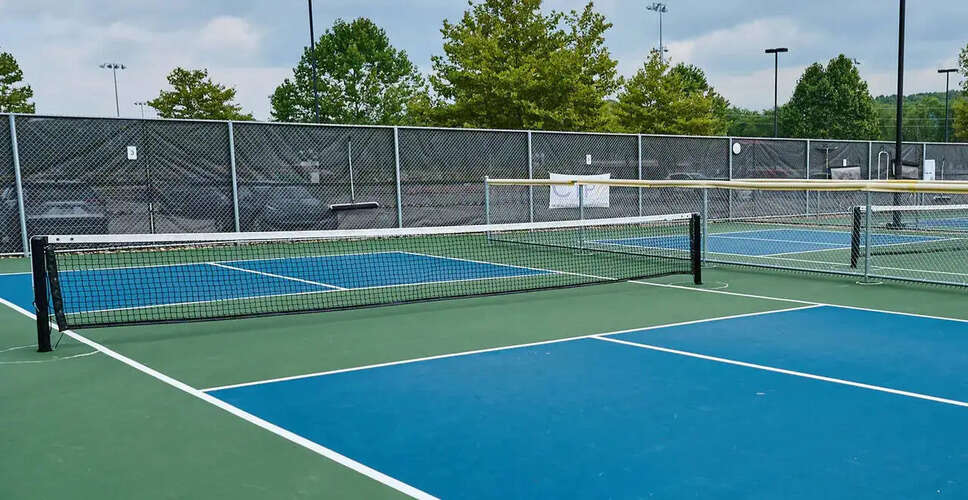
Despite the rapid increase in participation and institutional backing, the infrastructure for pickleball is still in its infancy. Dedicated courts for pickleball are scarce in most Chinese cities, with many matches being held on converted tennis or badminton courts.
Nonetheless, the momentum is undeniable. The sport's growth from around 80 tournaments to an anticipated 600 in just two years, combined with government support and high-profile exhibition matches featuring international stars like Andre Agassi and Steffi Graf, indicates a promising developmental path. China is not merely discovering pickleball; it is actively building the framework to support it.