
Navigating the Challenges of Middle Shots in Pickleball Doubles
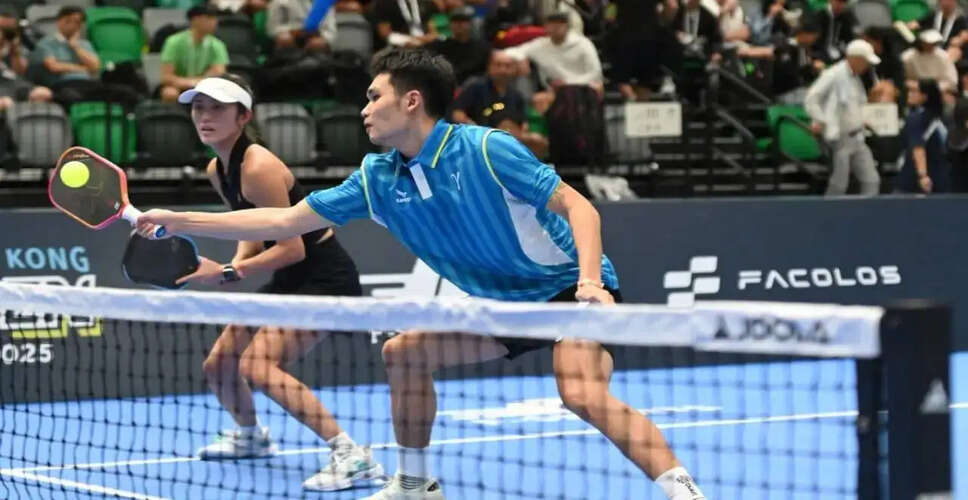

Understanding the Dynamics of Middle Shots
In the fast-paced environment of a pickleball match, few situations create as much tension as a ball heading directly down the center. This scenario tests not only players' reflexes but also their trust and teamwork. Whether you're a casual player or a seasoned pro, this seemingly straightforward situation can lead to confusion and sometimes heated discussions. Who should take the shot? More importantly, why do misunderstandings frequently occur?
At first glance, the solution seems simple. The commonly accepted 'forehand rule' indicates that the player whose forehand faces the center should take charge of the shot. This guideline is based on fundamental mechanics: a forehand stroke typically provides more strength, control, and versatility than a backhand. When executed properly, it allows players to dictate the pace of the rally rather than just react to it.
However, while the principle is easy to grasp, consistently applying it during a fast-paced game is quite challenging. Factors such as court positioning, ball trajectory, and player anticipation complicate what should be a straightforward decision.
Determining Responsibility
In a standard doubles setup, both players' forehands naturally align toward the center line, regardless of their side. This is where the nuances come into play. For example, a ball moving cross-court or slightly toward the middle typically falls to the right-side player, who can confidently step in with a forehand. Conversely, a sharply angled ball directed toward the left-center may require the left-side player to take action, again utilizing their forehand advantage.
The real difficulty arises when the ball lands directly between the two players, leaving no clear owner. These moments of hesitation can be detrimental. If both players rush toward the ball or, worse, both retreat, it can lead to unforced errors that quickly change the game's momentum. In these instances, effective communication is crucial. A quick, clear call made before the ball is struck can eliminate confusion and strengthen team dynamics.
It's important to note that the 'forehand rule' is not an official guideline. Even governing bodies like USA Pickleball do not dictate who should cover the middle. The onus is entirely on the players, highlighting a vital truth: success in doubles pickleball hinges as much on teamwork as it does on individual skill.
Exploiting the Middle
Experienced opponents are well aware of this dynamic. They often target the middle intentionally, taking advantage of any hesitation and forcing quick decisions. A lack of clarity between partners can lead to weak returns or outright mistakes.
Ultimately, mastering coverage of the middle is less about strict adherence to a rule and more about fostering a mutual understanding. Teams that engage in pre-game strategy discussions, set clear priorities, and maintain communication during play tend to achieve greater consistency. Those that neglect this often find themselves revisiting the same disputes after each lost point.
In conclusion, the middle shot is not merely a play; it serves as a test of partnership. In doubles pickleball, strong collaborations yield far more success than individual prowess alone.