
MS Dhoni Inducted into ICC Hall of Fame: A Tribute to His Legendary Career
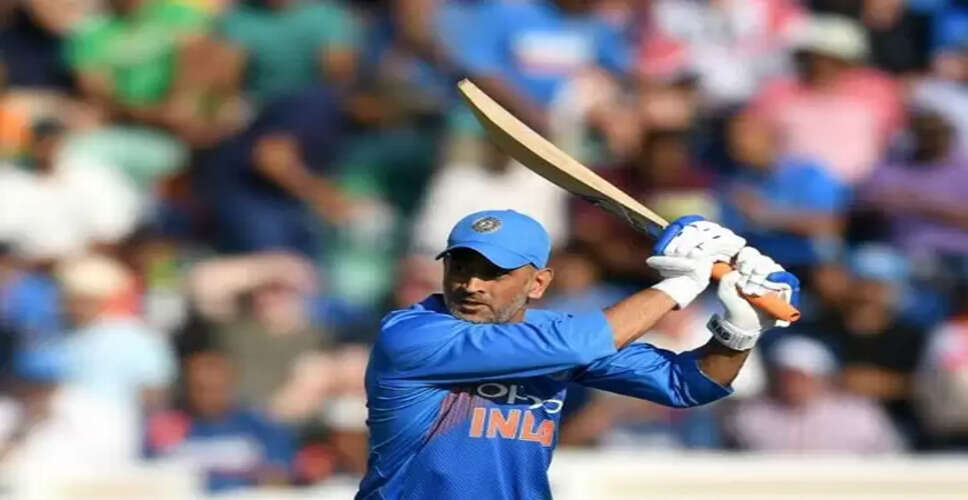
Celebrating MS Dhoni's Induction into the ICC Hall of Fame
London [UK], June 10: Former head coach of India, Ravi Shastri, praised MS Dhoni's exceptional wicketkeeping skills during the ICC Hall of Fame ceremony in London, humorously likening his quick hands to those of a "pickpocket."
Dhoni was honored with induction into the ICC Hall of Fame, becoming the 11th Indian cricketer to receive this prestigious recognition.
While speaking at the event, Shastri remarked, "His hands are quicker than a pickpocket's. If you're in India for a major match, especially in Ahmedabad, be wary of MS behind you; your wallet might vanish!"
He further noted, "Whether he scores a duck or wins the World Cup, his demeanor remains unchanged. There’s absolutely no difference in his approach."
With an impressive tally of 17,266 international runs, 829 dismissals, and 538 matches played for India, Dhoni's statistics showcase not only his excellence but also his remarkable consistency and longevity.
Reflecting on his induction, Dhoni expressed that this honor would remain with him forever. "Being named in the ICC Hall of Fame is a tremendous honor, recognizing the contributions of cricketers from various eras and regions. To have my name alongside such legends is a feeling I will cherish for a lifetime," he stated.
Dhoni's strongest performance came in ODIs, where he amassed 10,773 runs at an average of 50.57 across 350 matches. He recorded 10 centuries and 73 fifties, with a personal best of 183*. He ranks as India's sixth-highest scorer in ODIs, following Sachin Tendulkar, who leads with 18,426 runs. Notably, Dhoni achieved over 10,000 runs while batting lower in the order, making his statistics even more impressive.
As captain, Dhoni led India in 200 ODIs, securing 110 victories, with 74 losses, five matches tied, and 11 without results, giving him a winning percentage of 55. He guided India to triumph in the ICC Cricket World Cup 2011 and the ICC Champions Trophy 2013.
Known as "Thala" (leader) of the Chennai Super Kings, Dhoni played 98 T20Is, scoring 1,617 runs at an average of 37.60 and a strike rate of 126.13, including two half-centuries and a top score of 56. He captained India to victory in the inaugural ICC T20 World Cup in 2007.
In Test cricket, Dhoni participated in 90 matches, scoring 4,876 runs at an average of 38.09, with six centuries and 33 fifties, his highest score being 224. He captained India in 60 Tests, winning 27, losing 18, and drawing 15, achieving a win percentage of 45.00, making him one of India's most successful captains.
Dhoni is the only Indian captain to achieve a whitewash against Australia in the Border-Gavaskar Trophy, accomplishing this feat in the 2010-11 and 2012-13 series. He led India in 72 T20Is, winning 41, losing 28, with one tie and two no-results, resulting in a win percentage of 56.94.
When Dhoni debuted for the national team in 2004, few anticipated how significantly he would transform the role of a wicketkeeper-batter. His talent was evident, but his unique style set him apart from his predecessors.
His wicketkeeping technique was unconventional yet highly effective, turning the role into an art form. Dhoni executed run-outs off deflections, completed stumpings in an instant, and made catches with a distinctive flair.
With the bat, he introduced power-hitting to the wicketkeeper-batter position, which was traditionally reserved for more cautious lower-order players. At a time when Indian wicketkeepers were expected to play conservatively, Dhoni took a bold approach.
His international career began with a rocky start; his ODI debut in December 2004 ended in a run-out for a duck. However, he quickly made a name for himself, scoring a stunning 148 off 123 balls against Pakistan in April 2005, marking his arrival on the international stage.
Just months later, in October, he delivered another remarkable performance against Sri Lanka in Jaipur, scoring an unbeaten 183 off 145 balls, which remains the highest individual score by a wicketkeeper in men's ODIs.
This innings was also the highest score in a successful run chase at that time, showcasing the calm and calculated finisher Dhoni would become.
Thus began the journey of one of Indian cricket's most iconic figures, characterized by unconventional brilliance, unwavering composure, and an extraordinary ability to perform under pressure.
Dhoni's early performances demonstrated his composure and clarity, leading to his appointment as captain for the inaugural ICC Men's T20 World Cup in 2007.
The timing was crucial, as India had faced a disappointing exit in the group stage of the 50-over World Cup earlier that year. The squad for the T20 edition was largely untested, missing many senior players, and expectations were low.
However, under Dhoni's leadership, a new generation of players emerged, including Rohit Sharma, RP Singh, Robin Uthappa, and Dinesh Karthik, all playing fearless cricket.
This approach yielded spectacular results, as India lifted the trophy, defeating arch-rivals Pakistan in a thrilling final, marking their place in history as the first T20 World Champions.
India came close to victory in subsequent editions under Dhoni's captaincy, reaching the final in 2014 and the semi-finals in 2016.
This victory not only ushered in a new era for Indian cricket but also confirmed that its leadership was in capable hands. Following this, India experienced sustained success across formats, with Dhoni emerging as one of the most influential captains in cricket history.
India's ascent under Dhoni's captaincy extended into Test cricket as well. In December 2009, India achieved the No.1 ranking in the ICC Men's Test Team Rankings for the first time since its inception in 2003.
As a batter, Dhoni continued to defy expectations, even in Tests. His unorthodox style and aggressive instincts seemed ill-suited for the format's demands, yet he consistently found ways to succeed.
He made a significant impact in his fifth Test match against Pakistan, scoring a counter-attacking 148 off 153 balls.
A year later, he showcased his resilience at Lord's, scoring a crucial 76* under pressure, helping India secure a rare series win in England.
Among his many memorable Test innings, his lone double-century in 2013 at his home ground in Chennai stands out.
Facing a formidable 380 in the first innings, Dhoni scored a remarkable 224, his highest Test score, leading India to a decisive 192-run lead.
Throughout his Test career, Dhoni faced numerous challenges as both a batter and captain until his retirement in 2014. Yet, he consistently found ways to overcome obstacles.
Few can claim to have redefined the ODI format like MS Dhoni, whether as a finisher, captain, or wicketkeeper.
In just his 40th ODI, Dhoni reached the top of the ICC Men's ODI Batting Rankings, becoming the fastest player to achieve this milestone, a record that still stands.
His ODI legacy includes numerous records, such as the most stumpings (123), the highest individual score by a wicketkeeper (183*), and the most matches as captain (200). The pinnacle of his career came in 2011 when he led India to World Cup victory after a 28-year wait.
Despite a quiet tournament, Dhoni rose to the occasion in the final against Sri Lanka, making a bold decision to promote himself to No.4, a move that would become legendary.
Entering at 114/3, he formed a crucial partnership with Gautam Gambhir, guiding India to victory with a memorable six, ending a long wait for the World Cup.
He later added another title, leading India to the ICC Champions Trophy in 2013, showcasing his tactical brilliance once again.
Even in his final international match at the 2019 ICC Men's Cricket World Cup, Dhoni was India's last hope. His run-out in the semi-final against New Zealand marked a poignant end to his international career.
Though he officially retired over a year later, that moment felt like the conclusion of an era. MS Dhoni has firmly established himself in the annals of Indian cricket, leaving behind a legacy of unforgettable memories and milestones that will be cherished for generations.