
Mastering Pickleball: The Importance of Paddle Angle and Energy Control
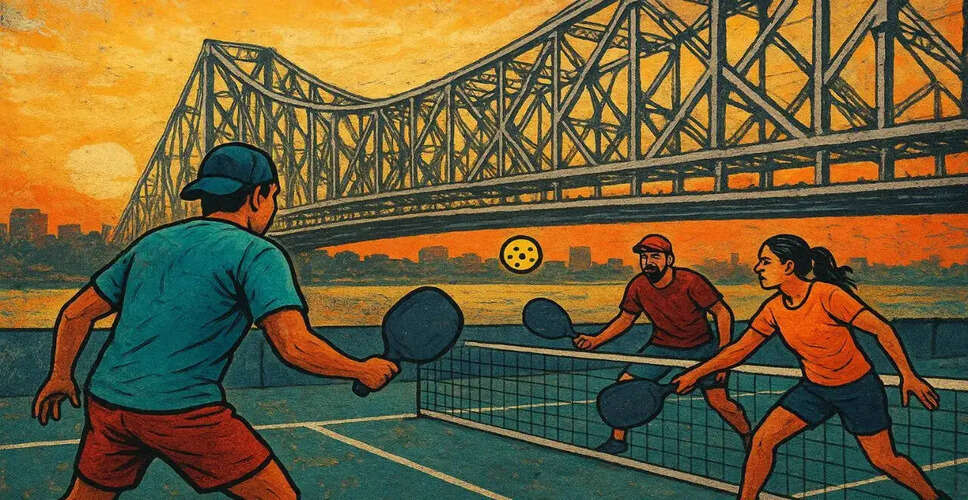

Understanding the Fundamentals of Pickleball
As pickleball evolves into a more structured and competitive sport, coaches are increasingly focusing on fundamental skills rather than just instinctive play. John Cincola, a prominent coach, emphasizes the significance of two key factors in volley control: paddle angle and energy. While pickleball is known for its accessibility, this simplicity can sometimes obscure the technical skills necessary for success. Cincola’s approach aims to bridge that gap, asserting that understanding the laws of physics is crucial for excelling in the game.
At the core of Cincola's teaching are what he refers to as the two essential elements of volley control. The trajectory of the ball when it strikes the paddle is primarily influenced by the angle of the paddle and the energy applied. Other factors such as timing, positioning, and shot selection are secondary to these two components.
Key Awareness in Play
Cincola advises players to visualize an imaginary line extending from the paddle face to a target positioned about a foot above the net. This target remains constant regardless of the height of the incoming ball. The only adjustment needed is in the wrist angle, which must be subtly modified to maintain that line. This distinction is vital and often overlooked during intense rallies.
The angle of the paddle plays a crucial role here. For low balls, an open paddle face is necessary, while a closed face is required for high balls, with waist-level shots falling in between. Cincola emphasizes, “You can’t control the ball if you don’t know where your paddle is pointing,” highlighting the importance of awareness over sheer force. This principle is applicable not just to volleys but also to dinks and groundstrokes, making it a versatile skill across different formats.
The second key element, energy, builds upon the first. The interplay between angle and power is situational rather than linear. An open paddle allows for a blocking motion, letting the ball bounce back with minimal force. As the paddle approaches a square position, a gentle push becomes possible, and with a closed face on higher balls, players can fully accelerate through their shots. Cincola summarizes this with a mantra: “Soft when it’s open, medium push when it’s square, hard push when it’s closed,” which aids in making quick decisions during play.
Wrist Technique Revisited
Another nuanced aspect of Cincola’s instruction is his perspective on wrist usage. While traditional advice often discourages wrist movement, he presents a more nuanced view. He explains, “Your wrist is a preparation tool, not an execution tool.” This means that the wrist should set the angle early based on the incoming ball and remain stable during contact. This distinction helps prevent erratic volleys that can lead to inconsistency.
To help players translate theory into practice, Cincola proposes a series of drills that gradually increase in complexity. Starting with low, controlled feeds, players concentrate on early wrist preparation and gentle contact. As they progress to waist-height balls, they learn to apply controlled pushes, while higher feeds encourage more aggressive strokes. The final stage involves live volley exchanges, requiring real-time adjustments and integrating both principles under match-like conditions.
What makes this methodology particularly effective is its clarity. Instead of inundating players with mechanical details, it grounds improvement in fundamental principles. In a sport where the kitchen line often determines outcomes, this clarity can be revolutionary. By aligning technique with the laws of physics, players not only minimize unforced errors but also cultivate a sense of control that goes beyond instinct.
As pickleball continues to professionalize, such frameworks indicate a significant evolution. The sport is shifting from mere participation to a focus on precision. Cincola’s teachings suggest that mastering this precision begins with understanding fundamental concepts, such as the angle of the paddle.