
Mastering Pickleball: The Art of Drop Shots vs. Drives

Understanding Shot Selection in Pickleball
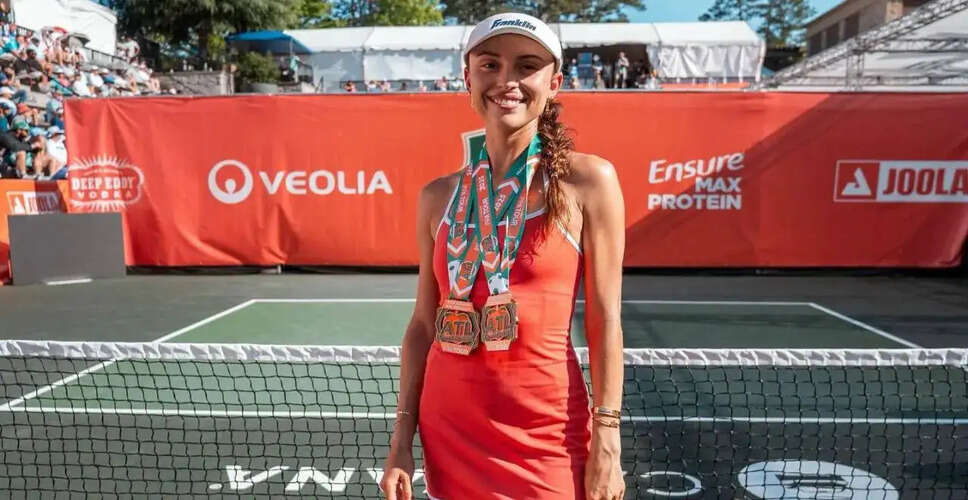
In the world of pickleball, a common tactical dilemma arises: should players opt for a drop shot or a drive? This question has puzzled many, but professional player Parris Todd offers clarity. She emphasizes that the ball itself should guide players' decisions. When faced with the choice between a third-shot drop or a drive from the baseline, Todd highlights essential cues that should influence the decision-making process. Instead of relying solely on instinct, players should consider factors like the depth of the return, their balance, the contact point, and the speed of the ball to determine whether to slow down the rally with a drop shot or apply pressure with a drive.
As a star on the PPA Tour and a member of the Columbus Sliders in Major League Pickleball, Todd asserts that a third-shot drop is the best option when a player finds themselves in a defensive position. She explains, 'A good drop is all about neutralizing a tough situation. If the return is deep, landing near the baseline or coming at you quickly, that's your cue for a third-shot drop. Trying to force a drive from a defensive stance will only give your opponents an easy opportunity to attack.'
The Importance of Control
'Soften your hands'
Todd encourages players to prioritize control over sheer power. She advises, 'Soften your hands. Your goal is to take pace off the ball and gently place it into the kitchen. Essentially, you want to 'drop the ball in the kitchen' so that your opponents are compelled to hit upwards. This tactic allows you and your partner to gain the necessary space to advance towards the kitchen line.'
She succinctly describes the purpose of the drop shot: 'It's not just a shot; it's a reset to regain your position in the point.' As the World No. 3, Todd shares technical insights for executing an effective drop shot. She recommends a low-to-high motion with a gentle lift, keeping the paddle face slightly open, using leg strength rather than wrist strength, and aiming for a soft arc that clears the net by no more than a foot. Patience is key; players should not rush to the kitchen line until they are confident in their drop shot's quality.
When to Attack
'Drive doesn't need to be a winner'
While the drop shot is essential for regaining control, Todd also identifies clear scenarios for attacking. She states, 'A drive communicates a different message: 'You provided me with an opportunity, and I will make you uncomfortable.' However, she clarifies that the aim of a drive isn't always to score a direct winner. 'A solid, heavy drive can set up the fifth shot, create pop-ups, and open up the court,' she explains.
For executing the perfect drive, Todd advises against aiming for the shoulders, as one might in tennis. Instead, she suggests targeting the hip area to jam opponents, limit their leverage, and force weak returns while keeping the ball low. The distinction between top players and the average ones lies in shot selection and timing. Those who can read the game conditions effectively will maintain an advantage. 'The real skill is in the read,' Todd emphasizes, noting that every decision should be informed by factors like return depth, balance, contact point, ball speed, and positioning. Her straightforward advice is: 'If you're falling backward, drop. If the ball invites a swing, drive. Vary your shots to keep opponents guessing. The best players don’t just hit; they make strategic choices.'