
Mastering Pickleball: Essential Techniques for Improved Volleys
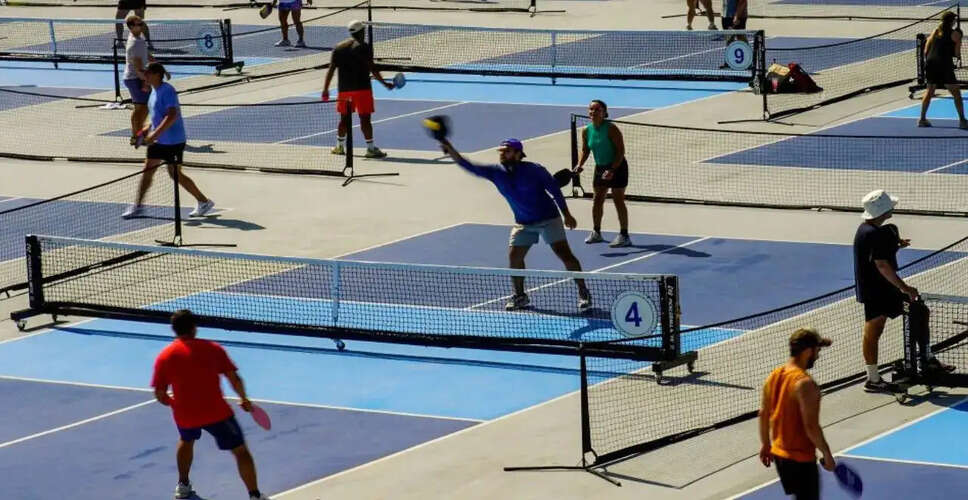
Enhancing Your Pickleball Skills
Players of pickleball who have faced challenges with their volleys are encouraged to revisit fundamental techniques, as highlighted in a recent instructional session by Selkirk TV. This lesson outlined frequent errors made at the net, reasons for losing control during rallies, and how minor adjustments in grip and positioning can lead to better outcomes. It also emphasized the significance of understanding the non-volley zone and its impact on shot execution during rapid exchanges.
The session illustrated that successful volleying involves not just quick reactions but also being technically prepared before the ball arrives. Players who grasped the concepts of positioning, grip, and the rules were more adept at controlling rallies and seizing opportunities at the net.
Clarifying the Non-Volley Zone
A major point of confusion was the non-volley zone, commonly referred to as the kitchen. Players are prohibited from volleying while positioned within this area, which extends seven feet from the net on either side. Additionally, stepping into this zone during a volley motion results in a fault, even if the shot is well-executed. The primary adjustment suggested was to remain just behind the line and utilize small, controlled steps, which aids in maintaining balance and minimizing errors during rallies.
The Significance of the Continental Grip
Another critical aspect discussed was grip. Many novice players tend to switch grips between forehand and backhand volleys, which can hinder their reaction times. The continental grip was recommended as the most effective choice, enabling players to manage both sides without needing to adjust, thus enhancing speed and consistency at the net. By positioning the index knuckle on the appropriate bevel, players could achieve better control while generating sufficient power. Once this grip became instinctive, players were able to react more swiftly and decrease mishits during fast exchanges.
Establishing the Ready Position
Players were advised to adopt a stance with feet shoulder-width apart, knees slightly bent, and weight shifted forward. Keeping the paddle at chest height prepared them for quick movements. This posture allowed players to respond effectively to both rapid drives and softer shots without compromising balance.
Transforming Defense into Offense
The lesson also covered practice techniques aimed at enhancing volleying skills. Players began with controlled, gentle exchanges at the net to develop feel and control. As their skills progressed, they transitioned to handling faster shots and converting defensive returns into offensive opportunities. The key takeaway was that effective volleying relies on simple yet consistent habits. Grip, positioning, and rule awareness are more crucial than sheer power. By concentrating on these fundamentals, players can reduce errors and gain greater control at the net. Over time, this method can help convert defensive situations into scoring chances and elevate overall performance.
Stay updated with the latest in Pickleball, including exclusive content, tips, and inspiration. Join the community for all things pickleball by following us on Instagram @pickleballnow.in and visiting our website!