
Manika Batra Contemplates Legal Action Over Asian Games Exclusion
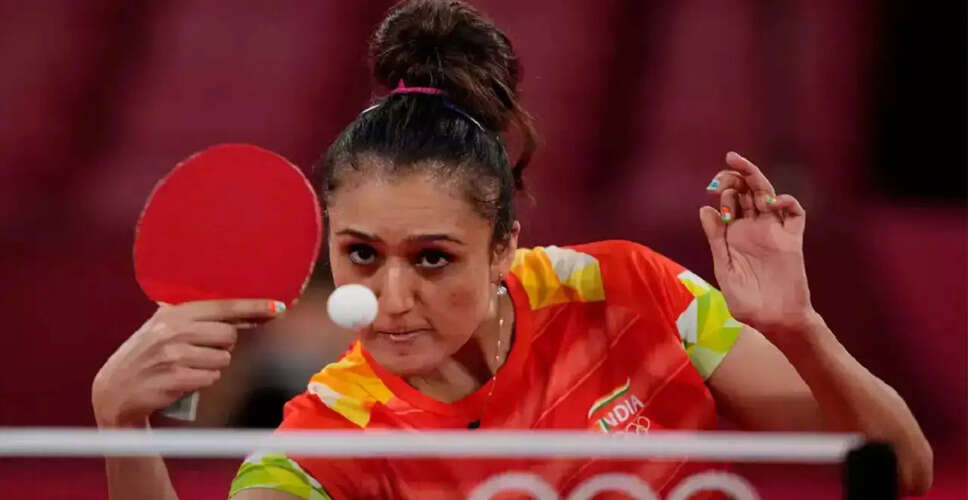

Manika Batra's Response to Exclusion from Asian Games
Renowned Indian table tennis player Manika Batra has indicated her intention to pursue legal action against the Table Tennis Federation of India (TTFI) following her omission from the squad for the upcoming 2026 Asian Games, scheduled from September 19 to October 4 in Aichi-Nagoya, Japan. Recognized as one of India's top female table tennis athletes, she was notably absent from the selected 10-member team, which includes five men and five women.
In a recent statement, Manika refuted claims that her reaction was merely emotional, asserting that there are significant unanswered questions regarding her exclusion. The bronze medalist from the 2018 Asian Games has called for a clear explanation and emphasized that she is not seeking preferential treatment. She has reached out to Prime Minister Narendra Modi and Sports Minister Mansukh Mandaviya for intervention.
“Having represented India for nearly two decades, I am not just an amateur athlete reacting to a selection decision. My public outcry stems from a genuine belief that crucial questions remain unanswered. My previous advocacy has led to substantial governance reforms in Indian table tennis, which may have upset some individuals,” she stated.
Manika expressed her concerns about the lack of transparency, consistency, and fairness in the sport's administration. “Table tennis has given me everything, and if I perceive something is amiss, I feel obligated to voice my concerns. I hope for a clear and factual explanation. However, if I do not receive satisfactory answers regarding the rationale behind this decision, I will have no choice but to consider all available options, including legal action,” she added.
She reiterated her request for the Prime Minister and Sports Minister to address the issue, clarifying that her aim is not to secure a place on the team or to receive special treatment, but rather to ensure that all athletes are afforded transparency and accountability in the selection process.
Addressing her absence from domestic tournaments, Manika argued that performances should not be evaluated in isolation from international competitions. Despite her current ranking of World No. 51, just outside the top 50 threshold for automatic selection, she highlighted her strong performance this season, including victories over top Asian and Chinese players.
“The rankings in table tennis are updated weekly and are based on a rolling points system. This raises important questions about the timeline used for evaluating rankings. Were the assessments based on the last 12 months, six months, or just a snapshot from the previous week? If an athlete consistently ranked around the top 50 drops to 51, does that render her ineligible?” she questioned.
Manika also expressed her surprise at the exclusion of athletes with proven track records, such as Ayhika Mukherjee, who contributed to India’s historic women’s doubles medal at the last Asian Games. “When accomplished athletes are overlooked, it raises concerns about the criteria and evaluation processes that led to these decisions,” she remarked.
Furthermore, she scrutinized the selection committee's voting process, questioning the qualifications of its members. “I have been informed that the final selection involved a voting process. If this is accurate, athletes deserve to know who made these decisions and the basis for them. Were the reasons documented and communicated? Were conflicts of interest disclosed? Can a voting system be entirely free from bias or personal opinions?” she asked.
Manika concluded by emphasizing the need for transparency and accountability in the selection process, advocating for the publication of these details on the TTFI website to uphold the spirit of fairness.