
Prominent Citizens from India and Pakistan Call for Renewed Dialogue

Joint Appeal for Bilateral Engagement
The signatories urged both governments to choose engagement over isolation
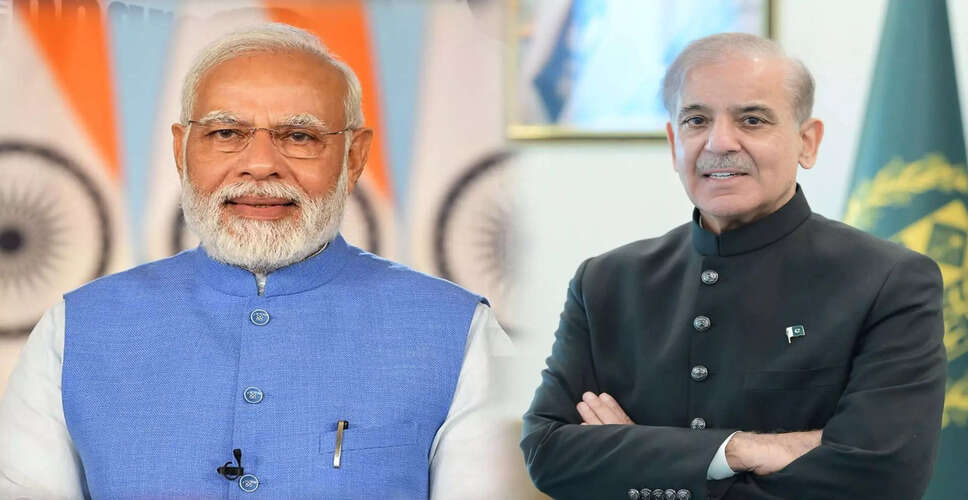
New Delhi, July 1: Over 100 distinguished individuals from India and Pakistan, including former chief ministers of Jammu and Kashmir, Farooq Abdullah and Mehbooba Mufti, have issued a joint appeal to Prime Ministers Narendra Modi and Shehbaz Sharif. They are urging the revival of bilateral discussions and concrete actions to restore normal diplomatic and interpersonal relations between the two nations.
The letter, dated June 30 and coordinated by OP Shah, chairman of the Centre for Peace and Progress, was signed by 61 Indians and 55 Pakistanis. It emphasized that "sustained engagement and dialogue are the only feasible means to resolve differences."
According to the letter, "The future of South Asia should be defined by peace, prosperity, and shared progress rather than division and conflict." The initiative is described as a call to prioritize the welfare and aspirations of nearly two billion people over conflict and division, rather than an endorsement of any political stance.
Notable signatories include former RAW chief A.S. Dulat, Rajya Sabha MP Manoj Jha, former Union minister Mani Shankar Aiyar, moderate Hurriyat leader Mirwaiz Umar Farooq, former Pakistan foreign minister Khurshid Mahmud Kasuri, and former diplomat Ashraf Jehangir Qazi, along with various retired diplomats and civil society members from both countries.
The signatories reiterated that "sustained engagement and dialogue are the only viable path to resolving differences," advocating for the restoration of full diplomatic relations, the reinstatement of high commissioners, the resumption of normal visa services, and the initiation of comprehensive bilateral discussions on all unresolved issues.
The letter also called for renewed discussions on Jammu and Kashmir, suggesting a revisit of the framework negotiated between 2004 and 2007, while promoting measures for demilitarization and de-escalation, alongside addressing the legitimate security concerns of both nations.
In addition, the signatories advocated for enhanced economic cooperation, including the reopening of trade channels, restoration of normal commercial relations, revival of the Most Favoured Nation (MFN) status or a similar non-discriminatory trade arrangement, and the reopening of the Attari-Wagah land border.
The appeal further requested the resumption of cross-border transport links, such as the Delhi-Lahore bus service, Srinagar-Muzaffarabad bus service, Samjhauta Express, and Thar Express, as well as the opening of the Kargil-Skardu route and the reopening of airspace for commercial flights.
Moreover, it called for the reopening of the Kartarpur Sahib Corridor, facilitating access to Sharada Peeth for pilgrims, easing travel restrictions, promoting exchanges among students, journalists, artists, and business leaders, and lifting restrictions on media organizations and digital platforms.
Highlighting that India and Pakistan together account for nearly one-fifth of the global population, with a significant youth demographic, the signatories noted that ongoing hostility deprives millions of opportunities, prosperity, and a secure future.
They concluded by urging both governments to prioritize engagement over isolation, dialogue over hostility, and cooperation over confrontation.