
India's Strategic Advantage at the 2026 Pickleball World Cup in Vietnam

Preparing for the Pickleball World Cup 2026
As India gears up for the 2026 Pickleball World Cup, scheduled to take place in Da Nang, Vietnam from August 30 to September 6, the challenges ahead are significant. These challenges extend beyond just rankings and skills; environmental factors will also play a crucial role. The local humidity, travel fatigue, court speed, and recovery times are all set to create unique hurdles for players worldwide. However, for Indian athletes, the conditions in Vietnam may feel more familiar compared to last year's tournament in Florida, USA. This familiarity could provide a subtle advantage for the Indian contingent.
The climate, travel distance, and overall environment in Vietnam are much more akin to what Indian players regularly encounter at home. Even minor comforts can significantly impact performance at the elite level.
Familiar Conditions Could Give India An Early Edge
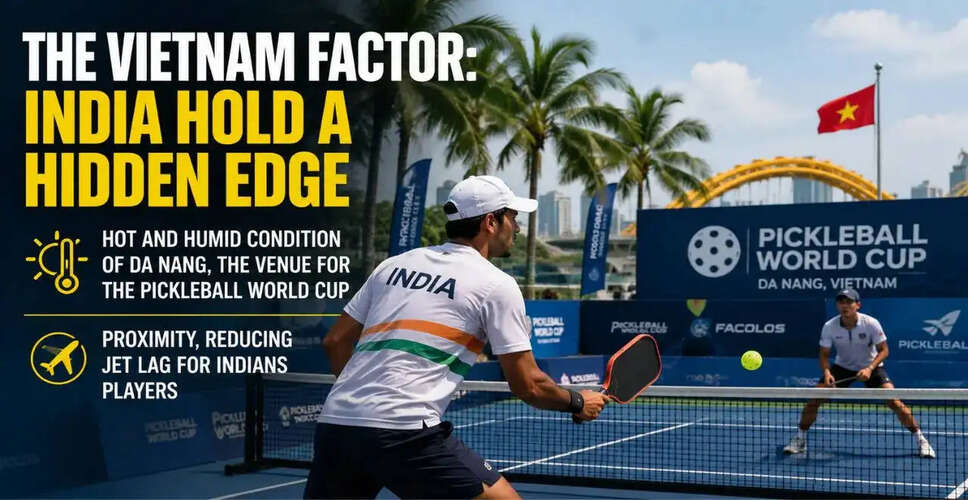
For Indian athletes, competing in the United States often requires significant physical adjustments. Long flights, drastic time-zone changes, and colder indoor venues can disrupt recovery and rhythm. Even seasoned players may need several days to readjust their sleep patterns and movement. In contrast, Vietnam, being closer geographically, presents a smoother transition for Indian players, minimizing travel fatigue and requiring less adaptation. The climate is similar to that of Indian cities like Mumbai and Chennai, where players are accustomed to humid and physically demanding conditions.
“Vietnam would be more familiar than the US,” stated Dhiren Patel, the chief pickleball coach of India. “No jet lag, similar weather, and a comparable playing feel,” he added. This reduced travel strain could facilitate quicker recovery between matches.
How Humidity Changes Pickleball
Humidity impacts more than just player comfort; it alters the dynamics of pickleball. In drier American conditions, the ball tends to travel faster, leading to explosive rallies that favor aggressive play styles. Conversely, in humid environments like Vietnam, the game evolves at a slower pace, emphasizing endurance, control, and patience. Players often experience increased friction and heavier bounces, making sweat management crucial. Paddle grip, hydration, and recovery routines become vital during long match days. Indian players, accustomed to similar climates, may find themselves better prepared for these adjustments.
Suryaveer Singh Bhullar, president of the Indian Pickleball Association, highlighted this advantage, noting that Da Nang's late-summer climate is typically humid and tropical, with temperatures often in the low to mid-30s (°C). For athletes training in hot, high-humidity regions of India, this environment requires minimal physiological adjustment.
The Hidden Impact Of Jet Lag
Jet lag is often overlooked in discussions about international pickleball. At the elite level, even slight disruptions in sleep can hinder performance during critical moments. Reaction times and focus can decline when athletes struggle to adjust their body clocks. Unlike tournaments in the US, where players may need several days to acclimatize, traveling to Vietnam allows for a much shorter adjustment period. This is crucial in tightly packed tournament schedules where players compete multiple times daily across various categories.
Bhullar emphasized the benefits of proximity, stating, “Traveling to the Americas involves exhausting 20 to 30-hour flights and significant jet lag due to an 11.5-hour time difference. In contrast, Vietnam is just a quick flight from major Indian cities with only a 1.5-hour time difference, allowing the team to maintain peak training intensity right up to match day.”
India’s Growing Exposure To Asian Conditions
India's expanding pickleball infrastructure may also enhance players' adaptability. Over the past two years, Indian athletes have increasingly participated in Asian tournaments and international circuits that mirror the conditions expected in Vietnam. The Indian Pickleball League and various tournaments have raised professional preparation standards, leading players to take recovery, hydration, and nutrition more seriously.
Can Conditions Actually Help India?
While conditions alone won't secure victories, they can provide an edge. India will still face formidable opponents from countries with more established professional structures. However, the familiarity with the climate, reduced travel burden, and smaller physical adjustments could favor Indian players. In Vietnam, they may not start from a completely unfamiliar position, as the environment is conducive to longer rallies and humid conditions. For a nation still carving its identity in global pickleball, these details could prove significant, as the difference between winning and losing often hinges on adaptability.