
India's Historic Comeback: Siraj Leads Victory Against England at The Oval
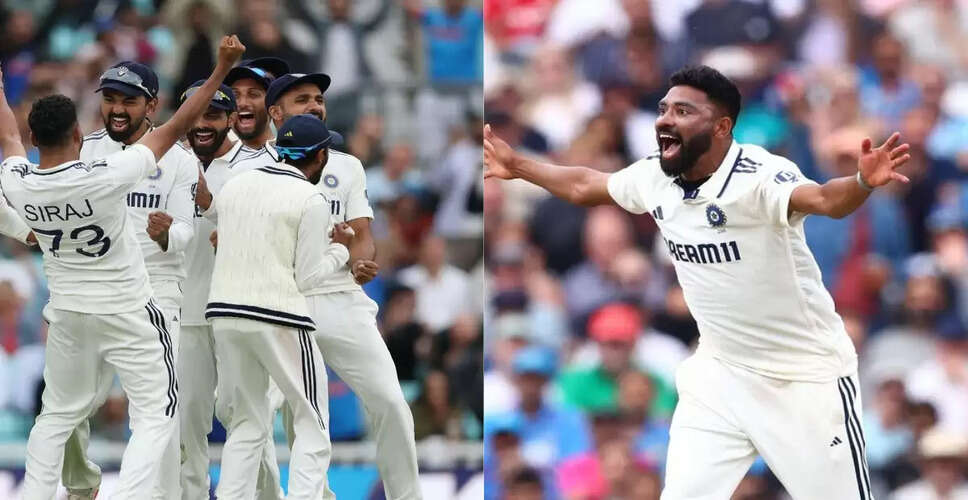
A Thrilling Test Match at The Oval
The recent Test match at The Oval has etched itself into cricket history as one of the most exhilarating encounters, where India staged a remarkable comeback to secure a narrow victory. Mohammed Siraj's exceptional bowling performance on the final day was pivotal in India's triumph over England by just six runs, leveling the series at 2-2 and allowing India to retain the prestigious Anderson-Tendulkar Trophy.
This final Test became notable for being the closest victory margin recorded in Test cricket history.
On the last day, England required only 35 runs to clinch the win, with three wickets remaining, making their victory seem imminent. However, Siraj delivered a stunning spell, claiming three crucial wickets, including those of Woakes and Atkinson, which dramatically shifted the match's momentum.
Mohammed Siraj, who participated in five consecutive Tests, showcased his best performance in this match. Reflecting on the game, he stated, 'I adhered to the strategy we devised earlier and executed it on the fifth day. I didn't anticipate that missing Brook's catch would have such a significant impact, but he played exceptionally well and applied pressure on us. The conditions were challenging, but I am thrilled with our victory. I believe in my ability to lead my team to success, regardless of the circumstances, and I never back down.' Siraj concluded the Kennington Oval Test with a total of nine wickets, including three on the final day, having bowled over 180 overs throughout the series.
Prasidh Krishna also played a vital role in supporting Siraj's efforts, taking four wickets in the innings. On the fourth day, he dismissed key batsmen Joe Root and Harry Brook, effectively slowing England's momentum towards victory. This series of setbacks led to a collapse in the English innings.
As the fourth day progressed, it appeared that India was on the verge of defeat, with Root and Brook comfortably approaching the target. However, the Indian fast bowlers made a remarkable comeback in the final session, culminating in Siraj's brilliance on the fifth day, which completely reversed the game's direction.
Another noteworthy aspect of this victory was Shubman Gill's captaincy. Leading India for the first time in a full Test series, he managed his bowlers with composure and strategy, guiding the team to a significant turnaround despite immense pressure.
England's final innings concluded at 367, a testament to how close they were to victory before their rapid decline. After losing six wickets for 331 runs, they succumbed to pressure, losing four wickets for just 36 runs.
The series ended in a tie at 2-2, but India emerged with a psychological advantage, preventing England from winning the series on home soil and demonstrating their capability to triumph in challenging conditions.
This match at The Oval will be remembered by cricket enthusiasts as a thrilling example of Test cricket's intensity and the rising prominence of Mohammed Siraj.
Despite England initially leading the series 2-1, this final Test showcased India's resilience and highlighted the depth and potential of their young squad, even in the absence of several senior players.