
ICC's New ODI World Cup Format Faces Backlash from Associate Nations

Criticism of the Revised ODI World Cup Format
The International Cricket Council (ICC) has recently unveiled a new format for the 2027 Men's ODI World Cup, which has sparked significant backlash from prominent Associate nations. Players and the World Cricketers' Association (WCA) have accused the ICC of restricting opportunities for emerging teams and neglecting to engage stakeholders before implementing these changes.
Under the new structure, the tournament will still include 14 teams, but it will kick off with a newly introduced three-team round-robin 'Super Series' featuring the lowest-ranked qualifiers. This format will see two teams eliminated after just two matches, causing frustration among Associate nations that are eager to compete regularly against Full Member teams, as reported by Cricinfo.
Voices of Discontent from Players and Associations
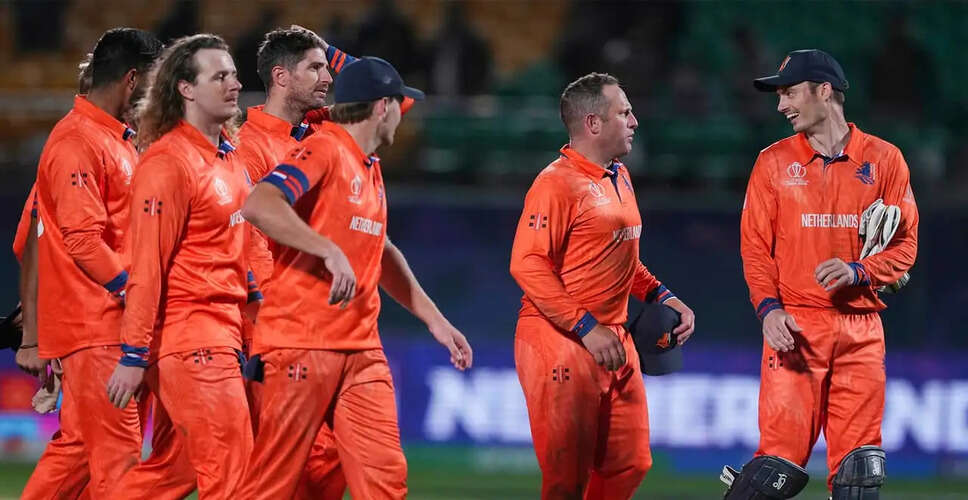
Scott Edwards, the captain of the Netherlands, expressed that this decision represents a significant setback for emerging cricket nations. He stated, "Qualifying for an ODI World Cup is a monumental achievement for any country, so when the reality of that opportunity shifts after years of preparation, it is incredibly disheartening," according to a statement from the WCA.
He further remarked, "The ICC frequently discusses expanding the game globally, but decisions like this hinder Associate nations from facing the top teams in the world. These opportunities are crucial for countries to improve and inspire future generations of players. If we are genuinely committed to making cricket a global sport, we should be increasing opportunities on the world stage, not diminishing them."
Namibia's captain, Gerhard Erasmus, also questioned the merit of qualifying if teams are only granted two matches at the tournament. He noted, "For players in many countries, an ODI World Cup is not just another tournament. It is our long format, and careers are built around it, with generations of players aspiring to participate." He added, "While we acknowledge the need to earn our place, we also want qualifications to offer a genuine chance to compete at the highest level, following a long history of limited opportunities at the Associate level."
WCA Critiques ICC's Decision-Making Process
The WCA has also criticized the ICC's approach to decision-making, stating that the governing body failed to adequately consult players despite the significant implications for qualification pathways and careers. WCA chief executive Tom Moffat commented, "The ICC has the right to determine the structure of its global events. However, when commitments are made to the game, and countries and players invest years pursuing those opportunities, substantial changes warrant genuine consultation, transparency, and a clear rationale."
According to Cricinfo, major cricket boards from countries like India, Pakistan, and Sri Lanka do not recognize the WCA.
Call for Greater Player Involvement
Scotland's captain, Richie Berrington, echoed similar concerns, urging cricket administrators to involve players more significantly in major decisions. He stated, "Players do not expect to make every decision, but we should be meaningfully consulted on choices that have substantial impacts on the game and players' careers. Better decisions emerge when diverse perspectives are included, and we are urging the sport to start doing this properly."
Additionally, Ireland's ODI captain Paul Stirling highlighted football's expanding global showcase as a model to emulate, saying, "It would be fantastic to see cricket adopt a similar approach to maximize opportunities for the sport," referencing the expanded 48-team FIFA World Cup.
ICC's Defense of the New Structure
In announcing the revised format, the ICC claimed that the 'evolved' structure would create "a more compelling tournament" and "enhance the overall experience for fans while still providing emerging teams with the chance to compete on cricket's biggest stage."
Changes to Qualification Pathways
These changes replace the previously suggested format of two groups of seven teams followed by a Super Six stage, a structure that teams had been planning their qualification campaigns around for several years.
The new model has also raised concerns regarding the relevance of the ongoing Cricket World Cup League 2, where eight Associate nations are competing in 36 matches each to qualify for the global event.