
Greg Chappell Urges Indian Management to Empower Jadeja in Test Match Strategy
Chappell's Insights on Jadeja's Performance
Former Australian cricket captain Greg Chappell has expressed that the Indian management should have clearly instructed Ravindra Jadeja to pursue victory during the recent third Test against England at Lord's.
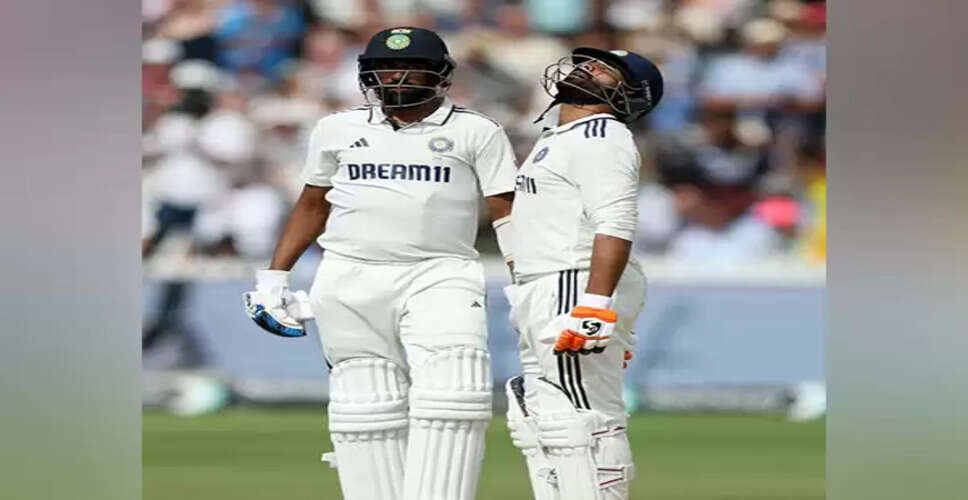
In a challenging match, Jadeja, alongside tail-enders Jasprit Bumrah and Mohammed Siraj, fought valiantly but ultimately fell short of the modest target of 193 runs on the final day.
Jadeja spent a significant amount of time on the field, partnering with Bumrah for 22 overs and contributing 35 runs. He then teamed up with Siraj for 13.2 overs until Siraj's unfortunate dismissal led to India's 22-run defeat. Throughout this tense period, Jadeja focused on protecting the lower-order batsmen but hesitated to take risks for boundaries.
Chappell noted, “The Test at Lord's highlighted a crucial moment regarding Jadeja's management late in the game. Faced with the tail, he played conservatively, which is typical for many specialist batsmen in such situations. While it was a disciplined approach, was it the right one?” in his column for a sports media outlet.
He emphasized that Jadeja was the last recognized batsman and needed to take calculated risks if India was to chase down the target. Chappell suggested that the captain should have communicated directly to Jadeja, emphasizing, “You are the key player who must secure this win. The tail's role is to support you, but you need to aim for victory.”
Chappell drew a parallel with England's Ben Stokes, who famously scored 135* at Headingley in 2019, leading his team to a remarkable one-wicket victory against Australia under similar circumstances. He remarked, “Stokes demonstrated the importance of self-belief and the backing of his team and leadership during that innings. This mindset is essential for any successful team.”
Shubman Gill, who came into the match with three centuries, including a career-best 269, struggled to replicate his form, scoring only 16 and 6 in this Test.
With two Tests remaining and India trailing 1-2 in the five-match series, Chappell believes Gill's leadership challenge is becoming increasingly significant. He argues that the 25-year-old must clarify the type of team he envisions, not just through words but through decisive actions and effective communication.
Chappell stated, “Gill needs to establish clear expectations consistently. He must define the identity of the team he wants India to be. The captain sets the tone through actions, clarity of purpose, and visible standards. This includes demanding discipline in the field, as India cannot afford to revert to poor fielding habits. The best teams excel in the field, minimizing easy runs and capitalizing on chances.”
He also advised that the selectors and Gill should maintain a consistent core group of players, outlining a clear game plan and individual roles. “Every player should understand their expectations and position within the team. In struggling teams, players often have to figure things out on their own, which is not acceptable at this level. Great captains are effective communicators, and Gill must develop this skill quickly. Whether during training, in matches, or in the dressing room, clear and calm communication is vital. His bat cannot always do the talking; he must learn to articulate in a way that aligns the team, fosters belief, and builds trust,” he concluded.