
US-Iran Rivalry Intensifies Ahead of 2026 World Cup
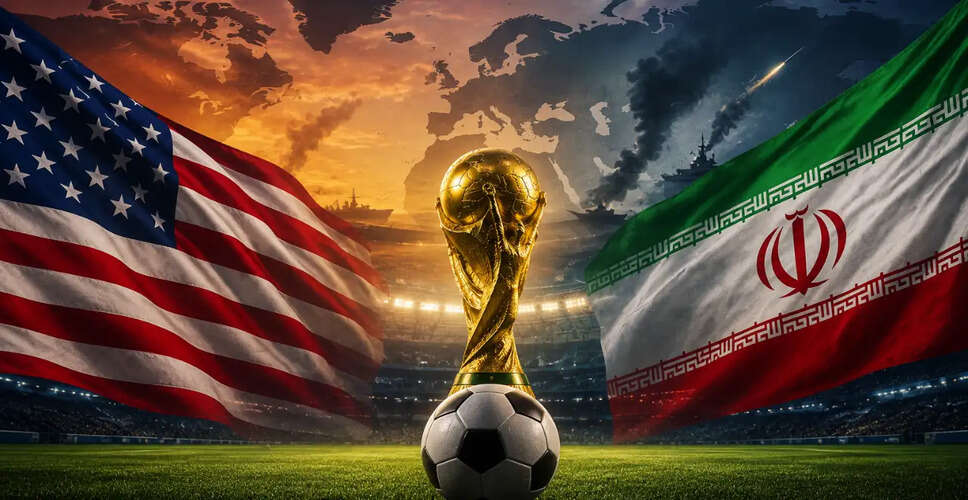

A Real Conflict on the Football Field
The upcoming 2026 World Cup is set against a backdrop of real conflict, as the United States and Iran find themselves in a state of war. Earlier this year, on February 28, American and Israeli forces conducted an operation that resulted in the death of Iran's Supreme Leader, Ayatollah Ali Khamenei. His son, Mojtaba, has since taken over leadership. In retaliation, Iran launched strikes against both Israel and US military bases, while also closing the strategic Strait of Hormuz. A ceasefire, facilitated by Pakistan, briefly held until April 8 but has since deteriorated, with both nations exchanging fire again in June. Amidst these tensions, US President Donald Trump has hinted at a potential deal with Iran, raising hopes for a resolution to the ongoing conflict.
Given this context, the question arises: will the two teams actually face each other on the pitch?
Current Group Placement Keeps Them Apart
The Draw Kept Them Apart — For Now
During the draw on December 5, FIFA organized 48 teams into 12 groups of four. The United States was assigned to Group D, alongside Paraguay, Australia, and Turkey, while Iran found itself in Group G with Belgium, Egypt, and New Zealand. As they are in separate groups, a direct encounter in the initial round is not possible. Iran's matches will take place on US soil, specifically two in California and one in Washington state, but the team has opted to base itself in Tijuana, Mexico, for safety and logistical reasons.
Potential Showdown in the Round of 32
The Earliest Possible Clash: Round Of 32, In Texas
The new tournament format allows the top two teams from each group, along with the eight best third-placed teams, to advance to a Round of 32. The most straightforward path for a rematch would occur if the US finishes second in Group D and Iran does the same in Group G. This scenario would lead to a match at AT&T Stadium in Arlington, Texas, on July 3, 2026. However, Iran's history in World Cups raises questions about their ability to progress beyond the group stage.
Historical Context of the Rivalry
Why 'The Mother Of All Games'
The term 'the mother of all games' originated in 1998 when the USA and Iran were drawn together in Group F. That year, Iran secured its first World Cup victory against the US, winning 2–1. The teams met again in Qatar, where the US won 1–0, allowing them to advance to the knockout stage. If they meet again in 2026, it would mark the third World Cup encounter, and the first while both nations are engaged in active conflict.
While a match between the US and Iran is possible, it is not guaranteed. Both teams must successfully navigate their respective groups, and the tournament bracket must align favorably. Diplomatically, Iran has indicated progress towards a peace agreement, although tensions remain high, with Trump warning that any attacks on US personnel could reignite hostilities. Should the match occur in Arlington, it would undoubtedly be one of the most politically charged games in football history.
As FIFA prepares for the tournament, the world watches closely, balancing the anticipation of a potential US-Iran clash with the ongoing military exchanges occurring thousands of miles away.