
The Hidden Dynamics of Football: Beyond the Ball

Understanding the Game Beyond Touches
David Dein, the former vice-chairman of Arsenal and a key figure in the establishment of the Premier League, recently shared a surprising insight on the Instagram channel Extraordinary Life Stories. He pointed out that during a 90-minute football match, a top player only has possession of the ball for about two minutes. "Many are unaware of this fact. How long do you think a player controls the ball in a match? Just two minutes. Over three games in eight days, they touch the ball for a total of six minutes. They must make their mark in just six minutes across those matches," he explained. This brief window is where they must create memorable moments, justify their high valuations, and shape their legacies.
However, the more significant revelation lies not in the limited time spent on the ball but in the actions taken during the remaining 88 minutes. Jo Paul Ancheri, a former captain of India, believes that this is where the evolution of modern football is most evident.
The Evolution of Football Intelligence
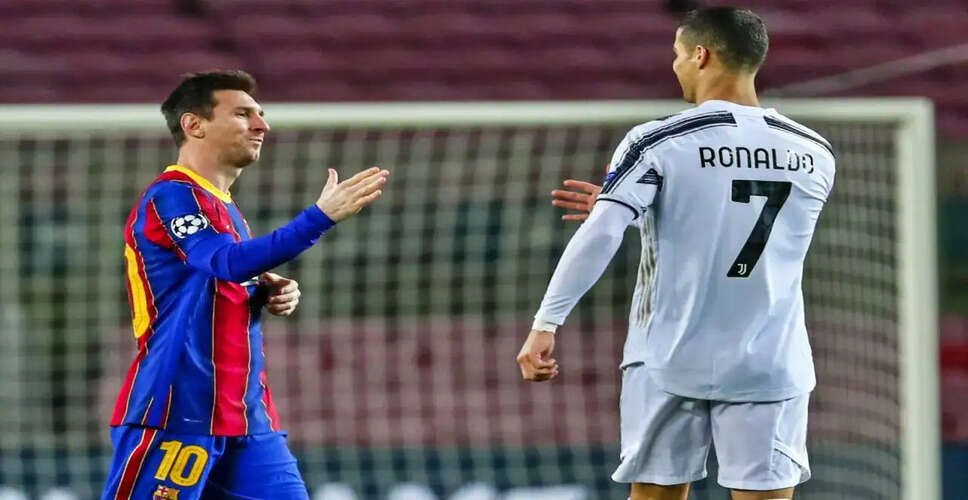
Messi, Ronaldo, and the Value of Brief Moments
Ancheri noted, "Modern football encompasses various elements. The intensity and movement required from players today are vastly different from the past." He elaborated, "In a match, we might only have the ball for three to four minutes, but we are constantly moving, gauging the game's tempo. Understanding football intelligence is crucial, even when not in possession. It’s about recognizing gaps and creating space." This insight sheds light on why the world’s top players often seem to be doing less on the field.
Current football analytics emphasize that scanning the field, interpreting movement patterns, conserving energy, and anticipating transitions can be more beneficial than relentless running. The sport's brightest talents are not merely chasing the ball; they are analyzing the chaos before engaging with it. In the modern football economy, these moments of strategic intervention hold immense value.
The Commercial Impact of Football Moments
Beyond Touches: The Financial Implications
According to sports business analyst Prashant Joglekar, clubs are shifting their focus from merely counting touches or statistics to investing in the psychological aspects of the game. "Teams are not just paying for the few minutes an elite player spends on the ball; they are investing in the emotional anticipation that builds throughout the match — whether it’s a goal, an assist, or a pivotal play," he stated. "Elite players evoke powerful emotions: excitement, belonging, admiration, and identity. These moments foster long-term loyalty among fans, which clubs can monetize through various channels like sponsorships, ticket sales, broadcasting rights, and merchandise," he added.
Thus, the true commercial value of elite footballers extends far beyond their ball touches; they are seen as emotional and cultural assets within a global entertainment framework.
Moments Over Matches: The New Football Economy
The Shift Towards Moment-Centric Engagement
Modern football has transformed into an economy driven by moments. A brief clip of a goal can reach a wider audience on social media than an entire tactical analysis. Algorithms favor dramatic content, and fans are increasingly drawn to highlights rather than full matches. Joglekar remarked, "This trend reflects the changing attention spans and the impact of social media on how we consume content. Today, moments serve as the most potent form of media currency. A short clip can generate more global engagement than a lengthy tactical breakdown. Fans are now more inclined to engage with sports through highlights, memes, and emotionally charged moments."
Football is not artificially creating this culture; it is adapting to how contemporary audiences engage with entertainment. While the sport still values tactical excellence, the commercial landscape now prioritizes moments as key engagement assets.
The Lasting Impact of Iconic Moments
Moments That Resonate Beyond the Game
This explains why a single pass from Lionel Messi or a last-minute goal from Cristiano Ronaldo can dominate discussions for days. "Shareable moments have become some of the most valuable assets in sports media due to their exceptional return on investment. Billions of fans continuously watch iconic goals and emotional reactions across various platforms. Each replay carries sponsor logos and commercial associations," he explained. "These moments extend far beyond the live match, influencing social media, digital conversations, and highlight reels. While the quality of the match is important for the sport's credibility, the industry increasingly recognizes that emotionally impactful moments drive visibility and monetization on a large scale."
Football thrives on anticipation, with 90 minutes often culminating in a few decisive seconds. This may be why the sport captivates billions across generations. Although football is technically played with the ball for 90 minutes, emotionally, it unfolds in every second leading up to those pivotal moments.