
Spain Triumphs Over Argentina in 2026 FIFA World Cup Final
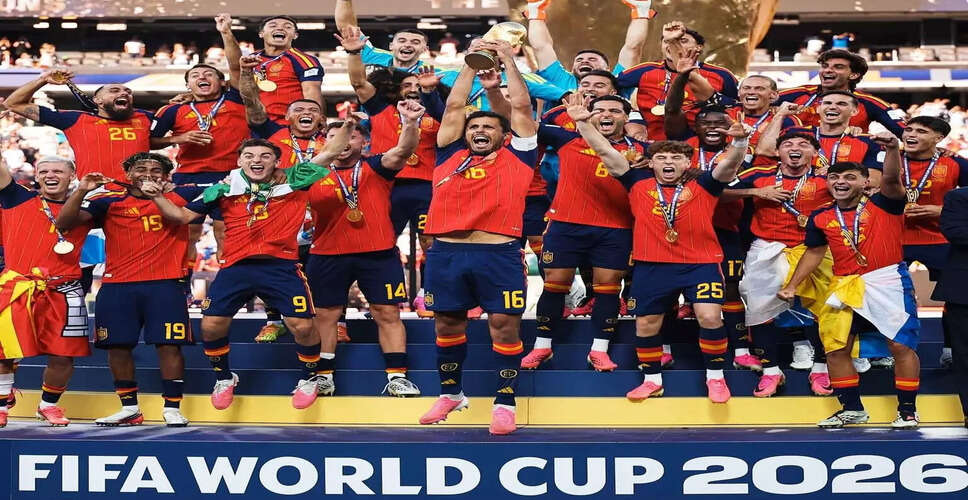

Spain's Tactical Mastery Shines in World Cup Final
In a thrilling conclusion to the 2026 FIFA World Cup, Spain secured a narrow 1-0 victory against the reigning champions, Argentina. This match was not just about ball possession; it highlighted how both teams responded under immense pressure. By analyzing metrics such as pass networks and expected threat (xT), the dynamics of the game became clearer. Spain effectively transformed pressure into offensive momentum, often forcing Argentina to reset their plays from the back.
Despite both teams displaying similar formations, Spain's efficiency was the key differentiator. They achieved nearly 1 xT (0.733 xT) for every 100 passes, significantly outpacing Argentina's 0.316, indicating a more aggressive and direct approach in their passing strategy, which was evident in the player ratings.
Spain's Structure Enhanced Their Attack
Spain's offensive plays frequently initiated from the back, with players like Pau Cubarsi, Pedro Porro, Aymeric Laporte, Marc Cucurella, and Rodri playing pivotal roles. Cubarsi and Porro emerged as crucial hubs in the network, showcasing the backline's active role in advancing the play rather than merely maintaining possession. Rodri provided a solid foundation while Porro and Cucurella pushed forward, with Cubarsi occasionally joining the attack.
Spain's progression was not limited to a single passing route; their most effective plays transitioned from the right half-space to the left. Cubarsi consistently found Dani Olmo in between the lines, while another strategy involved Fabian and Cucurella, later joined by Pedri, manipulating Argentina's formation to create space for Baena and Nico Williams.
The most effective xT for Spain was generated between Pedri and Nico Williams, followed closely by Porro to Williams. Spain adeptly drew pressure to the center before releasing Williams into open space, allowing him to exploit an unsettled defense. Although they occasionally lost momentum in central midfield, these instances were rare.
Argentina Struggled to Create Threats
In contrast, Argentina's passing network painted a different picture. Emi Martinez was often the focal point of their passing strategy, indicating a heavy reliance on their goalkeeper to regain possession. While they maintained security, their forward progression was minimal after these resets.
Argentina's most effective route of attack came from the left side into central areas, but these efforts lacked consistency and supporting connections. They managed to reach threatening positions in the final third but struggled to maintain pressure there.
Statistically, their overall xT was low, with a negative net progression index and a negative final-third net value per pass. Although players like Lionel Messi, Mac Allister, and De Paul had isolated moments of brilliance, Argentina failed to create the necessary support around them to sustain their attacks. Much of the burden fell on Romero, Otamendi, and Martinez to restart play after facing pressure.
Pressure Played a Crucial Role in the Final
Spain's defensive efforts consistently disrupted Argentina before they could mount any significant attacks. La Roja maintained high pressure in central areas, forcing Argentina into sideways or backward passes, which broke their rhythm even when they retained possession.
While Argentina occasionally applied pressure in central areas, Spain adeptly found alternative routes forward. Their structure absorbed initial pressure and transitioned into more advantageous spaces, which ultimately influenced the match's outcome. Spain's ability to maintain attacking value under pressure contrasted sharply with Argentina's tendency to revert to Martinez for resets.
Four Key Factors Behind Spain's Victory
Spain's success against Argentina can be attributed to four interconnected factors. Firstly, they managed pressure effectively within a five-pass window, maintaining positive positional value after facing resistance. Secondly, their structure complemented each other seamlessly, with defenders securing possession, fullbacks and wide attackers stretching Argentina's defense, and midfielders linking phases and controlling the tempo.
Thirdly, Spain's pressing tactics disrupted Argentina at critical moments, preventing them from entering central attacking zones. Lastly, while Argentina's formation appeared stable, it failed to translate that stability into a meaningful attacking threat. The decision to not utilize players like Simeone, Lautaro, and Paz when needed, opting instead for a more defensive strategy, proved detrimental.
Although the final score of 1-0 seems close, the tactical analysis reveals a different story. Spain consistently turned pressure into progression, while Argentina often reverted to resets. This tactical difference defined the outcome of the 2026 World Cup final.