
Folarin Balogun's Red Card Impact on USA's World Cup Journey

Balogun's Crucial Contribution and Controversial Exit
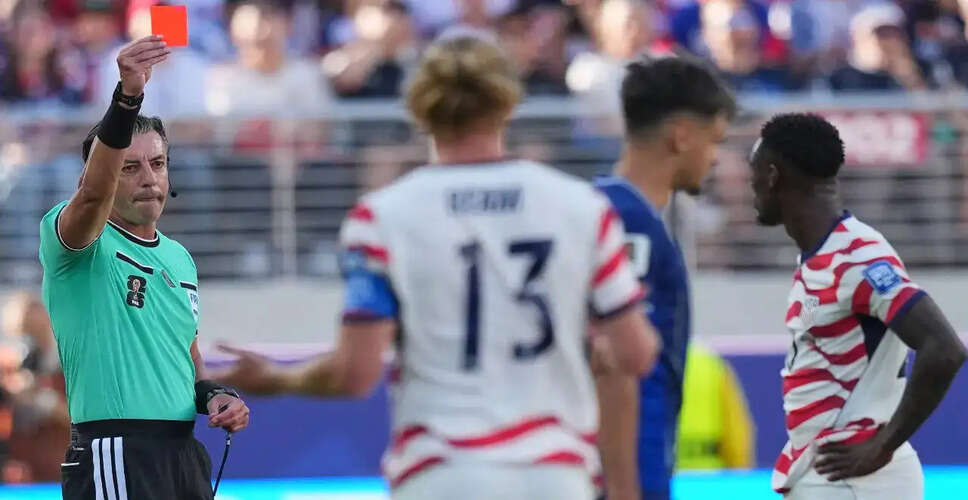
Folarin Balogun played a pivotal role in leading the United States to the Round of 16 in the FIFA World Cup. He netted the first goal just before halftime, followed by Malik Tillman, who secured a 2-0 victory against Bosnia and Herzegovina, setting up an exciting match against Belgium. However, the US faced a setback when Balogun was shown a red card after an accidental challenge on Tarik Muharemovic, which was deemed serious foul play by the International Football Association Board (IFAB).
Consequences of the Red Card
Will Balogun Be Available for the Match Against Belgium?
The red card means Balogun will miss the upcoming match against Belgium. FIFA regulations state that a player who receives a red card is automatically suspended for the next game. Article 10.5 of FIFA’s rules specifies that any player sent off, whether through a direct or indirect red card, will not be eligible to participate in the following match. Furthermore, Article 66.4 reinforces that a sending-off leads to an automatic suspension, with potential for additional penalties.
Appeal Options for the USA
Can the USA Challenge the Red Card Decision?
Currently, the US team cannot contest the red card, as appeals are only permissible if the suspension is extended. Balogun has become the fourth player in history to score a goal and receive a red card in a World Cup knockout match, following Zinedine Zidane's infamous incident in the 2006 final against Italy.