
FIFA's Disciplinary Actions: A Tale of Two Red Cards
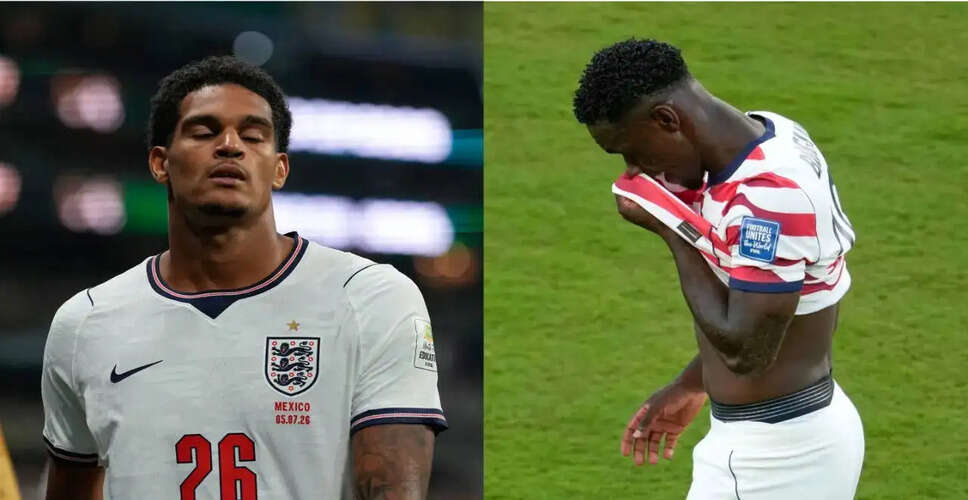

England's Jarel Quansah Faces Two-Match Ban
During the Round of 16 clash against Mexico, England's defender Jarel Quansah received a straight red card, leading to a two-match suspension. This decision underscores FIFA's stringent disciplinary guidelines. As a result, Quansah will miss both the quarter-final and a potential semi-final match, which could be against Argentina. This situation sharply contrasts with that of USA forward Folarin Balogun, whose red card suspension was overturned following a controversial intervention from President Donald Trump. The differing outcomes highlight inconsistencies in FIFA's regulatory practices.
Details Behind Quansah's Suspension
Quansah was sent off in the 54th minute after a VAR review escalated his challenge on Jesus Gallardo to a straight red card. Following the match, FIFA's disciplinary committee assessed the incident and invoked Article 14 of the FIFA Disciplinary Code, which addresses serious foul play. This article mandates a minimum two-match suspension for any challenge deemed reckless or excessively forceful. Under FIFA's tournament regulations, teams do not have a formal appeals process to contest such on-field decisions, preventing the English Football Association (FA) from challenging the suspension.
Balogun's Suspension Reversal Explained
In contrast, Folarin Balogun's initial one-match suspension for a red card received against Bosnia and Herzegovina was later lifted, allowing him to participate in the USA's Round of 16 match against Belgium. This was not due to a standard appeal process but rather a unique application of Article 27 of FIFA's disciplinary code, which permits the governing body to suspend the enforcement of a disciplinary action temporarily. FIFA announced that Balogun's suspension could still be enforced within a year if he commits a similar offense. This decision followed direct communication between US President Donald Trump and FIFA President Gianni Infantino.
Discrepancies in FIFA's Disciplinary Actions
The contrasting outcomes for Quansah and Balogun stem from the specific rules FIFA chose to apply. Quansah's two-match suspension adhered to standard procedures (Article 14), as he committed a serious foul that carries an automatic penalty without the possibility of appeal. Conversely, Balogun's situation was resolved through a rare exception (Article 27), which allowed FIFA officials to defer his punishment, enabling him to return to play without serving the ban.