
FIFA World Cup 2026: The Role of VAR and Referees Under Scrutiny

Controversies Surrounding FIFA World Cup 2026
The FIFA World Cup has always been a stage for controversy, but the 2026 tournament has ignited discussions like never before. From Egypt's shocking exit in the Round of 16 against Argentina to Germany's unexpected elimination, the focus has shifted from players to referees. Every decision has been analyzed in detail, raising the question of whether technology is enhancing fairness in football or complicating it further.
Goutam Kar, a former FIFA referee and a prominent figure in Indian refereeing education, is well-equipped to address these concerns. With over 40 years in the sport, he has held significant roles, including Director of Referees for the All India Football Federation and Referee Director for the All Nepal Football Association. He has witnessed the evolution of officiating from a time without technology to an era dominated by VAR and data-driven decisions.
VAR: A Supportive Tool, Not the Final Authority
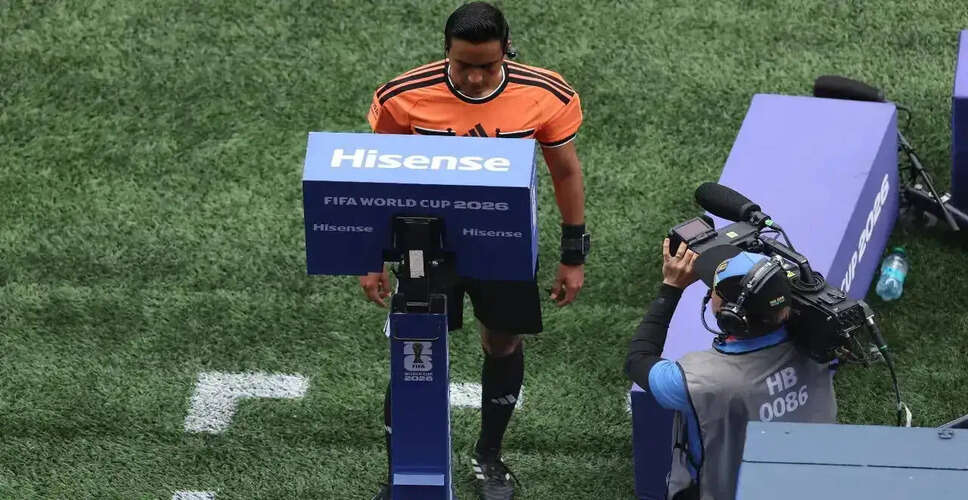
VAR - Supporting Factor, Not Decisive Factor | FIFA World Cup 2026
In an interview with Sports Now prior to the quarter-final match between Spain and Belgium, Kar discussed the role of technology in officiating. He emphasized that while technology aids in decision-making, the ultimate authority remains with the referee. "Technology can assist, but the final call is always human," he stated.
Kar pointed out that the rules of football clearly state that the referee's decision stands, regardless of VAR's functionality. He explained, "The machine may indicate an incident, but it is the referee who interprets the laws of the game." He defended the officials' decisions during controversial moments, such as Egypt's disallowed goal against Argentina, asserting that they adhered to the established rules.
Changes in VAR Protocols Amid Criticism
FIFA's recent decision to relocate VAR officials from a centralized facility in Dallas back to the stadiums for the tournament's latter stages was seen by some as a response to growing criticism. However, Kar clarified that this change was not a fundamental shift but rather a logistical adjustment due to fewer matches being played simultaneously.
He explained, "When many matches were occurring, a centralized system was necessary. Now, with fewer games, we can afford to have VAR in the stadium as a backup, ensuring that technical issues do not disrupt the flow of the game."
Increased Pressure on Modern Referees
There Is More Pressure On Referees Now: Kar
While technology has improved decision accuracy, it has also intensified scrutiny on referees. Every call is instantly reviewed and critiqued by millions online. Kar acknowledged the heightened psychological pressure on officials, noting that many are advised to avoid social media during tournaments to mitigate unnecessary criticism.
He remarked, "Referees are the best in the world, and they prepare rigorously for these events. However, the pressure has undoubtedly increased, which is why they are encouraged to stay away from social media during competitions."
The Future of VAR in Football
VAR Only For Goal-Bound Moves Or Red Cards?
With decades of experience in football, Kar was asked about potential reforms to make VAR more acceptable. He expressed that while VAR is evolving, its use should primarily focus on goal-related incidents and red cards. He stated, "The intrusion of VAR is diminishing the natural flow of the game, and its application should be limited to critical moments."
Kar concluded that while technology will continue to play a role in football, the essence of the game should remain intact, emphasizing the importance of human judgment in officiating.