
FIFA World Cup 2026: The Impact of VAR and Controversial Refereeing Decisions

Introduction to the FIFA World Cup 2026
The FIFA World Cup 2026 has emerged as a remarkable showcase of elite football, but it has also highlighted the significant role technology plays in the sport. Instances such as Davinson Sanchez's stoppage-time goal for Colombia being disallowed due to an offside 'toe' and Ghana's denied penalty against England for not being a 'clear and obvious' error have underscored the tension between automated offside technology and human referee decisions. In a recent discussion with a sports media outlet, former Indian striker Robin Singh, who is currently providing expert analysis for the tournament, shared his insights on the use of VAR and the contentious officiating seen throughout the event.
The Controversy of Argentina vs. Egypt
The Argentina Vs Egypt Conundrum
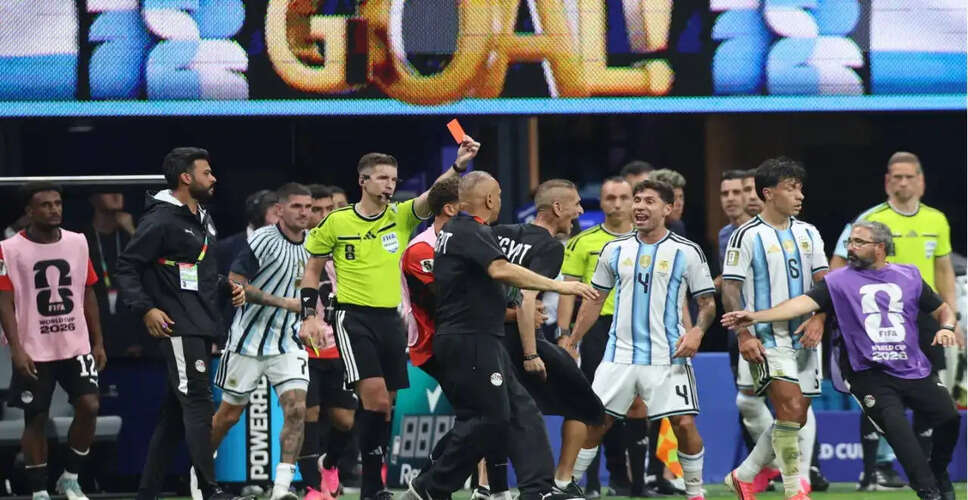
The VAR controversy reached a peak during Argentina's thrilling 3-2 comeback against Egypt in the Round of 16. Egypt initially led 2-0, but a crucial goal by Mostafa Ziko was disallowed after VAR intervention due to a foul in the buildup. Argentina then scored three goals in the last 11 minutes, with the final goal by Enzo Fernandez also coming under scrutiny as replays suggested Mohamed Salah may have been fouled by Julian Alvarez, potentially warranting a penalty. This led to outrage among Egyptian supporters, who accused the match of being biased towards Argentina. Robin Singh echoed this sentiment, stating that the potential foul on Salah should have been reviewed. He emphasized that every decision not in favor of a team feels unjust, but also acknowledged that Egypt should have maintained their lead.
The Slow-Motion Dilemma
The 'Slow Motion' Distortion
In the penalty area, physicality is expected, but Robin Singh believes the main issue with VAR is the use of slow-motion footage against players. He referenced the USA's Round of 32 match against Bosnia and Herzegovina, where Folarin Balogun's seemingly harmless ankle collision resulted in a red card after being viewed in slow motion. Singh noted that the same situation occurred with England's Jarell Quansah, where a no-call was escalated to a red card after the referee reviewed the slow-motion replay. He argued that while slow-motion can reveal contact, it often exaggerates the situation and fails to consider the context of real-time play.
Technology's Role in Football
'Lack Of Technology Helps Create Hand Of God-Like Moment'
Despite the ongoing debate about technology's influence on football, Robin Singh does not advocate for its complete removal. He pointed out that certain rules introduced with technology have enhanced fairness in the game. For instance, he praised the five-second rule for throw-ins, which prevents players from delaying the game. Singh believes technology is beneficial in ensuring that goals, such as those that hit the crossbar and are not counted, are accurately judged. However, he also acknowledged that the absence of technology can lead to iconic moments like Diego Maradona's infamous 'Hand of God' goal, suggesting that adaptation is necessary in the evolving landscape of football.