
England vs Argentina: A Historic Rivalry Reignited in the 2026 FIFA World Cup Semi-Final
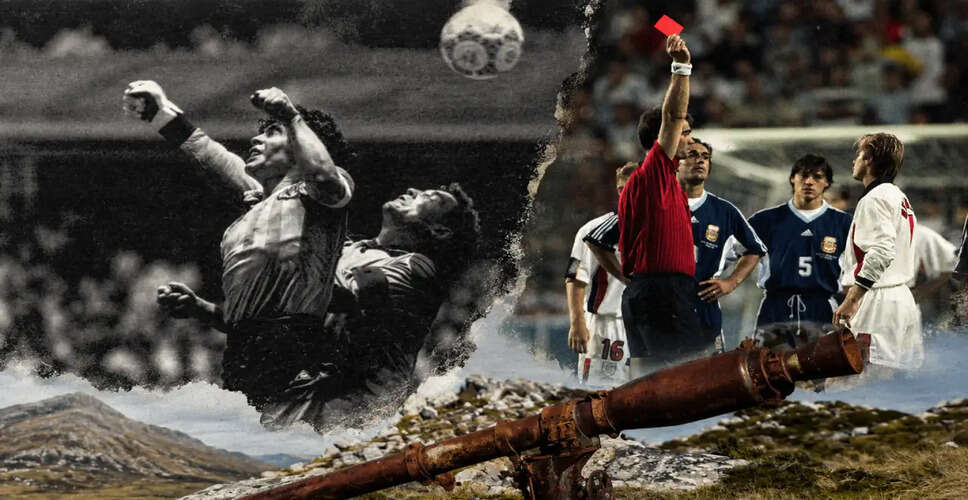

A Clash of Titans in Atlanta
The upcoming semi-final of the 2026 FIFA World Cup will witness England and Argentina reigniting their fierce rivalry after a 24-year hiatus. This match, taking place at the Mercedes-Benz Arena in Atlanta, marks a significant moment as it is the first time these two teams have met in the semi-finals of the World Cup. Despite being from different continents, the historical tensions between the nations, fueled by both political and sporting rivalries, promise an electrifying encounter. Their past meetings have produced some of the most memorable moments in World Cup history.
Political Tensions: The Falklands War
The Falklands War and the Political Context
The underlying tensions between England and Argentina can be traced back to a political conflict over the Falkland Islands, located in the South Atlantic Ocean, approximately 300 miles from Argentina's coast. This dispute escalated into a brief but deadly conflict in 1982, lasting 74 days. Argentina claimed sovereignty over the islands, while the British government maintained control since 1842. The war commenced on April 2, 1982, when Argentina invaded, leading to a British military response. The conflict concluded on June 14, 1982, with Argentina's surrender, resulting in the loss of 649 Argentine military personnel, 255 British soldiers, and three local islanders.
Football Rivalry: The Birth of Cards
The Football Battle, Which Led To Introduction Of Red, Yellow Card
The football rivalry began long before the Falklands War, notably during the 1966 World Cup, when England faced Argentina for the first time in the tournament. This match, which England won 1-0 thanks to Geoff Hurst's goal, is infamous in Argentina as the 'Theft of the Century.' The game saw Argentine captain Antonio Rattin controversially sent off, leading to a nine-minute delay as he protested the referee's decision. This incident ultimately prompted FIFA to introduce yellow and red cards in the 1970 World Cup.
Maradona's Legacy: The Hand of God
Diego Maradona And The Hand Of God
Two decades later, in the 1986 World Cup quarter-finals at Estadio Azteca, the teams met again, just four years after the Falklands conflict. This match is one of the most discussed in World Cup history, largely due to Diego Maradona's legendary performance. He scored two iconic goals, one of which, known as the 'Hand of God,' was a controversial play where he used his hand to score, unnoticed by the referee. His second goal, a stunning solo effort, is celebrated as the 'goal of the century.'
Beckham's Redemption
David Beckham And The Red Card
The next encounter in 1998 saw David Beckham controversially sent off in the Round of 16 after retaliating against Diego Simeone. The match ended in a 2-2 draw, with Argentina winning in penalties. Beckham faced severe backlash in England but redeemed himself in the 2002 World Cup, scoring the decisive penalty in a 1-0 victory over Argentina, which helped England advance while eliminating Argentina.
A New Chapter in Their Rivalry
Two Decades Later, They Meet Again
The upcoming semi-final will be the first World Cup meeting in 24 years and the first competitive match since a friendly in 2005. Historically, the teams have faced each other 14 times, with Argentina winning six, England five, and three matches ending in draws. The head-to-head record in World Cup matches stands at 2-2.
Lionel Messi's First Battle With England
This match will also mark Lionel Messi's first encounter with England in an international fixture, adding another layer of intrigue to this storied rivalry.