
FIFA President Hints at Expanding World Cup to 64 Teams for 2030

Potential Expansion of the World Cup
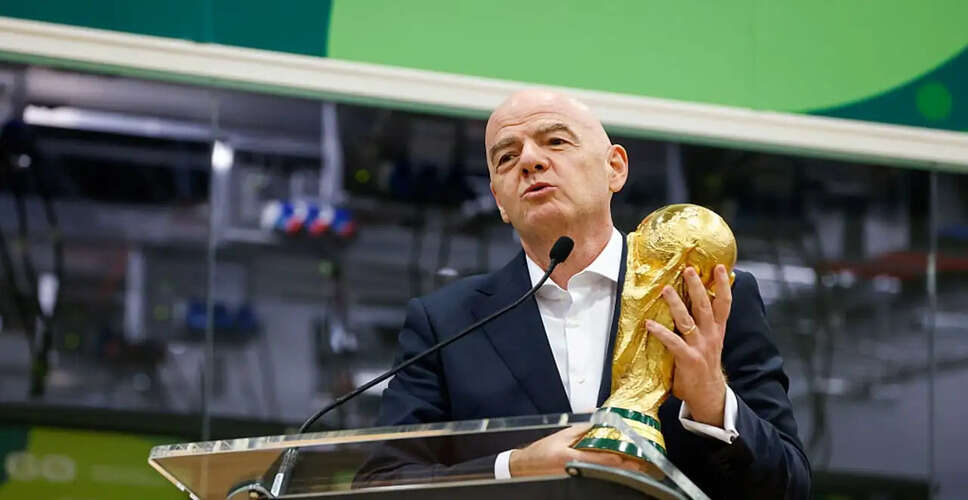
NEW YORK: Exciting changes may be on the horizon for football fans. FIFA President Gianni Infantino has suggested that the World Cup could expand from 48 to 64 teams for its centennial celebration in 2030. He praised the inaugural 48-team tournament held in the USA, Canada, and Mexico as a significant success.
Infantino's remarks came shortly after the quarter-finals of the 2026 World Cup concluded, with Argentina, France, Spain, and England advancing to the semi-finals. In an interview with a Swiss media outlet, he emphasized that the World Cup should be inclusive, stating, "The World Cup is for the entire world, not just for Europe and South America. Every nation dreams of participating in the World Cup. If we don't provide opportunities for smaller nations, they may lose the drive to enhance their football capabilities."
He further explained that a 64-team format would streamline the tournament by eliminating the current complex group stage calculations, such as determining the best third-placed teams. The proposed structure would consist of 16 groups with four teams each, allowing the top two teams from each group to advance directly to the knockout stage, increasing the total matches from 104 to 128.
However, this proposal has met with significant resistance. UEFA, along with major domestic leagues and players' unions, has expressed concerns about the physical and mental strain on players due to an already congested match schedule. They warn that adding more matches could jeopardize players' careers.
The 2030 World Cup is poised to be historic, as it will be the first to take place across three continents and six countries: Spain, Portugal, Morocco, Uruguay, Argentina, and Paraguay. Only the initial three matches will occur in Argentina, Uruguay, and Paraguay. If FIFA approves the 64-team expansion, as suggested by the South American Football Confederation, the 2030 tournament could become the largest football event in history.