
FIFA President Defends Hydration Breaks Amid Controversy at 2026 World Cup

FIFA's Stance on Hydration Breaks
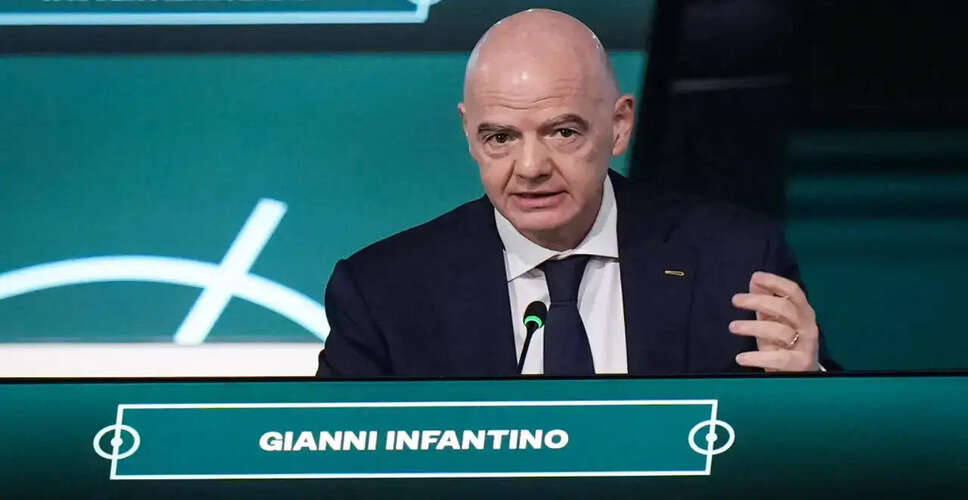
Gianni Infantino, the president of FIFA, has addressed the heated debate surrounding hydration breaks during the 2026 World Cup. He emphasized that the organization will review the necessity of these breaks after the tournament concludes, clarifying that they are not driven by commercial interests. The breaks, introduced at the 22nd minute of each half, have sparked significant discussion among fans and coaches alike.
Infantino's Comments on the Breaks
Infantino Responds to Criticism
Coaches have raised concerns that these breaks disrupt the flow of the game, making it resemble a sport divided into quarters. Infantino refuted claims that FIFA benefits financially from these pauses, stating, "I want to stress this because I hear as well it's about money; it is not. We don't make one dollar more in revenues in FIFA with these hydration breaks. All our contracts were signed well ahead of the decision to have these breaks." He acknowledged that broadcasters might gain from increased advertising opportunities, but FIFA itself sees no financial gain.
Future of Hydration Breaks
Infantino indicated that FIFA would assess its approach to future tournaments based on the outcomes of this World Cup. He noted that the breaks were implemented to maintain competitive balance, especially given the demanding schedule where teams may play up to eight matches in just over a month. "The most important element for us is to guarantee the sporting equity of the tournament," he explained.
Ongoing Criticism from Coaches
Coaches Voice Their Concerns
England's coach, Thomas Tuchel, recently expressed his discontent with the mandatory breaks, arguing that they disrupt the natural rhythm of the game. While he acknowledged their necessity in extreme heat, he questioned their application in all scenarios, including indoor matches. In a recent game between Portugal and Uzbekistan, a goal was disallowed following a hydration break due to a foul, highlighting the potential impact of these pauses on gameplay.
Fan Reactions and Future Considerations
Fans have reacted negatively to the hydration breaks, often booing during interruptions, particularly in stadiums with controlled environments. Infantino suggested that these breaks could enhance the game by allowing coaches to reassess strategies and giving players a moment to recuperate. He pointed out that the intensity of matches has been remarkable, possibly aided by these breaks. He referenced the Champions League final, where hydration breaks were also utilized, and assured that FIFA would evaluate the effectiveness of this policy after the World Cup.