
Dutee Chand Critiques IOC's New Gender Testing Policy in Sports

The Controversy Surrounding Gender Testing in Sports
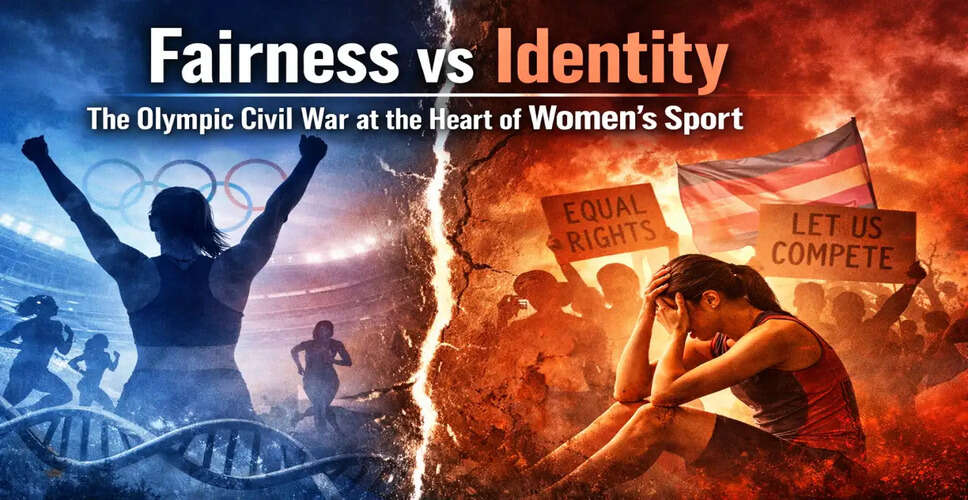
The International Olympic Committee (IOC) has recently introduced a policy centered on SRY gene testing, which has sparked renewed discussions about fairness and dignity in women's sports. Dutee Chand, an athlete who previously contested hyperandrogenism regulations, perceives this new framework as a troubling regression. She argues, “The return of gender testing, albeit under a different name, is concerning. If we accept variations in strength and body types in men's sports, why is there such intense scrutiny on women?”
Dutee Chand's Concerns About the SRY Test
Chand expressed her discontent with the IOC's decision, stating, “Changing the name of the gender test to SRY does not change its implications. This test is detrimental to female athletes. At birth, factors like gender, height, and weight are not considered. You cannot expect someone to change their biological makeup based on hormone levels.” She emphasized that while male athletes should be monitored, women should not be subjected to such invasive testing.
From the Los Angeles 2028 Olympics, eligibility for female categories will be limited to biological females, determined through a one-time SRY gene screening. This policy, framed as a measure to ensure fairness and safety, will not apply retrospectively and does not affect grassroots participation.
Joydeep Karmakar's Perspective on Fairness and Inclusion
Former Olympian Joydeep Karmakar highlighted the tension between inclusion and fairness, acknowledging that biological differences can impact competitive outcomes. He described the policy as a necessary correction, albeit an uncomfortable one. “Inclusion should not compromise fairness,” he stated, recognizing the complexity of the issue.
Karmakar noted that the debate extends beyond sports, touching on societal issues. He suggested that while the SRY test may be scientifically grounded, it raises ethical questions about competition and fairness.
Concerns from Gender Rights Activists
Gender rights activist Durga Nandini criticized the IOC's policy as a structural barrier that marginalizes transgender and intersex athletes. She argued that reducing athletes to their chromosomes is a violation of their dignity and identity. Nandini warned that this policy could have devastating effects on athletes from marginalized backgrounds, particularly in countries like India.
She emphasized that the policy echoes a past attempt at sex testing that was abandoned due to ethical concerns, suggesting that the IOC's current approach disregards historical lessons and human rights.
Legal Perspectives on Privacy and Dignity
Senior Supreme Court lawyer Rahul Mehra raised concerns about the potential infringement on privacy and dignity that could arise from the implementation of such policies. He suggested the creation of a third category in sports to accommodate evolving identities without compromising competitive fairness.
Mehra pointed out that while the intention may be to ensure fairness, the execution could lead to discrimination and stigmatization of individuals. He advocated for a balanced approach that respects the rights of all athletes.
The Future of Sports and Fairness
The ongoing debate highlights the complexities of balancing fairness with inclusion in sports. As the IOC navigates these challenges, the question remains: what kind of sporting environment do we want to foster? The implications of these policies extend beyond competition, affecting the dignity and rights of athletes worldwide.