
Dukes Ball Controversy: Calls for ICC to Reassess New Ball Regulations
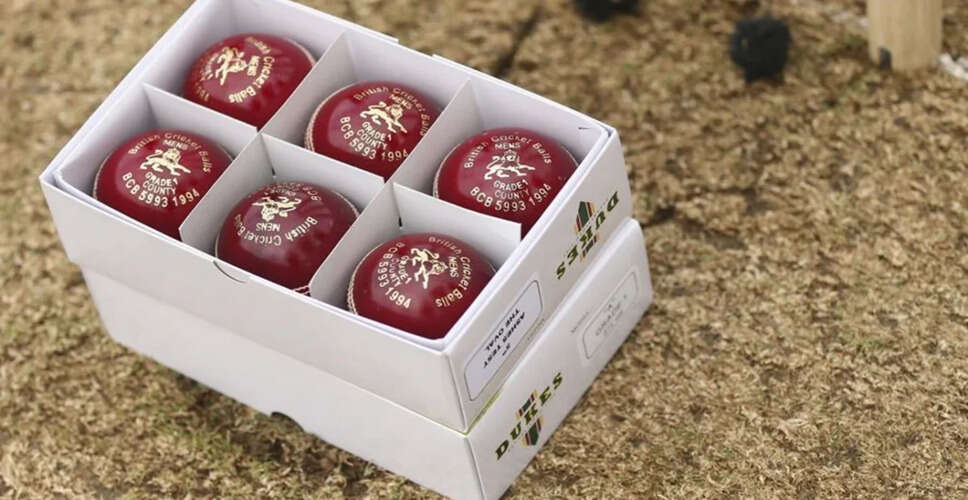
Dilip Jajodia's Appeal to the ICC
Dilip Jajodia, the owner of the Dukes factory in England, has called on the International Cricket Council (ICC) to review the regulations regarding the timing of the second new ball in Test matches. His request comes after the recent Edgbaston Test between India and England, where players from both teams expressed dissatisfaction with the condition of the ball.
Before suggesting that the international governing body reassess the current ball change policy, Jajodia criticized modern cricketers for their tendency to blame external factors rather than acknowledging the shortcomings of the pitches or their own skills.
Insights from Jajodia in an Exclusive Interview
“There’s little discussion about the flatness of the pitch or the skill level of the bowlers. The Dukes ball is recognized for being favorable to bowlers, yet with multiple centuries being scored in an innings, the blame shifts to the ball. If something goes awry, it’s either the pitch or the ball—never the players. When players fail to score, it’s the pitch’s fault. When bowlers struggle to take wickets, it’s the ball’s fault,”
Perhaps the authorities should consider permitting the new ball to be taken between the 60th and 70th overs, rather than adhering to the current rule of the 80th over. They seem to expect the ball to maintain its hardness until the 79.5th over, which is unrealistic,” he added.
Jajodia elaborated on the intricate process of ball manufacturing, emphasizing that it is not a conscious decision by Dukes to compromise on quality.
No two cowhides are identical, which introduces a natural variability. The ball is not a mass-produced item where every piece is the same. It is designed to wear down; it’s not a solid object. From our perspective as manufacturers, we are not producing a ball that is meant to fail. Our standards and processes remain unchanged,” he noted.
Despite India’s significant victory in the second Test, captain Shubman Gill voiced his concerns regarding the ball's performance, stating it created an uneven playing field for bowlers.
More than the pitch, the ball softens and loses shape rapidly. If bowlers can only rely on the ball for 20 overs of assistance, the rest of the day becomes a defensive struggle, detracting from the essence of the game,” Gill remarked after the match.
For those unfamiliar, Test matches in England, Ireland, and the West Indies utilize the Dukes ball, which is known for its hard seam that tends to favor fast bowlers.