
Unusual No-Ball Incident in India vs Zimbabwe T20 World Cup Match

In a surprising turn of events during the T20 World Cup match between India and Zimbabwe, an unprecedented no-ball was called by the umpire. This incident occurred in the 15th over, where Shivam Dube's delivery led to confusion and a significant score for Zimbabwe. The match showcased the complexities of cricket rules, particularly regarding legal deliveries. Fans and players alike were left astonished by the decision, prompting discussions about the laws of the game. Read on to find out more about this unusual moment in cricket history.
 | 
Unusual No-Ball Incident in India vs Zimbabwe T20 World Cup Match
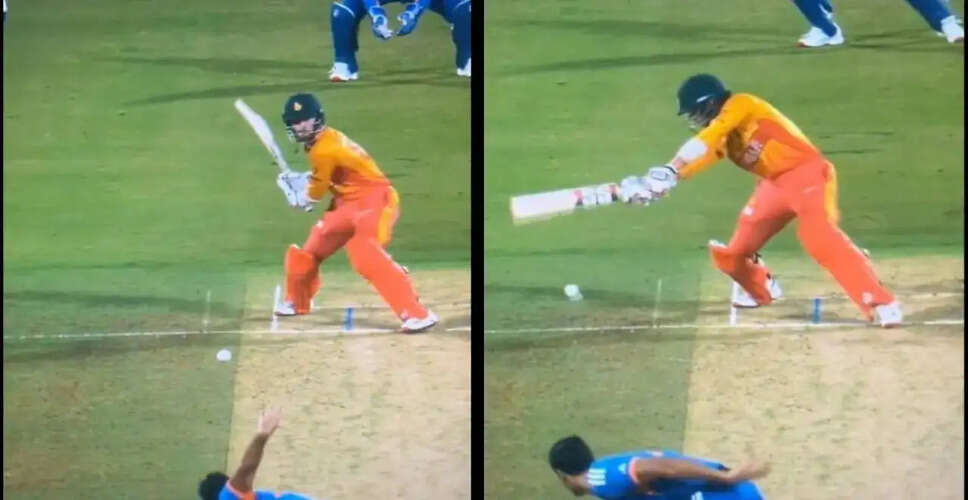
Bizarre No-Ball Decision in T20 World Cup

During the T20 World Cup match on February 26, 2026, between India and Zimbabwe, an unusual moment unfolded in the 15th over. Umpire Richard Kettleborough called a no-ball on a delivery from Shivam Dube, which was faced by Brian Bennett at the MA Chidambara Stadium in Chennai. This was Dube's only over in the match, and it turned out to be quite costly for India, as Zimbabwe scored 26 runs off it. Bennett faced all six balls, leaving the Indian bowlers in disarray. In response, Dube resorted to bowling wide outside the off-stump, resulting in three wides and one no-ball before the final delivery. The no-ball was awarded when Bennett attempted to hit a delivery that was well outside the wide line but failed to score any runs. The Zimbabwean players immediately appealed to the umpire, who confirmed the no-ball. Watch here

Understanding the No-Ball Ruling

The no-ball was deemed valid because the delivery was pitched outside the designated area on the grass. According to the rules, a bowler must land the ball on the pitch for it to be considered a legal delivery. As outlined in Law 21.7 of the MCC Laws of The Game: "The umpire shall call and signal No ball if a ball which he/she considers to have been delivered, without having previously touched bat or person of the striker, - bounces more than once or rolls along the ground before it reaches the popping crease or - pitches wholly or partially off the pitch as defined in Law 6.1 (Area of pitch) before it reaches the line of the striker’s wicket. When a non-turf pitch is being used, this will apply to any ball that wholly or partially pitches off the artificial surface.