
The Evolution of IPL: Lalit Modi's Journey from Doubt to Dominance
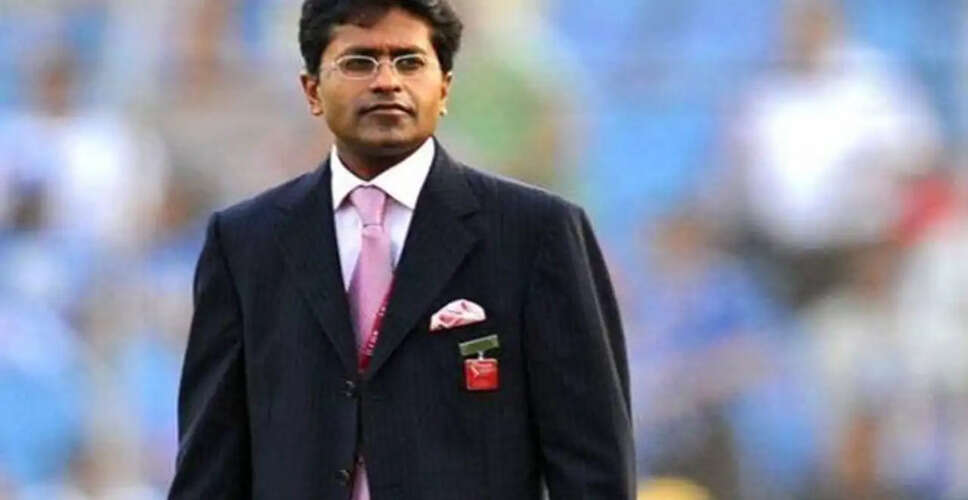
The Early Struggles of IPL's Founder
The Indian Premier League (IPL) has transformed into a financial powerhouse, now recognized as the second most valuable sports league globally based on per-match valuation. However, its inception was fraught with challenges. Lalit Modi, the league's founder, faced significant hurdles in securing broadcasters and investors, many of whom deemed the concept a failure. Before the inaugural season in 2008, he encountered resistance from broadcasters and a lack of understanding from potential investors.
Modi shared that he initially envisioned the league in the late 1990s, planning an eight-team format called the 'Indian Cricket League.' Despite having franchise names ready, the project was ultimately abandoned. Interestingly, he still owns the domain for this name, even though a league with the same title was launched by Essel Group Chairman Subhash Chandra in 2007.
“My goal was always to create the largest league in the world. The original concept was approved by the Board of Control for Cricket in India (BCCI), and we invested between $17 million and $20 million to hire top players. The teams included Delhi Panthers, Mohali Stallions, and others. However, the need for excessive under-the-table payments led me to abandon the idea,” Modi recounted during a conversation with Sportstar.
When he launched the IPL, his first approach was to Subhash Chandra to discuss broadcasting rights. Modi realized that the IPL would need to compete with popular television soap operas to attract viewers, particularly women and children. He noted, “We approached numerous broadcasters, but received rejections. I presented to over 1,000 businessmen, and 99% failed to grasp the concept. Even within the BCCI, only two understood the vision.”
To capture the audience of popular shows, he decided on a night cricket format with an 8 PM start time, incorporating music and entertainment to draw in families. The success of India's 2007 T20 World Cup victory, where players like Yuvraj Singh became national heroes, significantly boosted interest in the IPL.
Modi recalled that only three broadcasters submitted bids, with Sony's bid coming with strict conditions. He faced challenges in finding franchise owners, as many major corporations were hesitant to invest. “The first step was securing a broadcaster. Without that, we lacked a foundation. Sony agreed to a deal as a sub-licensee of World Sports Group, but only after I emphasized the necessity of having the top 100 players involved,” he explained.
He further elaborated on the bidding process, revealing that ESPN's proposal was based on revenue sharing, which he rejected. When he opened the World Sports Group bid, it was for a staggering billion dollars, a figure he believed would create headlines. “We needed to project that the IPL was bold enough to demand a billion dollars,” he stated.
On January 4, the franchise tender process began, with a minimum bid of $50 million over ten years. Modi assured potential investors that if they believed in the IPL's potential, they would reap significant rewards from ticket sales, sponsorships, and a share of the central pool. Despite skepticism from major companies like Airtel and Tata Group, he remained committed, stating, “If the IPL fails in the first year, I will cancel the second year. I risked my entire career on this.” Ultimately, with support from Sharad Pawar, the IPL was successfully launched.