
Ravichandran Ashwin Discusses India's Bowling Future Post-Bumrah
India's Batting Depth and the Role of Jasprit Bumrah
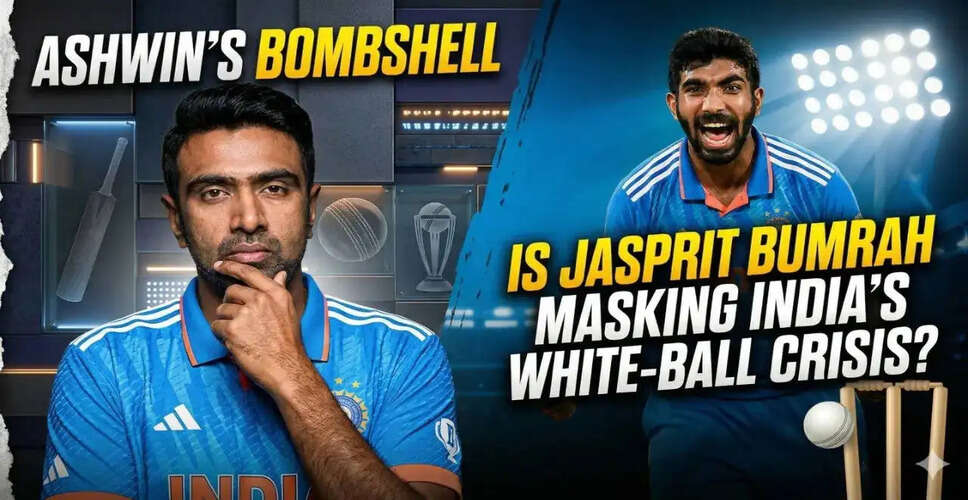
Ravichandran Ashwin, the former Indian off-spinner, expressed confidence in India's batting strength, suggesting that the team is poised to secure several white-ball titles in the upcoming decade. However, he emphasized the crucial impact of Jasprit Bumrah on the team's success in limited-overs cricket. Ashwin voiced concerns about the potential challenges India may face in bowling once Bumrah retires, highlighting his pivotal role in the team's achievements. India has recently claimed the T20 World Cup in 2024 and the Champions Trophy in 2025, along with defending their T20 title this year, marking three ICC trophies in just three years, with Bumrah being instrumental in all victories.
“The caliber of our white-ball batsmen is exceptional. I firmly believe that India will continue to win numerous white-ball trophies in the next decade, primarily due to our batting prowess,” Ashwin stated during the RevSportz Conclave. He further questioned, “What will happen after Bumrah? He is a key figure in this white-ball setup.”
Ashwin also highlighted the contrasting experiences of bowlers and batters, suggesting that they represent almost two distinct sports. He lamented the diminishing appeal of bowling, sarcastically noting that it has become a spectacle of conceding sixes, which could deter future generations from pursuing the craft. “I worry that bowling lacks the allure of batting, which might discourage kids from engaging with the sport. When I refer to sport, I see bowling and batting as separate entities. Bowling is not captivating enough; it feels like you are merely entertaining the audience by allowing sixes. Who would genuinely believe that bowling can lead to tournament victories?” Ashwin questioned.
The Future of India's Bowling After Bumrah
Beyond Jasprit Bumrah - Is India’s Success Hiding a White-Ball Crisis?
Bumrah is likely to be remembered as one of the greatest fast bowlers in history, and his absence will undoubtedly create a significant gap that will be hard to fill. The next generation of Indian fast bowlers, including talents like Arshdeep Singh, Akash Deep, Harshit Rana, Prasidh Krishna, Mukesh Kumar, and Anshul Kamboj, show promise, but it may be unrealistic to expect them to match Bumrah's caliber. It might be premature to speculate whether they can step into his shoes.
T20 World Cup 2026: India Bowling Performance
| 🔢 Rank | 🎯 Bowler | 🧮 Wickets | 📊 Overs Bowled | 🏏 Runs Conceded | ⚡ Economy Rate | 💬 Impact |
| 🥇 1 | Jasprit Bumrah | 14 | 28 | 174 | 6.21 | 🟢 Elite / Match-winner |
| 🥈 2 | Varun Chakaravarthy | 14 | 31 | 287 | 9.25 | 🔴 Expensive despite wickets |
| 🥉 3 | Axar Patel | 11 | 25 | 205 | 8.2 | 🟡 Steady support |
| 4️⃣ | Hardik Pandya | 9 | 33 | 291 | 8.46 | 🟠 Utility role |
| 5️⃣ | Arshdeep Singh | 9 | 30 | 254 | 8.41 | 🟠 Support role |
During the T20 World Cup 2026, Bumrah once again topped the wicket charts with 14 wickets, establishing himself as the tournament's standout bowler. Varun Chakaravarthy matched Bumrah's wicket tally but struggled with an economy rate of 9.25, conceding 287 runs in 31 overs compared to Bumrah's impressive 174 runs in 28 overs at an economy of 6.21. Axar Patel was India's next best bowler with 11 wickets at an economy of 8.20, while both Hardik Pandya and Arshdeep Singh took 9 wickets each, with economy rates of 8.46 and 8.41, respectively.
While Bumrah's ability to influence matches is unquestionable, the other Indian bowlers also contributed with wickets, albeit not as economically as Bumrah. Although India may face challenges in adapting to his absence, it is worth noting that he still has four to five years of cricket ahead, which could inspire the next generation of bowlers in a competitive Indian cricket environment. This situation echoes the historical question of who would succeed Sunil Gavaskar, to which India found answers in Sachin Tendulkar and later Virat Kohli. The same could hold true for Bumrah.