
India's Thrilling Comeback Secures Bronze at Men's Junior Hockey World Cup
A Remarkable Turnaround for Indian Hockey
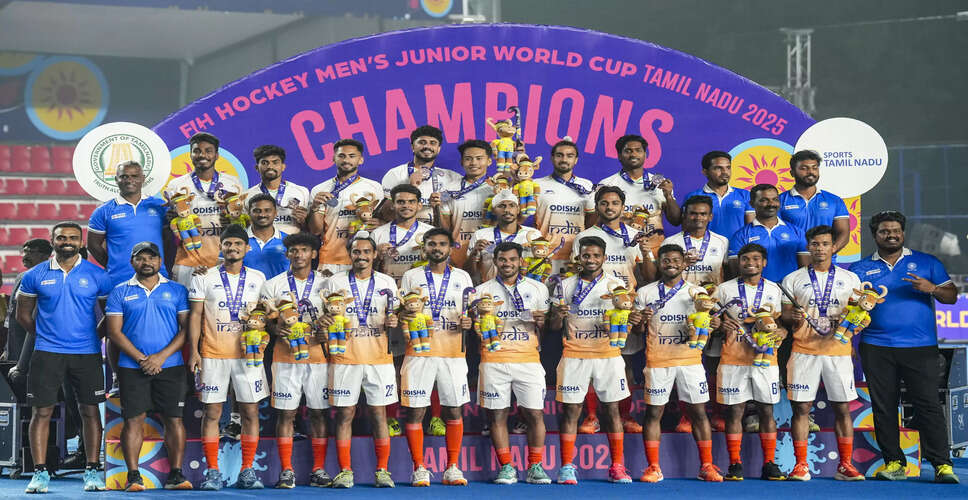
India's Men's Junior Hockey team achieved a stunning comeback, ending a nearly ten-year wait for a medal at the Junior World Cup. To break the cycle of near misses in previous tournaments, the team displayed relentless energy, a bit of luck, and strong mental resilience, surpassing the fourth-place finishes of 2021 and 2023. Although they fell short of matching the golden achievement of the 2016 squad, who secured India's second World Cup title, this year's team proudly brought home the nation's fourth medal in the tournament's history.
The journey began with dominant victories against lower-ranked teams during the pool stage, but it appeared to mirror the struggles of past World Cups. India managed to advance past the quarterfinals, winning narrowly against Belgium in 2021 and 2025, and edging out the Netherlands in 2023.
In all three tournaments, Germany proved to be a formidable opponent in the semifinals, exposing India's weaknesses with decisive victories. The trend continued into the bronze medal match, where India initially struggled against Argentina, falling behind early and appearing shaken from their semifinal defeat.
Despite a shaky start, India turned the tide in the final quarter, scoring four goals in just nine minutes to clinch a 4-2 victory. Their ability to remain composed under pressure was crucial, as they capitalized on a penalty corner with a clever variation that caught Argentina off guard.
Argentina, rattled by India's frantic style, lost their composure, leading to turnovers and missed opportunities. India seized the momentum, scoring additional goals to secure their place on the podium.
However, it is essential to recognize that this victory should not overshadow the flaws evident throughout the tournament. While a Junior World Cup medal is significant, it does not necessarily reflect a nation's overall growth or status in senior-level hockey.
Countries like the Netherlands and Australia, despite their junior records, remain dominant in the sport. India's victories against Belgium and Argentina do not indicate superiority, as their earlier pool stage wins against weaker teams painted an inaccurate picture of their capabilities.
The team's technical and tactical limitations were evident, particularly in their shooting, passing, and defensive strategies. Confusion in defensive roles and a lack of cohesive attacking play hindered their performance.
The junior level serves as a glimpse into the future, and while the medal is commendable, it highlights the need for improvement. The senior team has developed a disciplined style of play over the years, but the junior setup has not fully adopted these methods, leading to a disconnect.
As new players enter the junior ranks, they often undergo a relearning process, which can leave them unprepared for the demands of senior international hockey. In contrast, top hockey nations benefit from a consistent system across age groups, allowing players to transition smoothly.
Recent successes in Indian hockey have stemmed from the revival efforts in Punjab, driven by dedicated administrators and coaches. However, this progress has stagnated due to administrative neglect, risking a decline in the sport's future.
With key players retiring and others nearing the end of their careers, Indian hockey faces a critical juncture. Without long-term strategies from administrators, the sport may enter a downward spiral.