
India's Rollercoaster Day at The Oval: Hope, Collapse, and Resilience

A Day of Highs and Lows for India
As the second day unfolded at The Oval, India approached the game with a mix of hope and uncertainty. Their goal was clear: to build on the promise shown on Day 1 and establish a strong position.
However, the match, much like the unpredictable English weather, shifted dramatically.
In a shocking turn, India lost four wickets for just twenty runs within the first thirty minutes. The English bowlers, shrewd and relentless, exploited a pitch that had seemingly deteriorated overnight. The ball danced past the bat, and when it made contact, it often resulted in a dismissal. The once-promising scoreboard now read a disappointing 224 all out.
England began their innings with determination, showing no signs of extravagance. They understood that runs would be hard to come by and chances limited. Yet, they took advantage of a brief lull from the Indian bowlers and capitalized on any loose deliveries. By lunch, the hosts had reached 109 for 1, demonstrating a sense of purpose rather than dominance.
As the afternoon progressed, the dynamics of the match changed again.
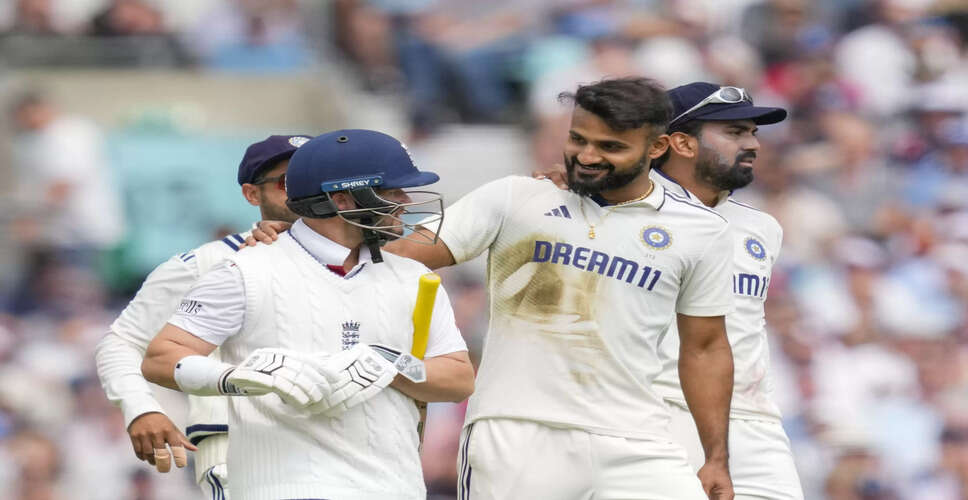
Mohammed Siraj found his groove, delivering hard lengths and sharp angles, while Prasidh Krishna, though less experienced, matched his intensity with bounce and aggression. Together, they began to dismantle England's confidence. Catches were taken, pads were struck, and patience was tested. By tea, England had faltered to 215 for 7, their early confidence shaken by the Indian seamers' relentless pressure.
Shortly after, rain interrupted play, prompting the crowd to seek shelter under umbrellas that bloomed across the stands. However, the damage had already been done.
With only three seamers in action, India managed to hold their ground. Siraj ended the day with three wickets, while Prasidh claimed four, each wicket a hard-fought victory celebrated with quiet determination. They had managed to restrict England, albeit not entirely, leaving the hosts with a slender lead of 18 runs at the end of the day.
Yet, the day's challenges were far from over.
Chris Woakes, England's dependable all-rounder, was unable to bat or bowl, subtly shifting the match's balance. The onus now rested on Harry Brook, who remained at the crease, tasked with turning the lead into a more significant advantage.
At The Oval, the match continued to unfold in its unique manner: a morning collapse, an afternoon resurgence, and an evening filled with quiet anticipation.
In cricket, expectations are often replaced by uncertainties, which is perhaps what makes the sport so captivating.