
India-Pakistan Cricket Rivalry Sparks Controversy Ahead of Asia Cup
Resumption of the Rivalry Amidst Tensions
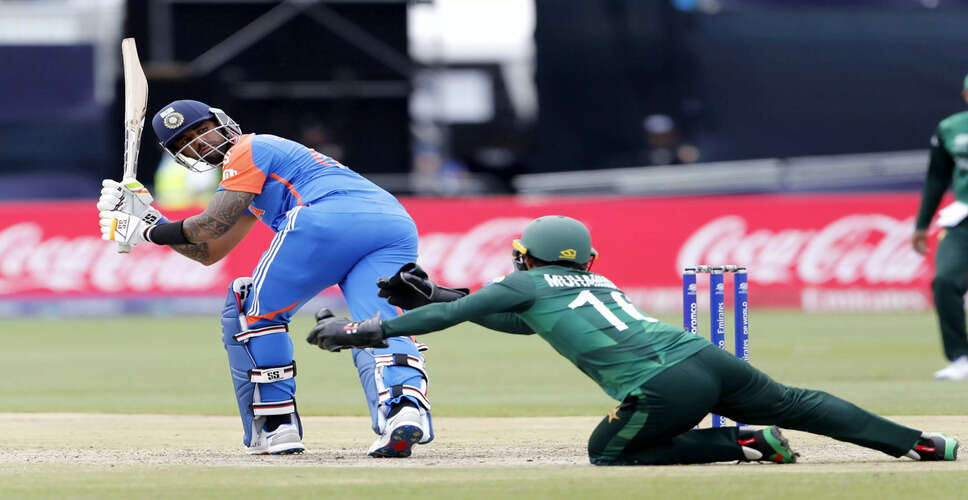
The long-standing cricket rivalry between India and Pakistan is poised to make a brief return during next month's Asia Cup. However, the announcement has ignited a wave of criticism across social media platforms, raising the question of whether the Sports Ministry should intervene.
The emotional aftermath of the tragic incident in April, where 26 individuals were killed by terrorists linked to Pakistan in Pahalgam, Jammu and Kashmir, still lingers. This incident even escalated into a brief military confrontation between the two nations. Now, just months later, the cricket teams are set to face off in the Asia Cup.
A source from the Sports Ministry indicated that currently, the Board of Control for Cricket in India (BCCI) operates independently of the ministry's oversight, as the National Sports Governance Bill has yet to be enacted. The ministry is monitoring public sentiment regarding the BCCI's response.
Lieutenant General (Retd) KJS Dhillon, a notable figure and former Director General of the Defence Intelligence Agency, has publicly advocated for a boycott of cricketing relations with Pakistan. Conversely, former BCCI President and captain Sourav Ganguly has expressed that while he condemns terrorism, sports should continue.
The Sports Ministry has clarified that any bilateral sporting engagements with Pakistan are currently off the table. However, in the context of multilateral events, they will adhere to the Olympic Charter, which prohibits discrimination based on political issues. This means that the government will not prevent Pakistan from participating in international competitions held in India.
Following the Olympic Charter is vital for India's aspirations to host the 2036 Olympics. Cricket is also becoming part of the Olympic movement, with its debut in the T20 format scheduled for the 2028 Games. Nevertheless, the Asia Cup, featuring eight nations, is not an ICC event and is organized by the Asian Cricket Council (ACC), currently led by Mohsin Naqvi of the Pakistan Cricket Board.
The tournament includes a highly anticipated India-Pakistan match on September 14, with the possibility of two additional encounters later on. The financial stakes are significant, as broadcasters anticipate substantial viewership, which translates into higher advertising revenues.
Sony Network has acquired the broadcast rights for the Asia Cup from the ACC for USD 170 million over eight years. Reports suggest that without mandatory India-Pakistan matches, the network could face considerable financial losses, which would also impact the ACC's revenue forecasts.
While the BCCI may not feel the financial strain, the repercussions could extend to the other 24 ACC member nations, many of which are still developing their cricketing infrastructure.
Understanding the National Sports Governance Bill
The National Sports Governance Bill includes provisions allowing the Sports Ministry to impose 'reasonable restrictions' on the international participation of Indian teams and athletes under 'extraordinary circumstances' and in the 'national interest.'
Although the Bill was introduced in Parliament last week, it requires approval from both the Lok Sabha and Rajya Sabha before it can become law. Once enacted, the BCCI will fall under the ministry's jurisdiction.
The source noted, 'The situation will change once the Bill is enacted. For now, it remains the BCCI's decision.'
Since the 2008 Mumbai terror attacks, which resulted in over 150 fatalities due to Pakistan-backed terrorists, India and Pakistan have refrained from engaging in lucrative bilateral matches. However, they frequently meet in multinational tournaments like the World Cup and Champions Trophy, drawing significant viewership both in stadiums and on various media platforms.