
Emotional Dynamics of Indian Cricket Unveiled in Recent ODI Victory
The Unseen Narratives of Cricket
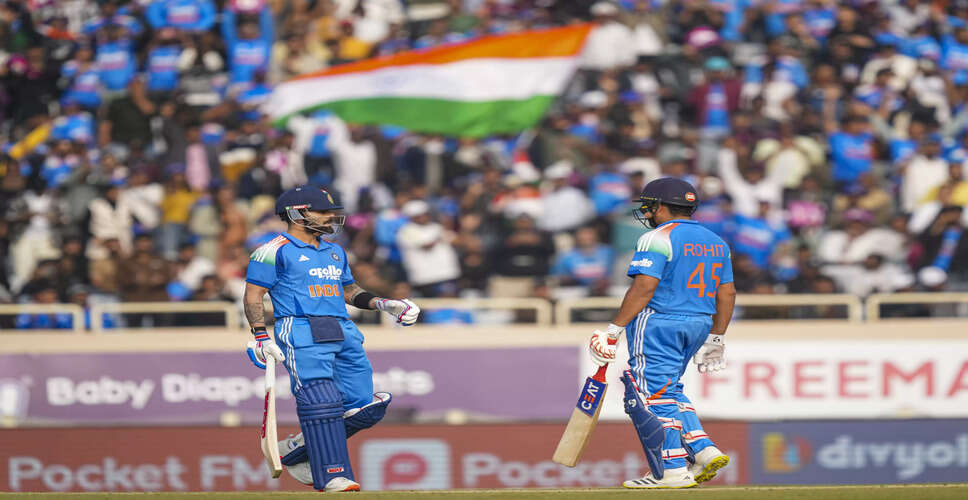
High-stakes cricket matches often unveil narratives that go beyond mere statistics. They manifest through subtle gestures, fleeting glances, and the unspoken interactions of players who carry both pride and unresolved issues. The recent ODI clash in Ranchi between India and South Africa was not just a decisive victory for India; it served as a revealing study of how triumph is perceived following a challenging period of uncertainty.
Beneath the surface of the match lay intricate subplots, with two specific moments providing a raw glimpse into the emotional landscape of Indian cricket.
The first significant moment occurred when Rohit Sharma notched his fifty. Virat Kohli, positioned at the non-striker’s end, cast a piercing glance towards the dressing room, reminiscent of a dart thrown with precision. His expression conveyed more than just acknowledgment; it seemed to carry an unspoken challenge shaped by months of speculation and decisions made behind closed doors. It appeared to ask, 'Is this the player you wanted to dismiss?' A single glance, yet rich with the weight of recent turmoil.
The second poignant moment unfolded as Kohli celebrated his 52nd ODI century. As he raised his bat, Rohit’s applause was tender, contrasting sharply with the competitive nature of professional sports. It resembled a parent cheering for a child triumphing in a school race — warm, nurturing, and quietly protective. His clapping felt like a comforting embrace, recognizing both the achievement and the struggles that preceded it.
These emotional expressions were not mere isolated incidents; they reflected the sentiments of players who felt misjudged, rearranged, or undervalued by a management team that had misinterpreted both the situation and the individuals involved. The wounds from the recent Test series defeat remain fresh, and the sidelining of senior players only amplifies the pain felt during moments of failure. Decisions made in boardrooms quickly fade under the pressure of match day.
Cricket, as always, levels reputations with ruthless precision. It disregards hierarchy and management theories, focusing solely on performance, resilience, and the unique chemistry of team spirit.
So, what lies ahead?
Players will naturally unite, as that is their instinct. They traverse the same emotional landscape, share similar worries, and exist under constant scrutiny. However, those responsible for recent decisions will begin to notice the growing divide. This rift is already forming: Players versus Coaching Staff. Each century by Kohli, every statement made by Rohit on the field, and every success will deepen this divide, affirming one faction while leaving the other scrambling for validation.
Such underlying tensions do not simply fade away. They linger, evolve, and influence the atmosphere in meeting rooms and the tone of discussions during lengthy bus rides.
What the match in Ranchi revealed was more than just a victory; it laid bare the uncomfortable, unscripted drama unfolding within the locker room — a setting where someone will eventually need to step up and assume the role of a stabilizing figure. Perhaps a leader akin to Shastri is needed, someone with the stature and authority to mend the frayed bonds of Indian cricket.