
Cricket Faces Challenges Amid Geopolitical Tensions in Asia
Cricket's Changing Landscape
Once seen as a tool for fostering diplomatic relations, cricket is now grappling with significant challenges due to escalating geopolitical tensions, particularly in Asia.
The recent actions of cricketing powerhouses—India, Pakistan, and Bangladesh—signal a departure from the concept of 'cricket diplomacy.' The Bangladesh Cricket Board's (BCB) recent decision to forgo travel to India for the ICC T20 World Cup matches marks a significant blow to this diplomatic approach.
India's refusal to visit Pakistan for the ICC Champions Trophy was met with Pakistan's decision to skip India for the T20 World Cup. The 2025 Asia Cup adopted a hybrid model with matches held in the UAE, similar to the ICC Women’s World Cup, where Pakistan played all its games in Sri Lanka. The BCB's announcement has further fractured the unity among Asian cricket nations, extending beyond mere hosting arrangements.
Historically, teams have sought relocations due to security concerns, but this is the first instance where three Asian boards have collectively declined to play on each other's home turf, igniting a debate on the intersection of sports and politics.
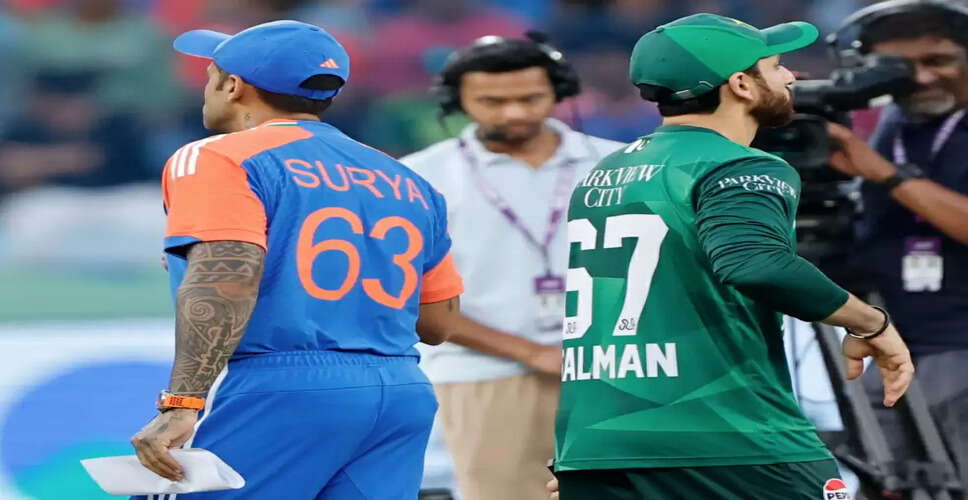
Last year, the Indian team opted not to engage in the traditional handshake with Pakistan's players during the Asia Cup and other ICC events. This trend may persist into the T20 World Cup, but with the BCB's recent stance, it remains to be seen if Bangladesh will adopt a similar approach against India should they meet in the knockout stages. Previously, the BCCI had refrained from sending a team to Pakistan during the 2013 Asia Cup, yet India hosted the 2011 and 2023 World Cups, allowing Pakistan to compete on Indian soil.
In recent years, significant tournaments like the Champions Trophy, Asia Cup, and Women’s World Cup have embraced hybrid formats, a trend that will extend to the India-Sri Lanka T20 World Cup in 2026, where Pakistan and Bangladesh are expected to avoid India. Compounding the situation, the BCCI has reportedly postponed India's scheduled 2026 tour of Bangladesh and requested the Kolkata Knight Riders (KKR) to release Bangladesh's pacer Mustafizur Rahman from his contract. As for the 2027 Asia Cup, which will be hosted by Bangladesh in a 50-over format, will India also choose to abstain from traveling?
The Era of Cricket Diplomacy
In the past, cricket served as a bridge for diplomatic relations; for instance, Pakistan's President Zia-ul-Haq visited Jaipur's Sawai Mansingh Stadium in 1987 to meet with PM Rajiv Gandhi, and India toured Pakistan in 2004 for its first full series in 15 years, using cricket as a means to repair ties.
Former Pakistani President Pervez Musharraf attended a cricket match in India in April 2005, and later, Pakistan's PM Yousuf Gilani accepted an invitation from Indian PM Manmohan Singh to attend the 2011 World Cup semi-final at Mohali's PCA Stadium—marking the first India-Pakistan home match after the 2008 Mumbai attacks.