
Celebrating Diversity: The Sikh Community's Vibrant Presence at Old Trafford
A Colorful Welcome Outside Old Trafford
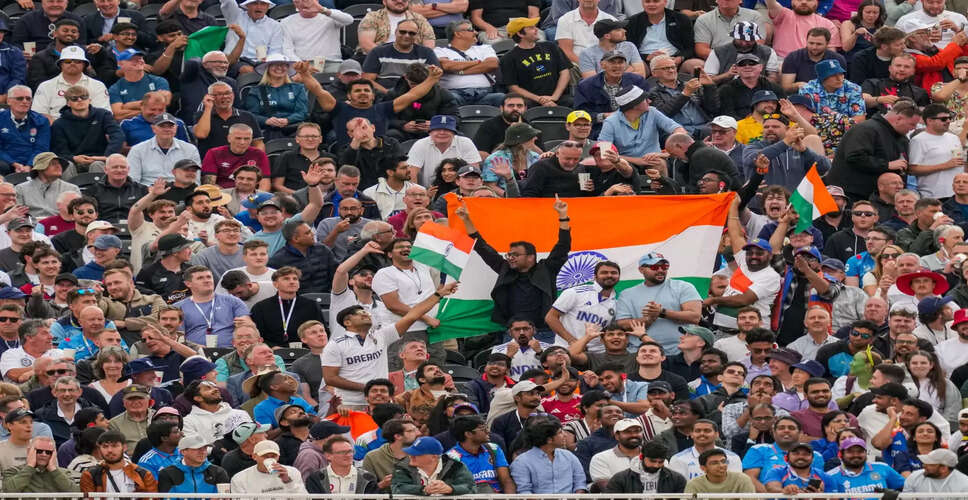
Once again, the 'Sikh lads of Manchester' made their presence felt outside Old Trafford, adorned in their signature red and blue turbans. They stood confidently, representing a community that is both deeply rooted and immensely proud. While there may not be an official welcome for an England-India Test match, these individuals serve as the vibrant heart of the occasion, embodying joy, Sikh heritage, and the spirit of cross-cultural celebration.
As fans began to arrive for Day 3 of the Test, the Sikh lads had already created an electrifying atmosphere, energetically playing their dholaks. Their rhythmic beats echoed off the historic stadium's walls, transforming the scene into a lively declaration of the Sikh community's journey from marginalization to celebration. They didn’t wait for an invitation; they arrived with enthusiasm, enriching the experience for everyone present.
An Unforgettable Experience
During my brief visit to Manchester, the vibrant sounds and sights outside Old Trafford left a lasting impression. It was impossible to ignore the pride and strength of a community that unapologetically embraces its identity—Sikh, British, and joyful.
Witnessing the red turbans amidst Root jerseys and Indian flags, with dhol beats blending into the typical English drizzle, offered a glimpse into a cricket culture that has evolved beyond the shadows of colonial history, flourishing through diverse voices and traditions.
Contrasting Rhythms Inside the Stadium
While the Sikh lads brought bhangra rhythms to the outside, Joe Root was busy crafting another exceptional innings within the stadium. He achieved a significant milestone, surpassing 13,000 Test runs, overtaking legends like Rahul Dravid and Jacques Kallis, and inching closer to the iconic Sachin Tendulkar.
Debates will inevitably arise regarding Root's place in cricket history. He stands as the most consistent English batsman of his era, having outlasted Cook and outperformed Stokes. However, in India, comparisons often lead to Tendulkar rather than Dravid or Ponting.
The Legacy of Tendulkar vs. Root
Comparing the two is challenging. Tendulkar was more than a cricketer; he symbolized a pivotal era in India's history, achieving 100 international centuries and carrying the hopes of millions. Many fans recall waking early or skipping school just to watch him play, not just for victory, but for the pride he instilled.
In contrast, Root does not bear such immense expectations. He is not a national obsession in England, unlike football icons such as Beckham or Kane. Root is humble, technically sound, and often overlooked. Yet, this may be his true strength: he scores quietly, leads without arrogance, and endures without fanfare.
Technical Comparisons and Emotional Depth
Both players share technical prowess. Tendulkar was known for his precision and power, while Root is more relaxed and adept at handling spin. They both excelled in challenging conditions—Tendulkar in places like Sydney and Root in Galle and Ahmedabad.
However, their emotional weight differs significantly. Tendulkar played with the burden of a nation’s hopes, while Root approaches the game with a calm, poetic demeanor. One embodies fire, while the other represents water.
A New Era of Cricket
Both players symbolize more than just runs. Tendulkar helped elevate India to a central role in world cricket, while Root represents a gentler, post-imperial English identity. He lets his bat speak for him, allowing the scoreboard to reflect his contributions.
Returning to the Sikh lads, they complete this narrative. They exemplify the remarkable evolution of cricket, where Indian fans no longer remain silent in English stadiums but actively participate through song, dance, and celebration. An English batsman is revered in Mumbai, while the sound of a Punjabi dhol resonates in Manchester—showcasing an identity that transcends borders.
The Ongoing Match and Cultural Significance
As the match progresses, Root may lead England to victory, or India may stage a comeback. Yet, the dholaks outside Old Trafford convey a message that the scoreboard cannot capture: cricket has transformed from a colonial legacy into a vibrant, living culture—rich in color, rhythm, and shared memories. If you listen closely, you’ll hear not just the sound of bat striking ball, but the harmonious emergence of a unified world.