
Bhuvneshwar Kumar: The Art of Fast Bowling in T20 Cricket

A Tale of Two Matches
On Saturday, Pitch No. 6 at Arun Jaitley Stadium witnessed an extraordinary display of batting, culminating in the highest successful chase in T20 history, with a remarkable total of 529 runs. This match seemed to affirm the prevailing notion that T20 batting has surpassed bowling in dominance. However, just two days later, on Pitch No. 5 at the same venue, a starkly different narrative unfolded. The Delhi Capitals found themselves in dire straits, collapsing to 8 for 6 within a mere 3.5 overs, ultimately finishing the powerplay with a record low of 13 for 6, marking the lowest in IPL history.
Bhuvneshwar Kumar's Masterclass
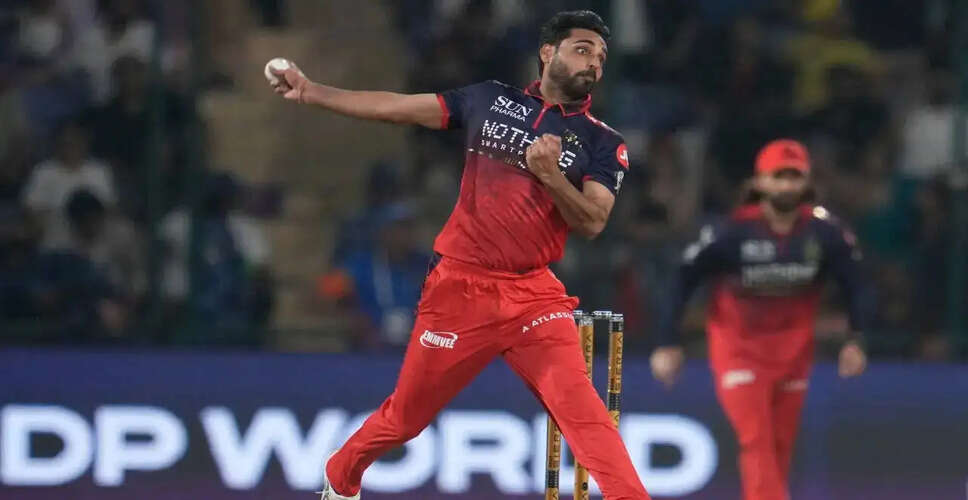
At the core of Royal Challengers Bengaluru’s decisive victory over Delhi Capitals was a bowling performance that felt almost out of place in the current T20 landscape—meticulously crafted and devastatingly effective. Bhuvneshwar Kumar's figures of 3 for 5 in his three overs during the powerplay not only showcased his skill but also momentarily revived the essence of traditional new-ball bowling. On a night filled with chaos and run-scoring, Bhuvneshwar's calm demeanor and precise execution were reminiscent of a Sanskrit shloka, where every element is intentional and every pause significant.
The Craft of Bowling
His bowling lengths were reminiscent of Test cricket, consistently hovering just short of a good length, enticing batsmen while instilling doubt. The dismissal of debutant Sahil Parakh epitomized Bhuvneshwar’s artistry—a perfectly executed inswinging yorker that left the young batsman bewildered. This was not merely a display of skill; it was biomechanics in action, characterized by discipline and precision. His wrist remained steady until the last moment, allowing for subtle deviations that kept the batsman guessing.
A Unique Bowling Style
Bhuvneshwar's ability to move the ball both ways even in his third over highlighted the contrast in fast bowling styles. If Kapil Dev represented the emotional surge of the 80s, and Javagal Srinath embodied the thunderous pace of heavy metal, then Bhuvneshwar Kumar stands as a serene Sanskrit invocation. His bowling is not about overwhelming force; it unfolds with a rhythmic grace that captivates rather than intimidates.
The Evolution of Indian Fast Bowling
Reflecting on the evolution of Indian fast bowling, Kapil Dev set the standard with his classical technique and emotional intensity. Javagal Srinath brought a percussive style, while Zaheer Khan introduced a smooth, deceptive approach. Jasprit Bumrah, with his unconventional style, represents a modern disruption. Yet, amidst these varied styles, Bhuvneshwar Kumar emerges as a paragon of efficiency, relying on timing and precision rather than sheer speed.
A Global Perspective
When comparing global pace icons like Brett Lee and Shane Bond, we see contrasting approaches to fast bowling. Lee's biomechanics exemplified fluid acceleration, while Bond's explosive style came at a physical cost. Both were thrilling, yet Bhuvneshwar's approach emphasizes sustainability over sheer speed.
The Lasting Impact of Precision
In a cricketing world that often glorifies speed and spectacle, Bhuvneshwar Kumar serves as a reminder that true mastery lies in understanding the game. His bowling is not merely an assault; it is a carefully composed piece, structured and rhythmical. Like a timeless Sanskrit shloka, his craft illustrates that excellence in fast bowling is defined not by volume, but by precision.