
Challenges in Securing FIFA World Cup 2026 Broadcasting Rights in India

FIFA's Media Rights Valuation Decline
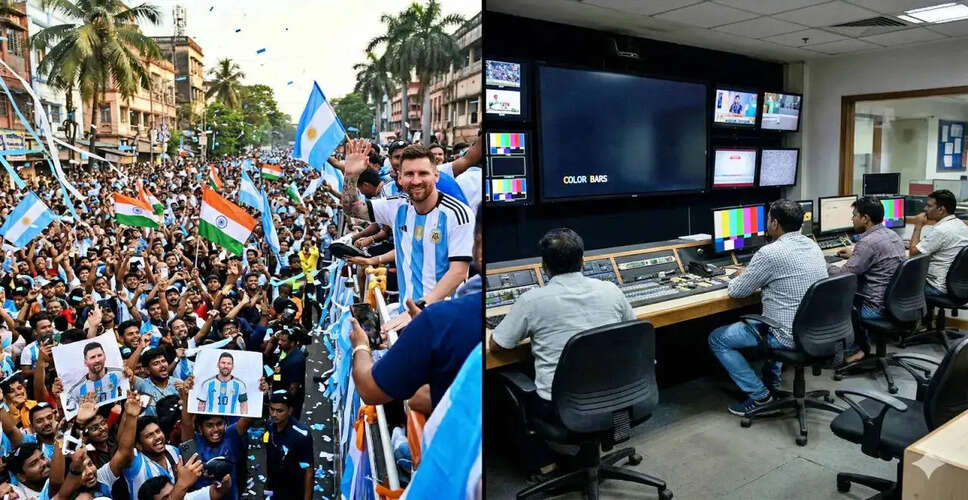
The recent decrease in FIFA's media rights valuation for India, plummeting from $100 million to $35 million, signifies more than just a price adjustment; it highlights significant underlying issues within the sports economy of India. Although there are claims of over 300 million football enthusiasts in the country, the actual commercial landscape presents a different picture. Broadcasters are hesitant to invest, not due to a lack of interest, but because the demand does not convert into sustainable revenue streams. Unlike cricket, football has limited advertising opportunities, primarily confined to pre-match, half-time, and post-match slots, which poses a challenge in an advertisement-driven market like India.
With just over two months remaining until the FIFA World Cup 2026, which will be co-hosted by the United States, Mexico, and Canada, FIFA is facing difficulties in securing broadcasting rights in India, with minimal interest from potential broadcasters. The tournament is set to commence on June 12, featuring Mexico against South Africa at the Estadio Banorte in Mexico City. This edition will be historic, as it will include 48 teams competing in 104 matches across 16 venues. However, the Indian market is struggling to attract buyers.
Timing and Scheduling Issues
FIFA WORLD CUP 2026: Timing and scheduling constraints
According to a leading broadcaster in Southeast Asia, the scheduling of matches poses a significant barrier to interest. Out of 104 matches, only 12 to 13 will occur during prime time in India, with nearly 90% scheduled between midnight and early morning (12 AM to 6 AM IST), severely limiting live viewership potential. The source emphasized that timing is one of the most significant structural challenges for broadcasters in this market.
In contrast, the Indian Premier League (IPL) has successfully established itself as a billion-dollar league, with substantial investments from broadcasters. Despite the evident demand for football, it has not yet garnered the same level of interest as cricket, which benefits from more monetizable advertising windows.
Market Realities and FIFA's Pricing Strategy
FIFA’s pricing vs market reality
In the Indian market, a valuation of $35 million may still be perceived as excessive, and FIFA might need to lower it further to attract interest from broadcasters. For context, the English Premier League rights were acquired for approximately $65 million for a three-year cycle, which includes consistent weekly matches, while the World Cup is a one-month event. Realistically, the valuation may need to be adjusted to around $20 to $22 million to make it commercially viable.
FIFA WORLD CUP 2026: Sharply Contrasting Views
Ranjit Bajaj, founder of Minerva Academy, presents a different perspective, arguing that the issue lies not in demand but in how the market is perceived and monetized. He estimates that the actual market for football in India is substantial, with around 350 million followers, although only about 15 million actively engage with Indian football, while the majority follow European leagues.
Cricket's Dominance in the Indian Sports Market
Cricket Controls The Market Dynamics
Bajaj attributes the current challenges to the cricket-centric nature of India's sports broadcasting landscape. Broadcasters have invested heavily in cricket properties like the IPL, creating a scenario where acquiring football rights for high-profile events like the World Cup could conflict with their existing investments. He notes that even non-football fans have historically tuned in to watch the World Cup, indicating the sport's broad appeal.
Despite the World Cup not overlapping with the IPL, Bajaj highlights the dominance of the Indian cricket calendar, which poses a significant challenge for football. The substantial investments in cricket rights, which have reached ₹15,000 to ₹20,000 crores, make it difficult for broadcasters to justify additional expenditures on football.
Perceptions of Timing and Audience Engagement
Time ZONE Isn't The Real Problem For FIFA WORLD CUP 2026
Regarding the timing of matches, Bajaj argues that dedicated football fans have historically adapted to inconvenient schedules, as evidenced by the viewership of European competitions like the UEFA Champions League. He asserts that while casual viewers may drop off, core engagement remains strong for significant matches.
Bajaj emphasizes that the Indian football audience is not merely digital noise, citing the commercial success of global football stars as evidence of real demand. He describes Indian football fandom as a 'sleeping giant' that remains under-leveraged due to insufficient marketing and strategic planning.
The Future of Football in India
India - A Sleeping Giant FIFA Can't Ignore For Long
Bajaj notes a generational shift, with younger audiences increasingly aligning with global sports trends and consuming football content across various platforms. He suggests that if this shift is harnessed effectively, it could redefine the commercial landscape for football in India.
He urges FIFA to reconsider its pricing strategy for lower-ranked footballing nations, proposing that World Cup broadcasts should be free-to-air to foster long-term growth. He argues that India, with its 1.5 billion population, represents a significant untapped market for football, and underestimating this potential could hinder FIFA's long-term profitability.