
Challenges Facing the Indian Super League: A Financial Crisis
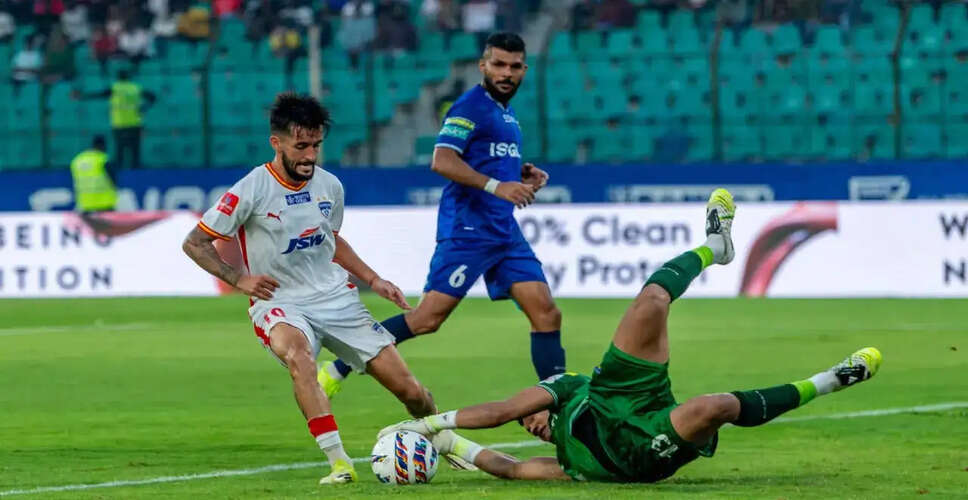

The Decline of the Indian Super League
For more than ten years, the Indian Super League (ISL) was promoted as the dawn of a footballing era in India, a lavish initiative backed by billionaires that aimed to elevate football's status in the country and potentially lead to FIFA World Cup qualification. However, as we approach May 2026, the initial excitement has diminished, leaving the league in a precarious situation. A significant rift has developed between the 14 club owners and the All India Football Federation (AIFF), primarily due to a proposed financial model that heavily depends on a foreign data company, leaving club owners frustrated with continuous demands for investment in an unsustainable environment. A senior official from one of the most successful ISL clubs expressed, "People will come for the love of the game, but to retain them, there must be a sound business strategy. Passion can drive spending, but successful businesspeople know what works financially."
The Thursday Night Blackout
The Thursday Night Blackout
To grasp the extent of the current disconnect, one must consider the events of Thursday, May 14. The AIFF was in the process of seeking a new commercial partner through a Request for Quotation (RFQ), a decision that would significantly impact the financial future of ISL clubs for the next two decades. The bids were scheduled to be revealed the following morning in Delhi, yet the clubs, who are responsible for player salaries and stadium operations, were left uninformed. A senior executive from another leading ISL club remarked, "We were not included in the RFQ process until the bids were opened." This lack of transparency has led to a breakdown of trust. The AIFF has aligned itself with Genius Sports, a UK-based technology firm, while clubs have realized that the proposed model offers little hope for sustainability.
Is the Genius Model a Financial Trap?
Is The 'Genius' Model A Debt Trap?
The AIFF estimates that the deal with Genius could be worth ₹2,100 crore over 20 years. However, when club leaders examined the financial details, the outlook appeared grim. Genius's bid for a single season's operations is around ₹65 crore. According to the AIFF's proposed structure, the federation would take a 20% administrative fee upfront, approximately ₹13 crore, leaving ₹52 crore for production and operations. Genius would then recoup its entire investment from the central revenue before any profits are shared: 60% to the clubs, 10% to the AIFF, and 30% to Genius. A senior executive explained, "For clubs to receive any funds, revenue must exceed ₹52 crore." Given current broadcast estimates from streaming platforms are around ₹15–20 crore, the executive noted that Genius itself anticipates a Year 1 loss of ₹20–30 crore. The contract allows Genius to carry forward losses for five years, meaning next year, the league would need to generate ₹102 crore for clubs to see any returns. The official lamented, "A club could end up with as little as ₹2 lakhs or ₹5 lakhs, which is insufficient to cover even one player's salary for the year."
The Participation Fee Dilemma
The 'Participation Fee' Disconnect
As if the lack of revenue clarity wasn't enough, the AIFF has suggested a 'participation fee'—a financial burden on clubs to help recover losses from the previous broadcast deal with Reliance. A senior club executive stated, "Even when we open a small soccer school, we analyze the numbers closely. I had to absorb a loss four times greater than my initial estimates this season. Now, you're proposing a participation fee on top of that? Owners will invest, but not without caution." Drawing a comparison to the English Premier League (EPL), the official highlighted the disconnect between the AIFF and ISL clubs, stating, "Imagine if Manchester United was told to spend heavily on players but receive no central revenue. In the EPL, clubs average $200–300 million in central revenue, while in the IPL, it's nearly ₹200 crore. You're essentially asking clubs to pay to invest in football."
The 90-10 Proposal
The 90-10 Alternative
In search of a viable solution, 13 of the 14 ISL clubs have proposed the 90-10 Model to the AIFF, suggesting they take 90% economic control of the league, leaving the AIFF with a 10% stake focused on governance. The clubs argue they can operate the league more efficiently without an expensive external partner. A senior executive stated, "Genius wants ₹65 crore, but we believe we can manage operations for ₹40–45 crore. Genius lacks a presence in India and has no clear media rights strategy. We are willing to take the risk ourselves." The clubs have even offered to pay the AIFF ₹12.5–13 crore annually to gain operational freedom.
AIFF's Response
The AIFF Responds
The AIFF has indicated that any structural changes must navigate a complex legal framework before approval. In a recent statement, AIFF Deputy Secretary General M. Satyanarayan acknowledged the clubs' proposal but emphasized the need for further clarity before abandoning the Genius Sports bid. "We are studying it and require more details from the clubs to proceed in accordance with legal and procedural guidelines," he stated.
The Impact on the Game
The Beautiful Game Suffers
As the administrative stalemate continues, it is the sport itself that is suffering. Hundreds of players will be out of contract by the end of May, with no new offers due to uncertainty about revenue. A senior club executive noted, "If I assume zero revenue, every rupee spent is a loss." This financial paralysis threatens the quality of the product that fans pay to see. "If I have to pay just to survive, my focus will shift to survival rather than growth," the official admitted. "If I’m only looking to survive, I won’t be able to develop my club further."
The Future of ISL
Is The ISL Dying A Slow Death?
The ISL stands at a critical juncture. The AIFF needs funding to maintain its operations, while Genius Sports seeks a secure investment. However, the clubs, which are vital to the ecosystem, are struggling to cover costs while facing significant losses. A senior executive warned, "If they proceed with Genius, I fear some teams may shut down this year. It’s better to make tough decisions now than wait until it’s too late." Reports indicate that a Special General Meeting will be held on May 23, 2026, where the AIFF will decide whether to adopt the clubs' 90-10 proposal or continue with the Genius structure. The future of Indian football hangs in the balance, as clubs are ready to take control and ensure the league's survival.